

Why is there more and more talk about the “second brain”? Because many people feel the connection between the intestines and well-being literally: stress – and the stomach “shrinks”, anxiety – and appetite changes, lack of sleep – and digestion reacts. What used to sound strange is now perceived as logical: the gut is connected to the nervous system and immune responses. But where is the truth and where is the exaggeration? Let’s analyze calmly and without myths what exactly can stand behind this fashionable topic.
What is the “second brain” really
The “second brain” is usually understood as the enteric nervous system, a network of nerve cells in the walls of the intestine that helps control its function. Simply put, the intestine regulates itself in many ways: the movement of food, the secretion of juices, the reaction to irritation.
At the same time, the system constantly exchanges signals with the central nervous system. Therefore, the intestines react to emotions and stress: the tone, sensitivity and rhythm of the gastrointestinal tract change – hence the feeling that digestion becomes more “capricious” when worried.
How the microbiome affects mood
The microbiome is a community of microorganisms that live in the gut. Today, there is evidence of a connection between its state and emotional well-being: the microbiome can affect the general background not directly, but through processes related to the gastrointestinal tract and the body’s response to stress.
The topic of serotonin is often mentioned, but in everyday reality, something else is more important: if the intestines are uncomfortable, it is generally harder for a person – there is discomfort, sleep is disturbed, and the energy for exercise decreases. In addition, under severe stress, many people’s digestion suffers: appetite, eating habits and regimen change, and this is already considered as a factor that can affect the microbiome and the feeling of “internal balance”.
And one more point: with long-term problems with the gastrointestinal tract, the emotional state often worsens simply because constant discomfort is exhausting. This does not mean that every bad mood is “because of the intestines”, but such a connection can really manifest itself.
Microbiome and immunity: what is the connection
The gut is often referred to as an important part of the immune system — not because it “heals,” but because a huge amount of what the body comes into contact with passes through it. The balance of the microbiota and the state of the mucous membrane are related to how protective reactions are formed and “trained”.
Again, without extremes: the microbiome does not make you “invulnerable,” but is seen as a factor in overall immune well-being. Therefore, gastrointestinal support is especially relevant during periods when the body is overloaded: cold season, lack of sleep, stress, recovery from illness. At such moments, many people notice that the stomach and intestines react faster and more strongly – and this is a normal story for the body that is trying to restore balance.
What can gently support the intestines under stress
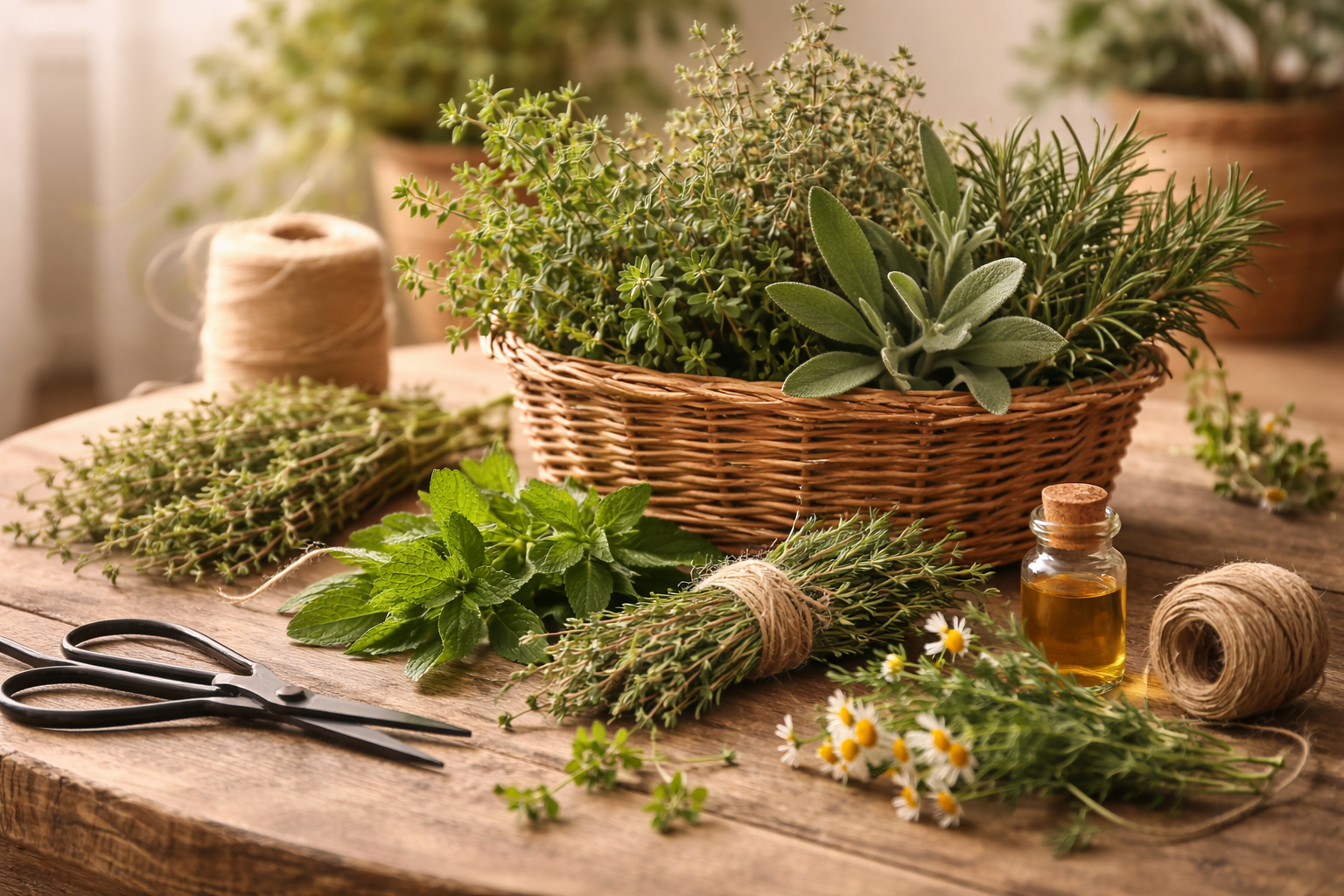
After stress or illness, a gentle diet and regimen are usually more important to the intestines than a “microbiome pill”. Herbal components are seen here as mild support — without promises to “restore the microbiome” and without comparison with probiotics.
- Altea root is known for its enveloping properties due to the content of mucous substances. In everyday life and phytotherapeutic traditions, it can be perceived as a gentle support for the gastrointestinal mucosa when you want a more delicate regimen.
- Calendula is a plant that is traditionally used as a component of preparations with a mild supportive effect on the mucous membranes. As part of a calm “restorative” regimen, it can be used in warm infusions and self-care routines (sleep, food, rest).
- Lemon balm is often associated with periods of increased nervous stress and a feeling of internal tension, which often accompanies digestive problems. It is traditionally used in evening rituals and soft infusions, when the task is to calm down and maintain the regimen.
The key thing is that any herbal components are about support and habits, and not about “quickly fixing” the body. And if you have chronic diseases, pregnancy or you are taking medications, it is better to discuss such things with a specialist.
When not to blame everything on the microbiome
Not every mood deterioration is related to the gut. Sometimes the reason is simpler: lack of sleep, overload, lack of rest, conflict, information noise. Self-diagnosis based on articles and videos is not the best way, because you can miss important things and fuel anxiety.
The best “anti-myth” approach is basic things: eating regularly, getting enough sleep, exercising, managing stress, and watching what really affects your well-being. The microbiome is part of the overall system, but it is not its only “conductor”.
Conclusion
The gut can really affect well-being – both through nerve signals, and through the connection with immune reactions, and through the way we tolerate stress. But this is not a magical organ and not the source of all problems. Microbiome and GI support is a holistic approach, not one supplement or one “superfood.” Attention to the body, regimen, and recovery usually works better than any fashion trends.
Literature
- Margolis K.G., Cryan J.F., Mayer E.A. The Microbiota–Gut–Brain Axis: From Motility to Mood (https://www.gastrojournal.org/article/S0016-5085%2821%2900268-7/fulltext)
- Choden T., Cohen N.A. The gut microbiome and the immune system (https://www.explorationpub.com/Journals/em/Article/100187)
- Marushko Y.V., Gishchak T.V., Chabanovich O.V. Basic mechanisms of intestinal microflora intrusion into the immune system and significance in clinical practice (http://ir.librarynmu.com/bitstream/123456789/7369/1/249409-Article%20Text-576614-1-10-20220113.pdf)
Author: Natalia Kandybey, Candidate of Pharmaceutical Sciences, Quality Director of PJSC Pharmaceutical Factory “VIOLA”
Subscribe to our pages on social networks: Facebook and Instagram


