
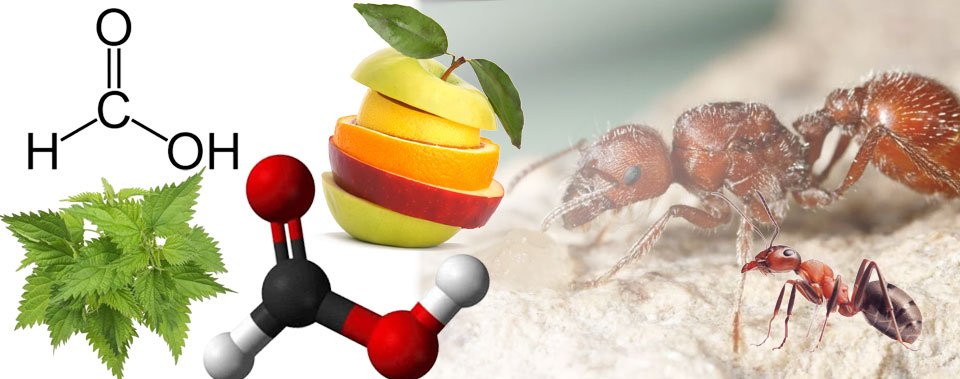
Formic acid (methanic acid, HCOOH) is the simplest carboxylic acid, which has a pungent odor and strong antiseptic properties. It is naturally found in ants, bees, nettles and some plants, performing a protective function. In industry, formic acid is obtained synthetically and is widely used in the chemical, medical and food industries.
The main properties of formic acid are its antiseptic, anti-inflammatory and antimicrobial effects. Due to these characteristics, it is used in medicine to treat inflammatory processes, muscle and joint pain as part of ointments and solutions. Formic acid is also used in antiseptics and in cosmetology as a component for cleansing the skin and fighting acne.
In industry, formic acid is used as a preservative in the food sector (E236), a disinfectant, as well as in the production of leather, textiles and rubber. Despite its beneficial properties, in high concentrations it is an aggressive substance that can cause irritation of the skin, mucous membranes and respiratory tract, so its use requires caution.