
A sore throat most often occurs with viral respiratory infections, but bacterial inflammation, dry air, allergies, mucosal irritation, or voice strain can also cause it. In most cases, an uncomplicated sore throat gradually improves within a few days.
Gargling does not eliminate the cause of the condition, but it can moisturize the mucous membrane, help remove mucus, and temporarily relieve scratchiness and discomfort. Warm salt water, certain pharmacy products, or herbal infusions can be used for this purpose. If the pain is severe, persists for a long time, or is accompanied by warning signs, a doctor’s consultation is necessary.
What Causes a Sore Throat?
The most common cause is a viral infection. In this case, a sore throat is often accompanied by a runny nose, cough, weakness, headache, or fever. Pharyngitis typically causes a scratchy throat and pain when swallowing, while laryngitis is more commonly associated with hoarseness and a dry cough.
Bacterial inflammation is less common. For example, a streptococcal infection may cause sudden, severe throat pain, high fever, swollen lymph nodes in the neck, and white patches on the tonsils. If necessary, a doctor may perform a test to determine the cause. Antibiotics should not be used solely because of throat redness or pain: they are ineffective against viral infections.
A sore throat can also occur without an infection. The mucous membrane may become irritated by dry air, tobacco smoke, dust, aerosols, and other substances. A scratchy throat can also result from allergies, prolonged voice strain, or acid reflux. If discomfort frequently recurs without signs of a cold, it is worth discussing the possible causes with your doctor.
What Can You Gargle With?
For home care, one suitable remedy is usually sufficient. There is no need to mix several antiseptics, increase the concentration of a solution, or use multiple topical preparations at the same time, as this may increase irritation of the mucous membrane.
Warm Salt Water
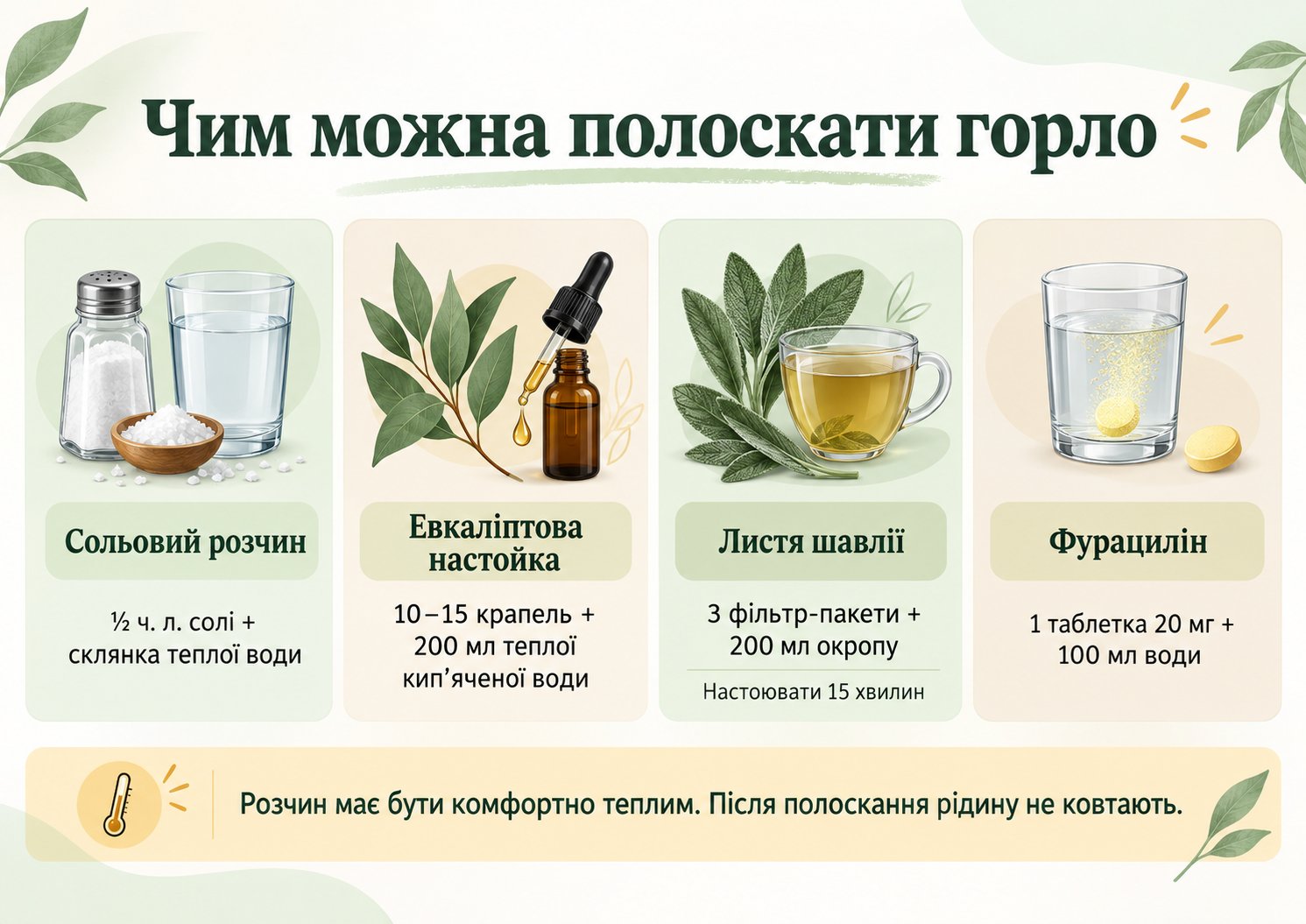
The simplest option is to dissolve half a teaspoon of salt in a glass of warm water. Gargle with the solution and then spit it out. The water should be comfortably warm, not hot.
Baking soda is sometimes added to salt water, but using too much can worsen dryness and burning.
Furacilin
Furacilin is a nitrofural-based medication for topical use. A 0.02% aqueous solution is used for gargling: one 20 mg tablet is dissolved in 100 ml of water. If the tablet is dissolved in hot water, allow the solution to cool to a comfortable temperature before use. Do not swallow the solution.
Eucalyptus Tincture
Eucalyptus tincture is used topically for inflammatory diseases of the upper respiratory tract and oral cavity. For gargling, dilute 10–15 drops of the tincture in 200 ml of warm boiled water. Do not gargle with undiluted tincture.
The tincture has contraindications, including bronchial asthma, bronchospasm, severe liver disease, and hypersensitivity. Discontinue use if an allergic reaction occurs.


Sage Leaves
An infusion of sage leaves is used for topical care in inflammatory conditions of the oral cavity and upper respiratory tract. To prepare the infusion, pour 200 ml of boiling water over 3 filter bags, cover, and let steep for 15 minutes. Use the infusion for gargling once it has cooled to a comfortable temperature.
Adults and children aged 12 and older can use the infusion undiluted. For younger children, the method of use depends on age; children aged 3 and older should use sage only as directed by a doctor. The remedy should not be used in cases of hypersensitivity to the plant.
Topical Sprays
Gargling is not the only option for topical throat care. For example, Anguilor is a spray for the oral cavity and oropharynx containing hexetidine, choline salicylate, and chlorobutanol. It is not a gargling solution and is used separately according to the recommended method of administration.
Adults and children over 15 years of age use one spray 4–6 times a day, while children aged 6–15 use it 2–3 times a day. The course of treatment should not exceed 5 days. If symptoms persist or the condition worsens, consult a doctor.
How to Gargle Properly
Gargling should be a simple topical procedure. To avoid irritating the mucous membrane and prevent the solution from entering the respiratory tract, follow a few rules:
- use warm, not hot, liquid;
- take a small amount of the solution and gargle for approximately 20–30 seconds;
- do not tilt your head too far back or inhale while gargling;
- do not swallow saline, herbal, or medicinal solutions;
- do not increase the concentration of pharmacy products on your own or mix several medications in one solution.
Gargling is suitable for children only when they can control the procedure, avoid swallowing the liquid, and spit it out independently.
When to See a Doctor
Most uncomplicated cases associated with a viral infection gradually improve within about a week. Medical evaluation is needed sooner if signs of a more severe condition or another cause of pain appear.
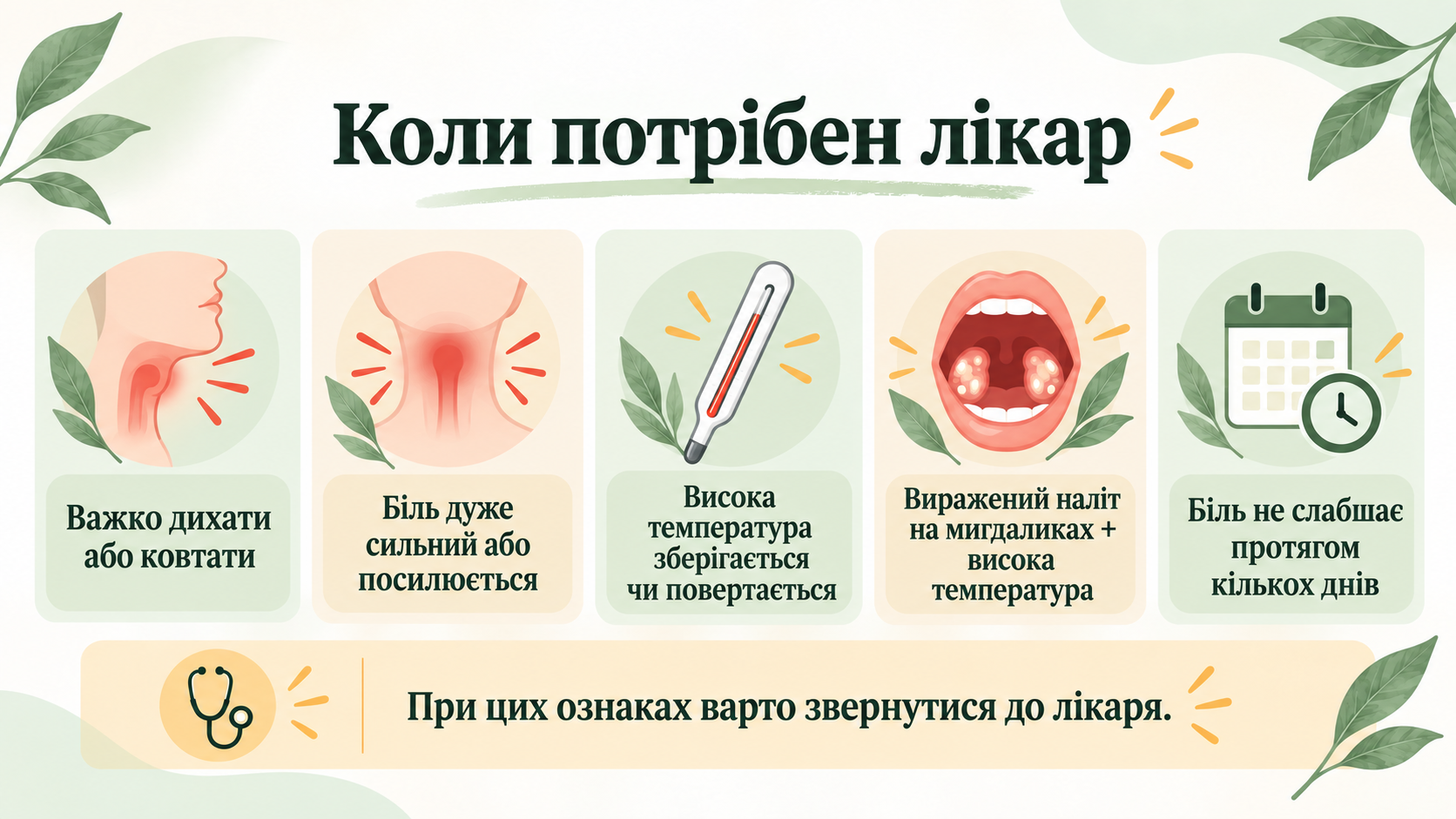
- difficulty breathing or swallowing;
- pain so severe that drinking becomes difficult;
- rapidly increasing swelling of the neck or face;
- high fever that persists, returns, or is accompanied by a marked deterioration in general well-being;
- pronounced white patches on the tonsils accompanied by high fever;
- rash, blood in saliva or sputum, or signs of dehydration;
- pain that does not improve for several days, becomes more severe, or lasts longer than a week in an adult;
- hoarseness that persists for more than two weeks or recurring episodes of throat pain.
Difficulty breathing, inability to swallow saliva, or rapidly increasing swelling requires urgent medical attention.
Frequently Asked Questions About Sore Throats
How Many Times a Day Can You Gargle?
You can gargle with warm salt water several times throughout the day. For medicinal and herbal remedies, the frequency of use depends on the specific product and its recommended dosage.
Is It Safe to Gargle with Baking Soda and Salt Every Day?
A mild saltwater or salt-and-baking-soda solution can be used for a short period to relieve discomfort. If dryness, burning, or irritation increases after gargling, it is better to stop using this method.
Do Warm Drinks Help?
Yes. Drinking enough fluids helps keep the throat lining moist and may reduce dryness and scratchiness. Drinks should be warm rather than hot.
Can Several Remedies Be Combined?
There is usually no need to use multiple topical remedies at once. In particular, you should not mix pharmaceutical preparations or change their concentration on your own.
Conclusion
For a mild sore throat, adequate fluid intake, humidification, and simple topical care are often sufficient. Warm salt water can be used for gargling, while medicinal or herbal remedies should be used according to the recommended method of administration and with consideration of contraindications. If the pain is severe, persists for a long time, or is accompanied by difficulty breathing or swallowing, high fever, or other warning signs, medical evaluation is necessary.
References
- Pellegrino R., Timitilli E., Verga M.C. et al. Acute pharyngitis in children and adults: descriptive comparison of current recommendations from national and international guidelines and future perspectives. European Journal of Pediatrics. 2023; 182:5259–5273. DOI: 10.1007/s00431-023-05211-w (https://pubmed.ncbi.nlm.nih.gov/37819417/).
- Spinks A., Glasziou P.P., Del Mar C.B. Antibiotics for treatment of sore throat in children and adults. Cochrane Database of Systematic Reviews. 2021; 12:CD000023. DOI: 10.1002/14651858.CD000023.pub5 (https://pubmed.ncbi.nlm.nih.gov/34881426/).
- Osadchiy O.I. Acute pharyngitis: role and effectiveness of local therapy. Ukrainian Medical Journal. 2021; 6:5–8. DOI: 10.32471/umj.1680-3051.146.223412 (https://umj.com.ua/wp/wp-content/uploads/2022/05/Chasopis146.pdf).
Author: Natalia Kandybey, Candidate of Pharmaceutical Sciences, Quality Director of PJSC Pharmaceutical Factory “VIOLA”