
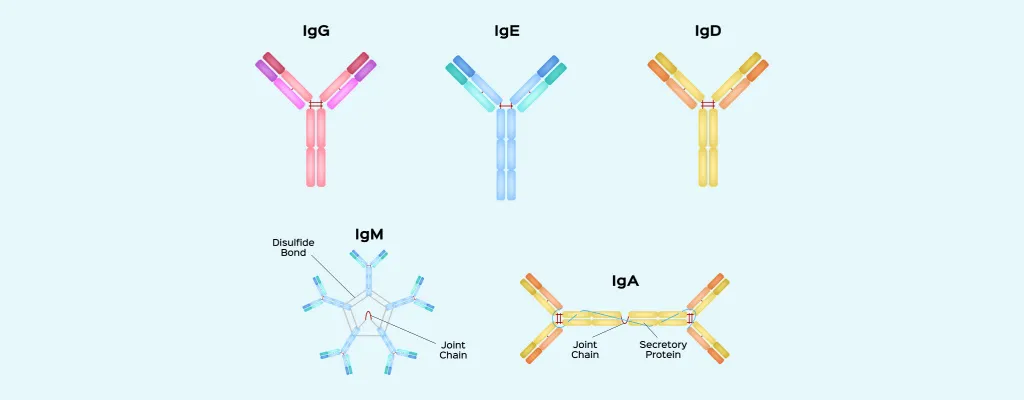
Antibodies, or immunoglobulins, are proteins that are produced by the immune system in response to antigens (for example, components of viruses, bacteria, toxins). They are involved in the recognition and neutralization of foreign substances and the formation of immune memory.
There are several classes of immunoglobulins (IgG, IgM, IgA, IgE, IgD), each performing its own function in the immune response. Laboratory determination of antibodies is used in the diagnosis and monitoring of infections, some autoimmune conditions, and allergic reactions, taking into account the timing of the formation of the antibody response and the clinical context.