
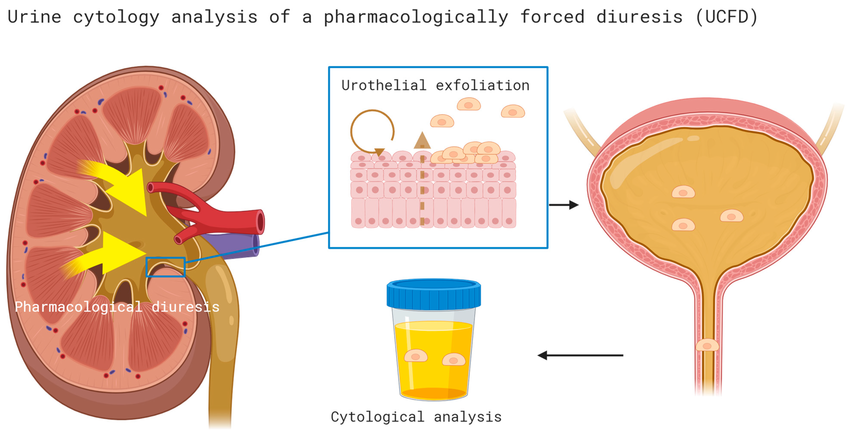
Diuresis is the formation and excretion of urine by the kidneys. It reflects the body’s excretory function and water-salt balance. In adults, normal daily diuresis averages from 1 to 2 liters, depending on fluid intake, kidney function and hormone levels. Persistent changes in urine output should be checked by a doctor.
What is diuresis?
Diuresis is the process of formation and excretion of urine from the body through the kidneys. It reflects the functional state of the excretory system and water-salt balance. The amount of diuresis depends on fluid intake, kidney function, hormone levels and other physiological factors.
Normal daily diuresis
Normal daily diuresis averages from 1 to 2 liters. The amount depends on fluid intake, kidney function, hormone levels and other physiological factors.
Increased, decreased and absent diuresis
Disorders of diuresis – its increase (polyuria), decrease (oliguria) or complete absence (anuria) – may indicate pathologies of the kidneys, cardiovascular or endocrine systems.
Frequently asked questions
What is diuresis?
Diuresis is the formation and excretion of urine through the kidneys.
How much is normal daily diuresis?
In adults, normal daily diuresis averages from 1 to 2 liters.
What affects diuresis?
Fluid intake, kidney function, hormone levels and other physiological factors.
When should you see a doctor about urine output?
Increased, decreased or absent urine output may be a sign of kidney, cardiovascular or endocrine disorders. Persistent changes should be checked by a doctor.