
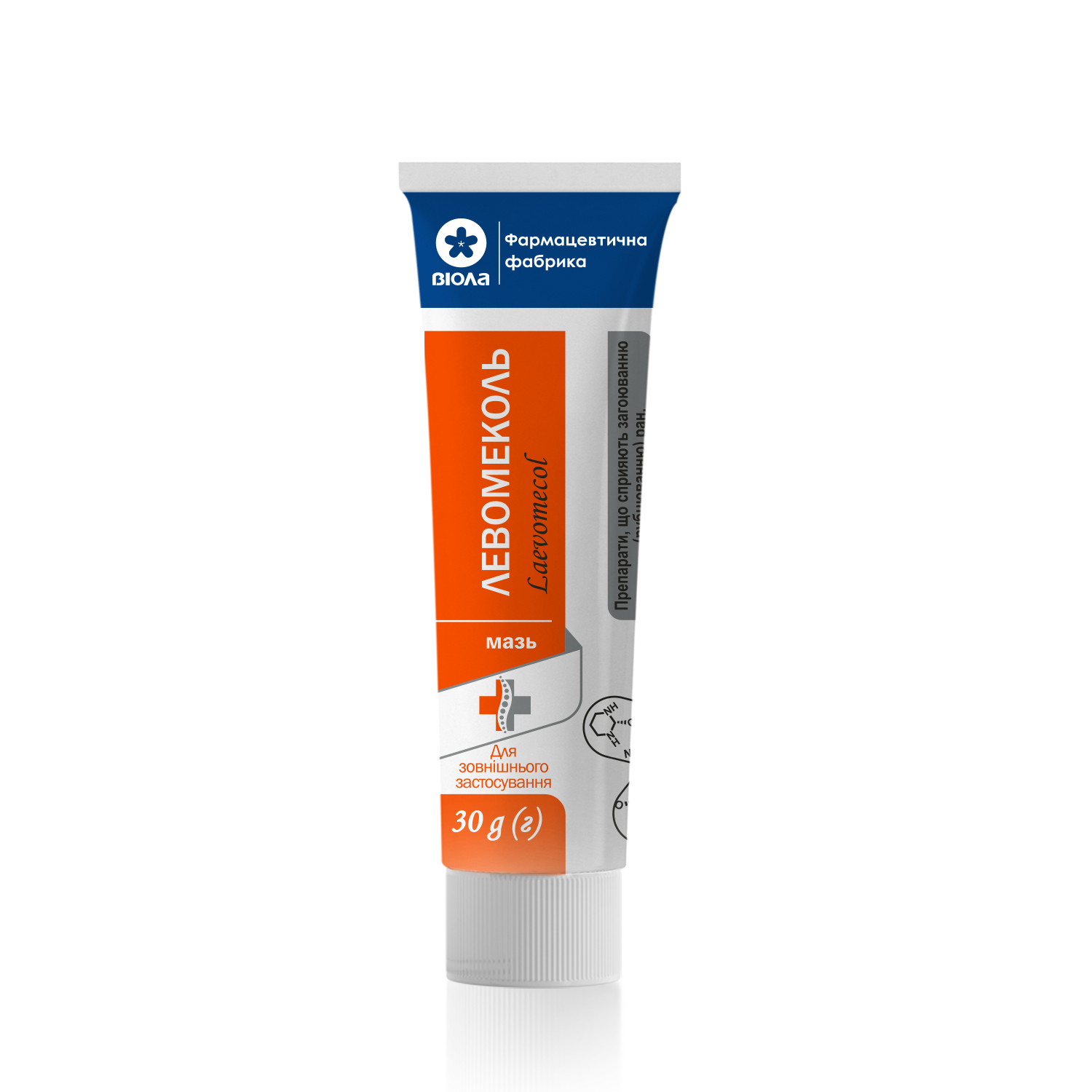
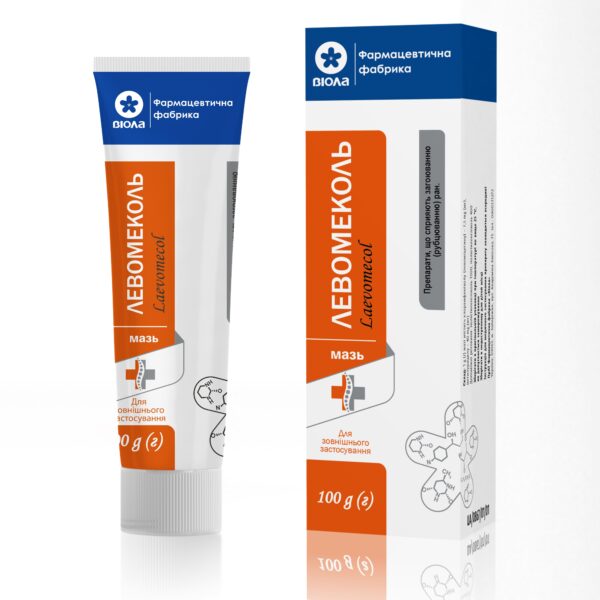
 Levomekol ointment 100 g in a pack
 Levomekol ointment 20 g
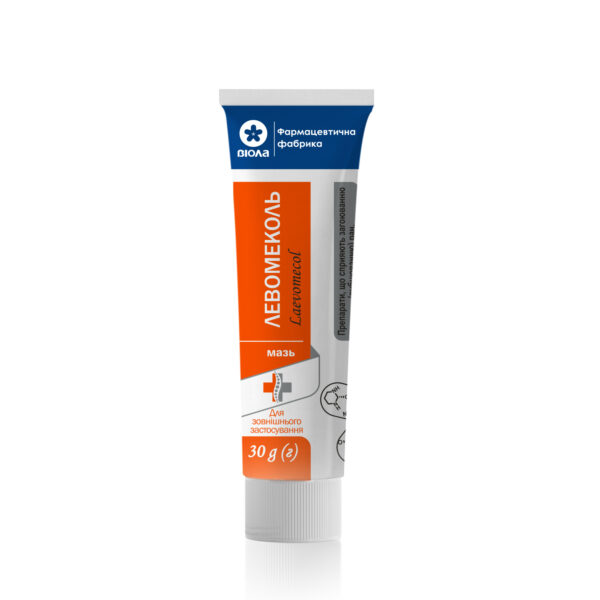 Levomekol ointment 30 g
 Levomekol ointment 40 g
 Levomekol ointment 40 g in a pack


Levomekol ointment 30 g
Treatment of purulent wounds (infected with mixed microbial flora) in the first phase of the wound process, trophic ulcers, bedsores, infected burns, boils, carbuncles.
The use of antibacterial agents for external use can lead to sensitization of the skin, which is accompanied by the development of hypersensitivity reactions during further use of this drug externally or in the form of a medicinal form of systemic action.
The ointment should be used from the first day of injury for 4 days. Levomekol hyperosmolar ointment is not recommended to be used for a long time, because it can cause osmotic shock in intact cells. On the 5-7th day of treatment, it is recommended to change the ointment to drugs that restore the integrity of the damaged tissue.
Increased sensitivity to the components of the drug; psoriasis, eczema, fungal skin lesions.
Description
Who Levomekol Ointment Is For
A combined topical product with antibacterial, anti-inflammatory, and wound-healing effects. Suitable for adults and children aged 3 years and older as a basic remedy when there is a risk of wound infection or signs of a purulent process.
When to Choose Levomekol
The product is chosen to treat conditions that require antibacterial treatment and faster healing:
- purulent wounds, including those infected with mixed microflora, in the first phase of the wound process;
- trophic ulcers and pressure sores;
- infected burns;
- boils and carbuncles.
What Problem the Product Addresses
Thanks to the combination of chloramphenicol and methyluracil, the ointment works in a comprehensive way:
- Antibacterial action: inhibits the growth of Gram-positive and Gram-negative bacteria, including staphylococci, streptococci, Pseudomonas aeruginosa, and Escherichia coli.
- Anti-inflammatory support: reduces inflammatory manifestations in the affected area.
- Tissue regeneration: methyluracil accelerates cellular repair and promotes healing.
- Wound cleansing: the ointment base adsorbs wound exudate and enhances the action of active substances.
- Effectiveness in the presence of pus: antibacterial activity is maintained in the presence of pus and necrotic masses.
Conditions and Features of Use
- Levomekol is intended for external use in adults and children aged 3 years and older.
- For wound treatment, sterile gauze wipes are soaked with the ointment and used to fill the wound.
- The ointment may be introduced into purulent cavities through a catheter or drainage tube using a syringe.
- Before introduction into cavities, the ointment should be pre-warmed to 35–36 °C.
- Dressings should be changed daily until the wound is completely cleared of purulent-necrotic masses and granulation begins.
- It is optimal to use from the first day of injury for 4 days.
- On days 5–7, it is recommended to switch to products that restore tissue integrity.
- For large wound surface areas, the daily dose of the ointment calculated as chloramphenicol should not exceed 3 g.
- Avoid contact of the ointment with the mucous membrane of the eyes.
Compatibility and Comprehensive Care
- It is undesirable to combine with products that suppress hematopoiesis, including sulfonamides, cytostatics, and pyrazolone derivatives.
- Simultaneous use with diphenyl, barbiturates, and ethanol is not recommended.
- Combination with erythromycin, oleandomycin, nystatin, and levorin may enhance the antibacterial activity of the ointment, while combination with benzylpenicillin salts may reduce it.
Why Choose Levomekol Ointment
- Dual formula: an antibacterial component is combined with stimulation of tissue repair.
- Works in challenging wounds: the effect is maintained in the presence of pus and necrotic masses.
- Convenient protocol: daily dressings and the possibility of introduction into cavities through drainage.
- Use from 3 years of age: the product can be used in children aged 3 years and older.
- Ukrainian manufacturer: PrJSC Pharmaceutical Factory “Viola”.
Composition:
| Active ingredients | chloramphenicol (levomycetin), methyluracil |
| Content in 1 g of ointment | chloramphenicol (levomycetin) — 7.5 mg, methyluracil — 40 mg |
| Excipients | polyethylene glycol 400, polyethylene glycol 1500 |
Medicinal form: ointment.
Main physical and chemical properties: white ointment or white ointment with a yellowish tint.
Pharmacotherapeutic group.
Drugs that promote wound healing and scarring. ATC code D03A X.
Pharmacological properties.
Pharmacodynamics.
Combined drug for topical use with antimicrobial, reparative, and anti-inflammatory effects. Chloramphenicol (levomycetin), which is part of the medicinal product, has an antimicrobial effect, the mechanism of which is associated with disruption of protein synthesis in microorganisms. It acts bacteriostatically and is active against Gram-positive and Gram-negative microorganisms, including staphylococci, streptococci, Pseudomonas aeruginosa, and Escherichia coli. Methyluracil accelerates cellular regeneration processes, promotes wound scarring, and has an anti-inflammatory effect.
Pharmacokinetics.
The polyethylene oxide base adsorbs wound exudate and potentiates the activity of medicinal substances. The drug easily penetrates tissues without damaging biological membranes; however, the degree of systemic absorption after application of the drug to the skin, wounds, and mucous membranes is unknown.
Clinical characteristics.
Indications: treatment of purulent wounds, including those infected with mixed microbial flora, in the first phase of the wound process; trophic ulcers, pressure sores, infected burns, boils, and carbuncles.
Contraindications: increased sensitivity to the components of the drug; psoriasis, eczema, fungal skin lesions.
Interaction with other medicinal products and other types of interactions.
It is undesirable to use simultaneously with drugs that inhibit hematopoiesis: sulfonamides, cytostatics, pyrazolone derivatives; with diphenyl, barbiturates, and ethanol.
Concomitant use of the drug with erythromycin, oleandomycin, nystatin, and levorin increases the antibacterial activity of the ointment, while use with benzylpenicillin salts decreases it.
Features of application.
The use of antibacterial agents for external use can lead to skin sensitization, which is accompanied by the development of hypersensitivity reactions during further external use of this drug or use in a systemic dosage form.
In the presence of pus or necrotic masses, the antibacterial effect of the drug is preserved. Do not allow the ointment to come into contact with the mucous membrane of the eyes.
With long-term use, longer than 1 month, it is necessary to monitor the peripheral blood picture.
The rules for using the medicinal product should not be violated.
Use during pregnancy or breastfeeding.
The use of the drug during pregnancy or breastfeeding is justified only if the expected benefit to the mother exceeds the potential risk to the fetus or child.
Ability to influence the reaction rate when driving vehicles or operating other mechanisms.
Does not affect.
Method of administration and dosage.
Levomekol is intended for external use in adults and children aged 3 years and older. Sterile gauze wipes should be impregnated with the ointment and used to fill the wound. The ointment may be introduced into purulent cavities through a catheter or drainage tube using a syringe. In such cases, Levomekol should be pre-warmed to 35–36 °C.
Dressings should be changed daily until the wounds are completely cleared of purulent-necrotic masses and granulation begins. For large wound surface areas, the daily dose of ointment calculated as chloramphenicol (levomycetin) should not exceed 3 g.
The ointment should be used from the first day of injury for 4 days. Levomekol hyperosmolar ointment is not recommended for long-term use because it may cause osmotic shock in intact cells. On days 5–7 of treatment, it is recommended to change the ointment to drugs that restore the integrity of the damaged tissue.
Children: the drug should be used in children aged 3 years and older.
Overdose: long-term external use, for more than 5–7 days, often leads to contact sensitization, which is accompanied by the development of hypersensitivity reactions during subsequent external use of the drug or use in dosage forms for systemic administration. Therapy is symptomatic.
Adverse reactions.
Allergic reactions are possible, including skin rashes, dermatitis, burning sensation, itching, local swelling, hyperemia, angioedema, and urticaria; general weakness is possible. In such cases, it is necessary to stop using the ointment and consult a doctor.
Expiration date. 2 years.
Storage conditions.
Store in the original packaging at a temperature not higher than 25 °C, do not allow freezing. Keep out of the reach of children.
Packaging.
| Containers | 25 g |
| Aluminum tubes | 20 g, 30 g, 40 g, or 50 g; in a pack or without a pack |
| Laminate tubes | 20 g, 30 g, 40 g, 50 g, or 100 g; in a pack or without a pack |
Dispensing category: without a prescription.
Manufacturer: PrJSC Pharmaceutical Factory “Viola”.
Location of the manufacturer and its business address: 75 Akademika Amosova St., Zaporizhzhia, Ukraine, 69063.
Applicant: PrJSC Pharmaceutical Factory “Viola”.
Location of the applicant: 75 Akademika Amosova St., Zaporizhzhia, Ukraine, 69063.
Instructions
Video
Reviews
Articles
-
 Levomecol: a universal ointment for healing wounds, burns, acne and other skin problems
Levomecol is a proven ointment for rapid healing of wounds, burns, acne and inflammation. Learn how to use the product for maximum effect!
Read more »