
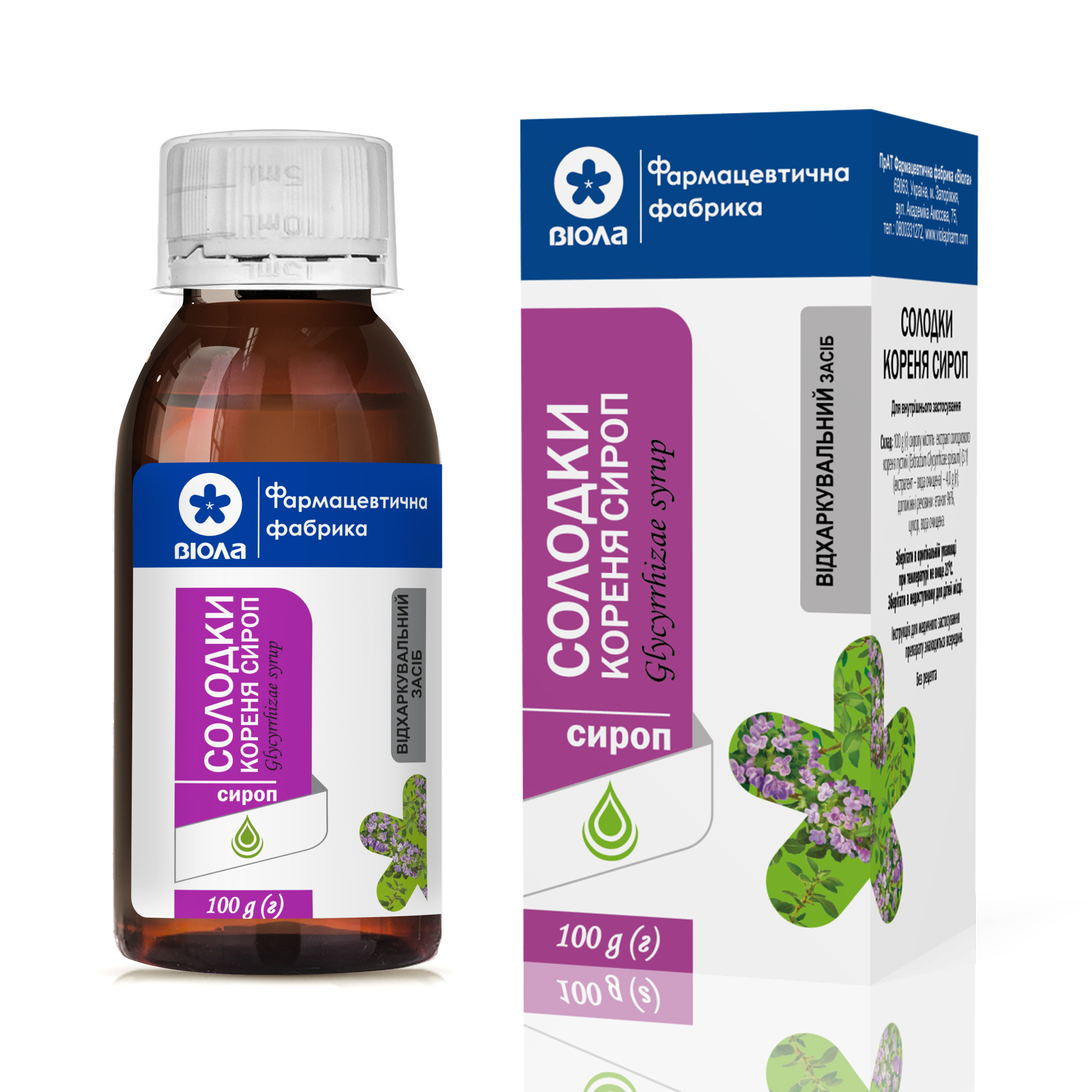


Licorice root syrup 100 ml
In the complex therapy of infectious and inflammatory diseases of the respiratory tract.
The syrup contains sugar, so it cannot be used by diabetics.
Adults and children over 12 years old should use 1 tablespoon (15 ml) of syrup after meals 3-4 times a day.
The duration of the treatment course is determined by the doctor individually for each patient, taking into account the degree of severity and features of the course of the disease, the stability of the achieved therapeutic effect and the tolerability of the drug.
Cases of overdose have been reported with long-term use (more than 4 weeks) and/or taking excessive doses of licorice preparations with such symptoms as fluid retention, hypokalemia, hypertension, heart rhythm disturbances, hypertensive encephalopathy.
Description
Who Licorice Root Syrup is suitable for
A herbal expectorant for use in cases of cough and difficult sputum discharge. Suitable for adults and children from 12 years old as part of complex therapy for infectious and inflammatory diseases of the respiratory tract.
When to choose Licorice Root Syrup
The medicine is used in complex therapy for respiratory tract diseases accompanied by cough and difficult sputum discharge:
- acute and chronic bronchitis;
- tracheobronchitis;
- pneumonia;
- bronchiectatic disease.
The medicine may also be used as an auxiliary agent in chronic hyperacid gastritis.
What problem the medicine solves
Licorice Root Syrup helps ease sputum discharge and supports the respiratory tract during inflammation:
- Expectorant action: glycyrrhizin stimulates the activity of the ciliated epithelium of the trachea and bronchi.
- Secretion support: it enhances the secretory function of the mucous membranes of the upper respiratory tract.
- Antispasmodic action: flavonoid compounds, in particular liquiritoside, affect the smooth muscles of the respiratory tract.
- Anti-inflammatory effect: associated with glycyrrhizic acid, which is formed during the hydrolysis of glycyrrhizin.
Conditions and features of use
- Adults and children from 12 years old should take 1 tablespoon (15 ml) after meals 3–4 times a day.
- The duration of the treatment course is determined individually by the doctor.
- The medicine is not prescribed for children under 12 years of age.
- The syrup contains sugar, so it must not be used by patients with diabetes mellitus.
- The alcohol content in 1 ml of the medicine is not less than 5%.
- During use, one should refrain from driving vehicles and working with potentially dangerous machinery.
Compatibility and comprehensive care
- The medicine should not be used for a long time simultaneously with thiazide and loop diuretics, adrenocorticosteroids, and laxatives due to the risk of electrolyte imbalance.
- Hypokalemia may enhance the effect of cardiac glycosides, antiarrhythmic medicines, and agents that affect heart rhythm.
- When using any other medicines at the same time, you should consult a doctor.
- If rash, itching, swelling, or other adverse reactions occur, use should be stopped and a doctor should be consulted.
Why choose Licorice Root Syrup
- A herbal syrup based on thick licorice root extract.
- Helps with cough accompanied by difficult sputum discharge.
- Has expectorant, antispasmodic, and anti-inflammatory effects.
- Suitable for adults and children from 12 years old.
- Ukrainian manufacturer: PJSC “Pharmaceutical Factory “Viola”.
Composition:
active substance: thick licorice root extract (Extractum Glycyrrhize spissum) (3:1) (extractant – purified water);
100 g of syrup contain licorice root extract (Extractum Glycyrrhize spissum) (3:1) (extractum – purified water) – 4 g;
excipients: ethanol 96%, sugar, purified water.
Medicinal form. Syrup.
The main physical and chemical properties: a thick brown liquid with a specific smell. In the process of storage, precipitation is allowed.
Pharmacotherapeutic group. Means used for coughs and colds. Expectorants. ATX code R05C A.
Pharmacological properties.
Pharmacodynamics.
Licorice roots contain glycyrrhizin, potassium and calcium salts of glycyrrhizic acid, flavone glycosides (liquiritin, liquiritigenin, liquiritoside). The expectorant effect of licorice preparations is related to the content of glycyrrhizin, which stimulates the activity of the ciliated epithelium of the trachea and bronchi, enhances the secretory function of the mucous membranes of the upper respiratory tract.
The antispasmodic effect of the drug on the smooth muscles of the respiratory tract is due to the presence of flavone compounds, among which liquiritoside is the most active, and the anti-inflammatory (corticosteroid-like) effect is due to the presence of glycyrrhizic acid, which is released during the hydrolysis of glycyrrhizin.
Pharmacokinetics.
They did not study.
Clinical characteristics.
Indication.
In the complex therapy of infectious and inflammatory diseases of the respiratory tract, accompanied by difficult sputum discharge and cough (acute and chronic bronchitis, tracheobronchitis, pneumonia, bronchiectasis).
As an auxiliary agent for chronic hyperacid gastritis.
Contraindication.
Hypersensitivity to any components of the drug, diabetes, impaired liver and kidney function, arterial hypertension, hypokalemia, severe obesity.
Interaction with other medicinal products and other types of interactions.
Hypokalemia (as a result of excessive use of licorice root) may be exacerbated by interaction with cardiac glycosides, antiarrhythmic drugs, and drugs that affect heart rhythm (eg, quinidine).
With simultaneous use with drugs that lead to the development of hypokalemia (thiazide and loop diuretics, adrenocorticosteroids and laxatives), there may be a violation of the electrolyte balance. Therefore, you should not use “Licorice root syrup” for a long time at the same time as the medicines listed above.
“Licorice root syrup” can counteract the effects of antihypertensive drugs.
When using any other medicines at the same time, you should consult a doctor.
Features of application.
The syrup contains sugar, so it cannot be used by diabetics.
This medicine contains at least 5 vol. % ethanol (alcohol), i.e. 600 mg/dose, which is equivalent to 15 ml of beer, 6 ml of wine per dose. Harmful for patients suffering from alcoholism. It should be used with caution in children over 12 years of age and patients with epilepsy.
It is not recommended to use the drug for a long time, as it can lead to disturbances in water-salt metabolism, edema.
Simultaneous use with diuretics, cardiac glycosides, corticosteroids, stimulant laxatives or other drugs that can cause electrolyte imbalance is not recommended (see section “Interaction with other drugs and other types of interactions”).
Using during pregnancy or breastfeeding.
The drug is contraindicated during pregnancy, as licorice increases the level of estrogens, as a result of which the hormonal balance is disturbed. Stimulates the activity of the uterus. In large doses, it has an embryotoxic effect. The drug is contraindicated during breastfeeding.
The ability to influence the speed of reaction when driving vehicles or other mechanisms.
During the use of the drug, you should refrain from driving vehicles and working with potentially dangerous mechanisms.
Method of application and dosage.
Adults and children over 12 years old should use 1 tablespoon (15 ml) of syrup after meals 3-4 times a day.
The duration of the treatment course is determined by the doctor individually for each patient, taking into account the degree of severity and features of the course of the disease, the stability of the achieved therapeutic effect and the tolerability of the drug.
Children. The drug should not be prescribed to children under 12 years of age.
Overdose.
Cases of overdose have been reported with long-term use (more than 4 weeks) and/or taking excessive doses of licorice preparations with such symptoms as fluid retention, hypokalemia, hypertension, heart rhythm disturbances, hypertensive encephalopathy. In case of overdose, side effects may increase. The therapy is symptomatic.
Adverse reactions.
With individual hypersensitivity, the development of allergic reactions is possible, including rashes, itching, hyperemia of the skin, swelling.
Long-term use of licorice preparations in excessive doses can cause a violation of the water-electrolyte balance and lead to the formation of edema, the development of hypokalemia; in some cases, an increase in blood pressure, hypokalemic myopathy and myoglobinuria are possible.
In case of occurrence of any undesirable phenomena, the patient must stop using the medicinal product and consult a doctor!
Expiration date. 2 years. Do not use the drug after the expiration date indicated on the package.
Storage conditions. Store in the original packaging at a temperature not higher than 25 o C.
Keep out of the reach of children.
Packaging. 100 g each in glass or polymer bottles without a pack or in a pack with a measuring spoon or measuring cup, or without a measuring device; 200 g each in glass bottles without a pack or in a pack with a measuring spoon or measuring cup, or without a measuring device; 200 g each in polymer bottles with a nozzle or without a nozzle, without a pack or in a pack with a measuring spoon or a measuring cup, or without a measuring device.
Leave category.
Without a prescription.
Producer.
PrJSC Pharmaceutical factory “Viola”.
The location of the manufacturer and its address of the place of business.
Ukraine, 69063, m. Zaporozhye, Academician Amosova, 75.
Instructions
Reviews
Articles
-
 TOP antiviral, anti-inflammatory and antimicrobial herbs
Oregano is a herbaceous plant in the Lamiaceae family that is known for its antiviral and anti-inflammatory properties.
Read more » -
 Licorice root: benefits and contraindications
Learn about all the beneficial properties of licorice root, its use in medicine.
Read more »
Effects on the body.
Useful properties. Contraindication.