
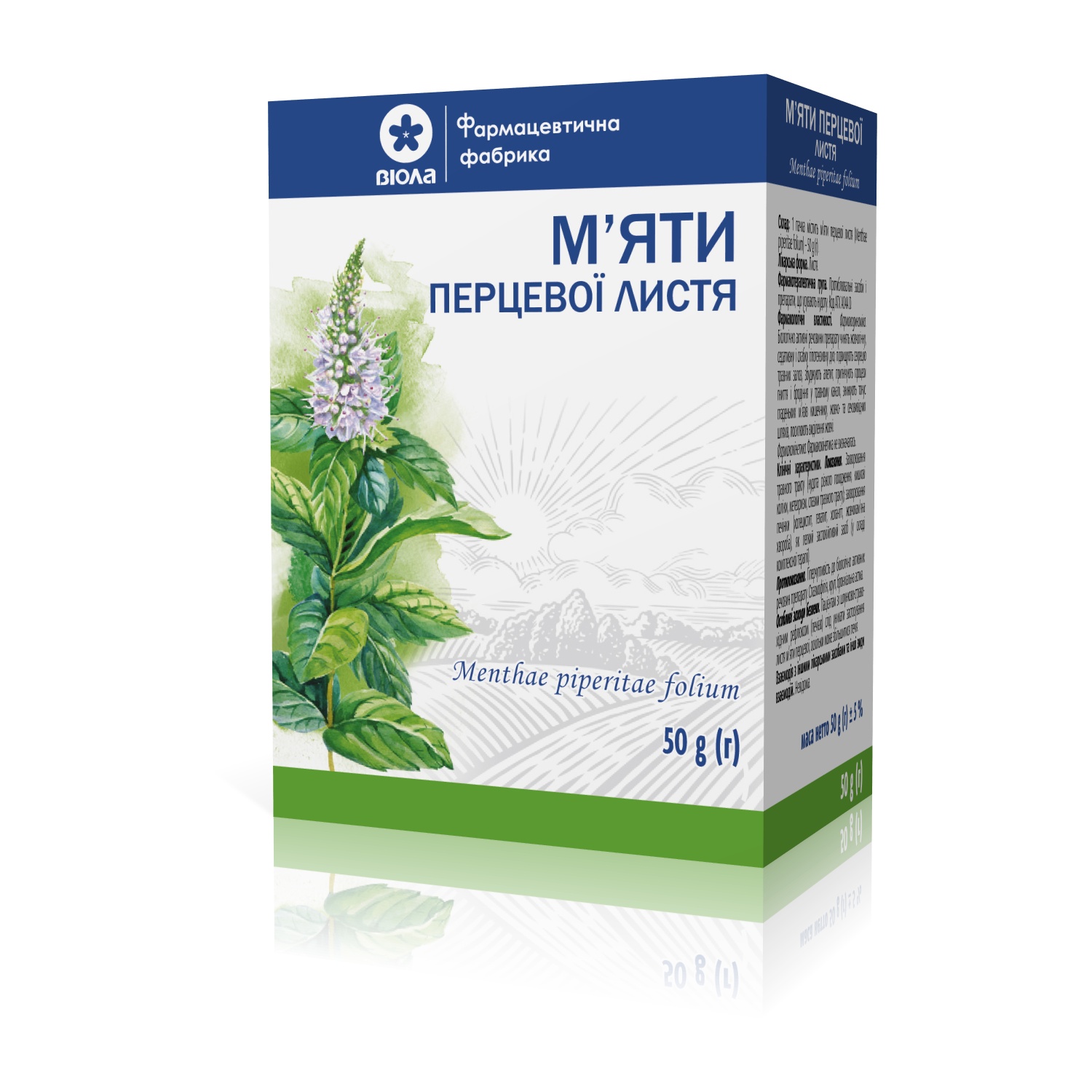
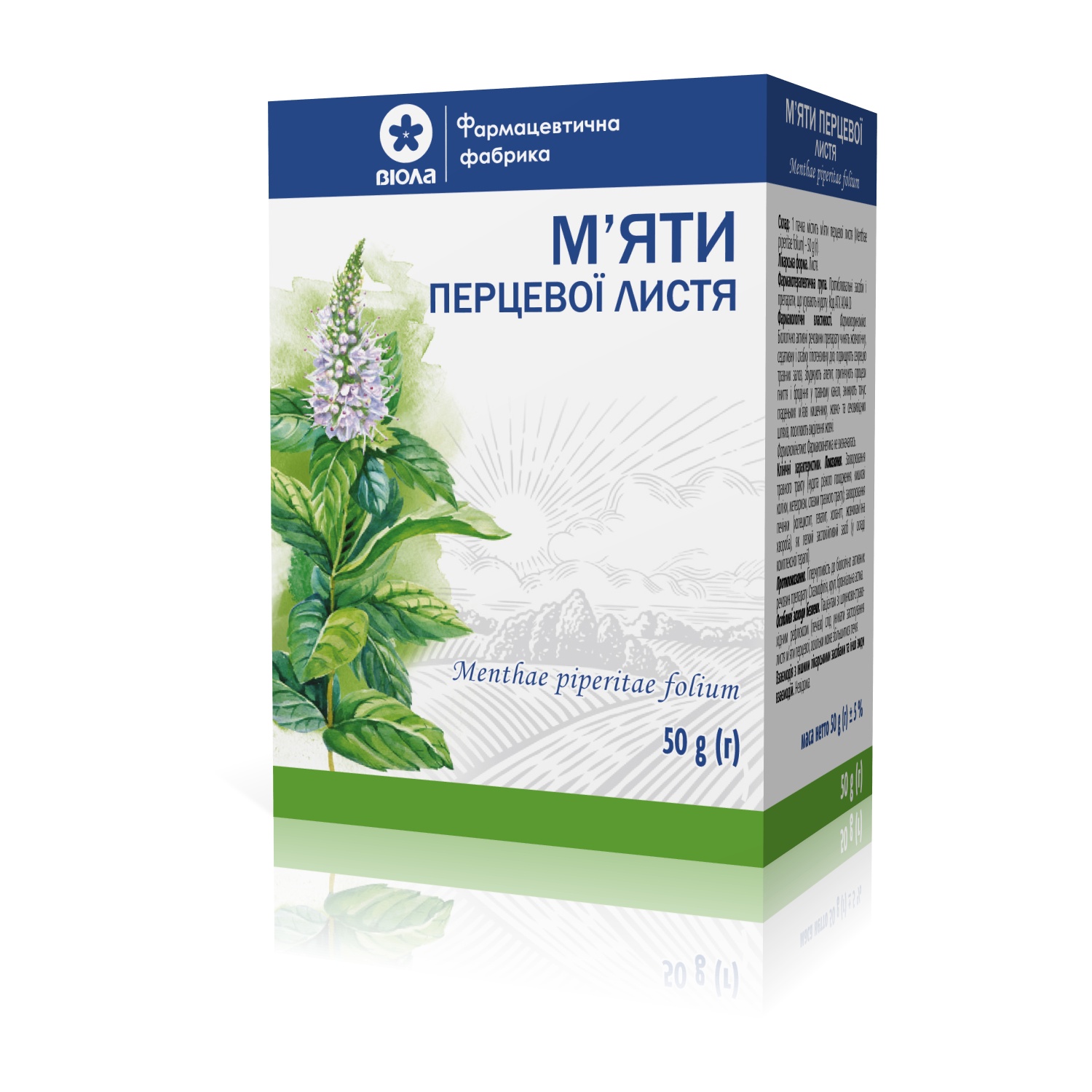


Peppermint leaves 50 g
Diseases of the digestive tract ; liver disease, as a mild sedative (as part of complex therapy)
Adults and children from 3 years old
15 minutes before meals
adults and children over 3 years old
*see instructions
Determined by the doctor individually
Hypersensitivity to the biologically active substances of the drug. Spasmophilia, croup, bronchial asthma
Description
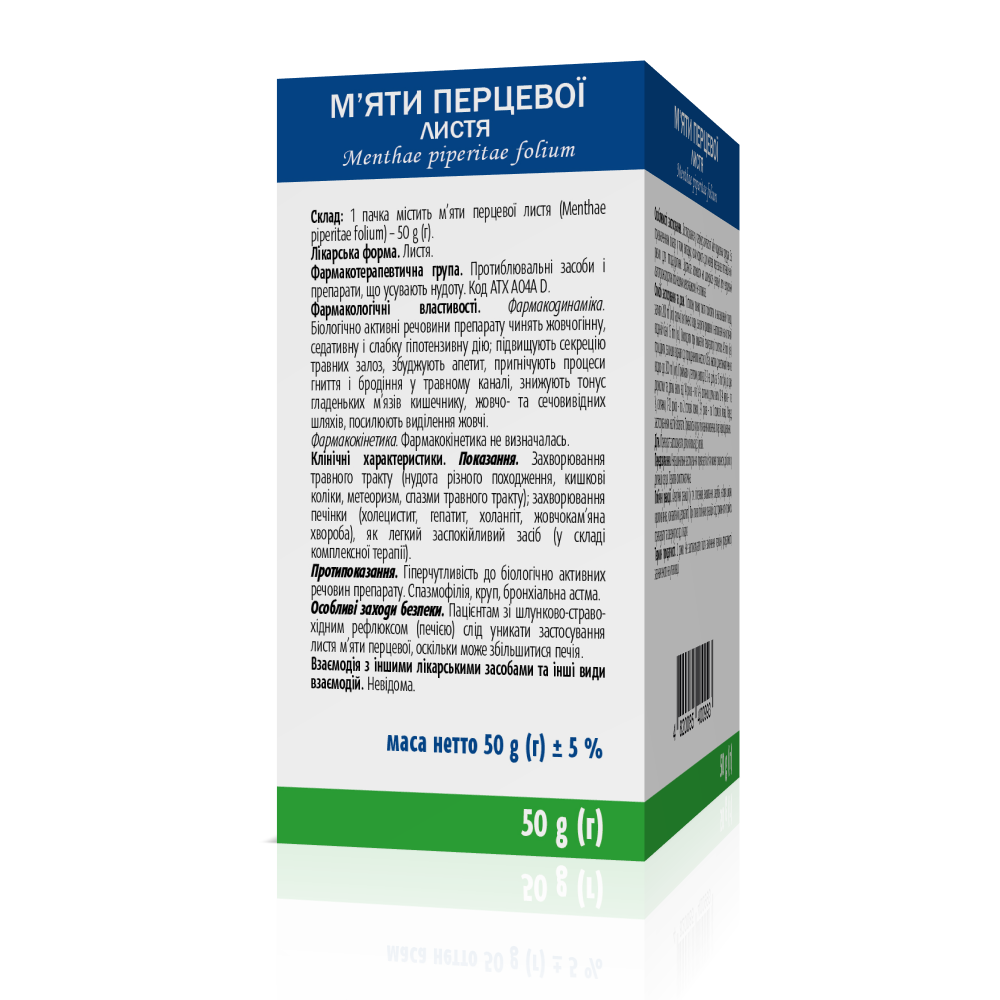
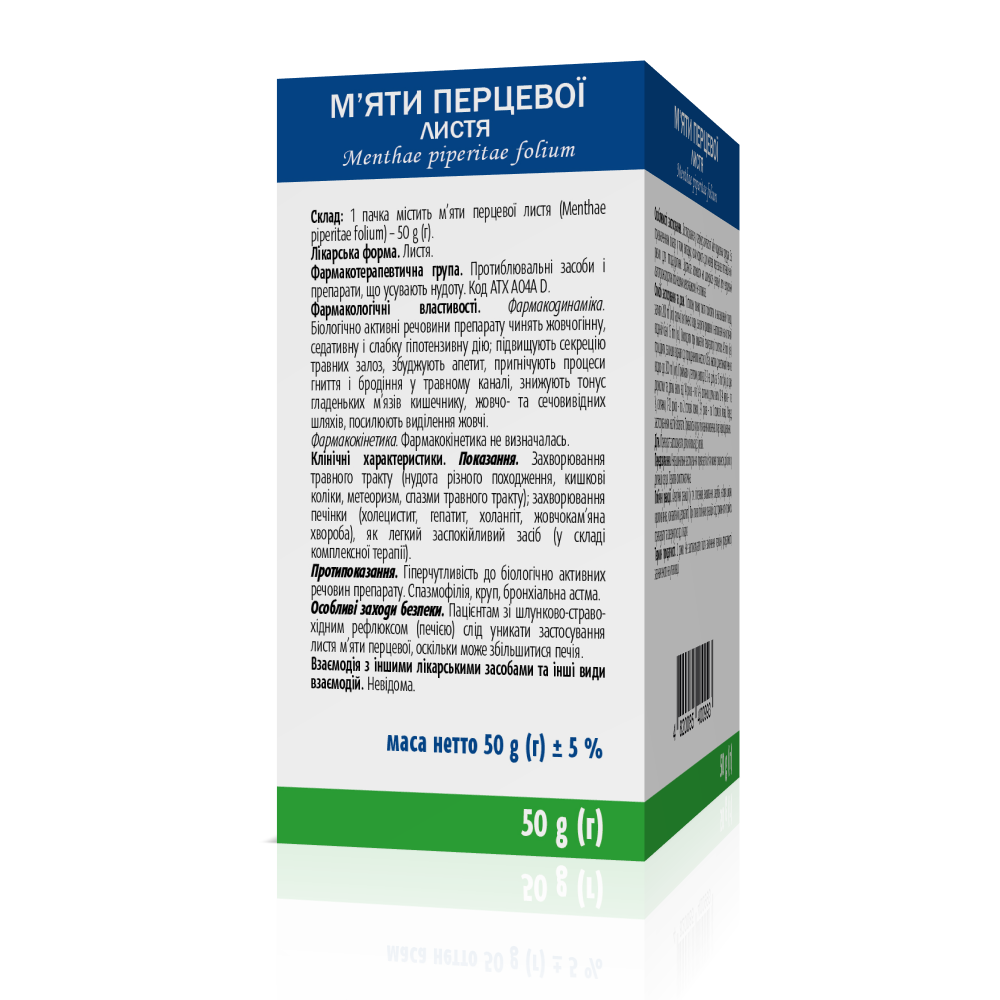
Composition:
active ingredient: peppermint leaves (Menthae piperitae folium);
1 pack contains peppermint leaves (Menthae piperitae folium) – 50 g; 1 filter package contains peppermint leaves (Menthae piperitae folium) – 1.5 g.
Medicinal form. Leaves.
Basic physical and chemical properties:
crushed raw materials: pieces of leaves of various shapes, mixed with flowers and buds. The edge of the leaf is serrate with uneven sharp teeth; The surface is bare, only from below the veins under the magnifying glass there are liquid, pressed hairs and over the entire surface of the leaf – shiny golden-yellow or darker glands. The color of the leaves is from light green to dark green. The smell is strong, pleasant. The taste is a little burning, chilly;
The powder is large: pieces of leaves of different shapes, with an admixture of flowers and buds passing through a sieve with a hole diameter of 2 mm. The edge of the leaf is serrate with uneven sharp teeth; The surface is bare, only from below the veins under the magnifying glass there are liquid, pressed hairs and over the entire surface of the leaf – shiny golden-yellow or darker glands. The color of the leaves is from light green to dark green. The smell is strong, pleasant. The taste is a little burning, cold.
Pharmacotherapeutic group.
Antiemetic drugs and drugs that eliminate nausea. ATH code A04A D.
Pharmacological properties.
Pharmacodynamics.
Biologically active substances of the drug have a choleretic, sedative and weak hypotensive effect; increase the secretion of digestive glands, stimulate appetite, inhibit the processes of decay and fermentation in the digestive canal, reduce the tone of the smooth muscles of the intestine, biliary and urinary tract, increase the secretion of bile.
Pharmacokinetics.
Pharmacokinetics was not determined.
Clinical characteristics.
Indication.
Diseases of the digestive tract (nausea of various origins, intestinal colic, flatulence, spasms of the digestive tract); liver diseases (cholecystitis, hepatitis, cholangitis, cholelithiasis), as a mild sedative (as part of complex therapy).
Contraindication.
Hypersensitivity to the biologically active substances of the drug. Spasmophilia, croup, bronchial asthma.
Special security measures.
Patients with gastroesophageal reflux (heartburn) should avoid using peppermint leaves, as heartburn may increase.
Interaction with other medicinal products and other types of interactions. Unknown.
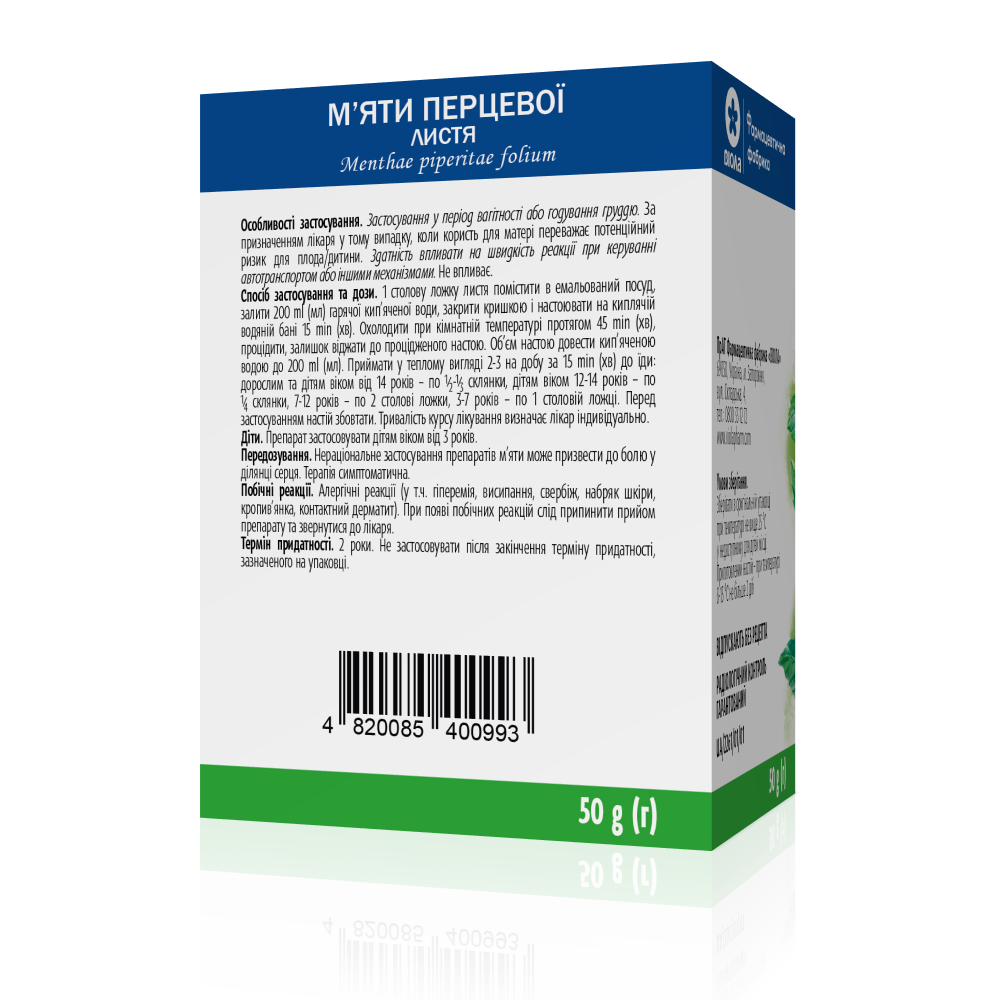
Features of application.
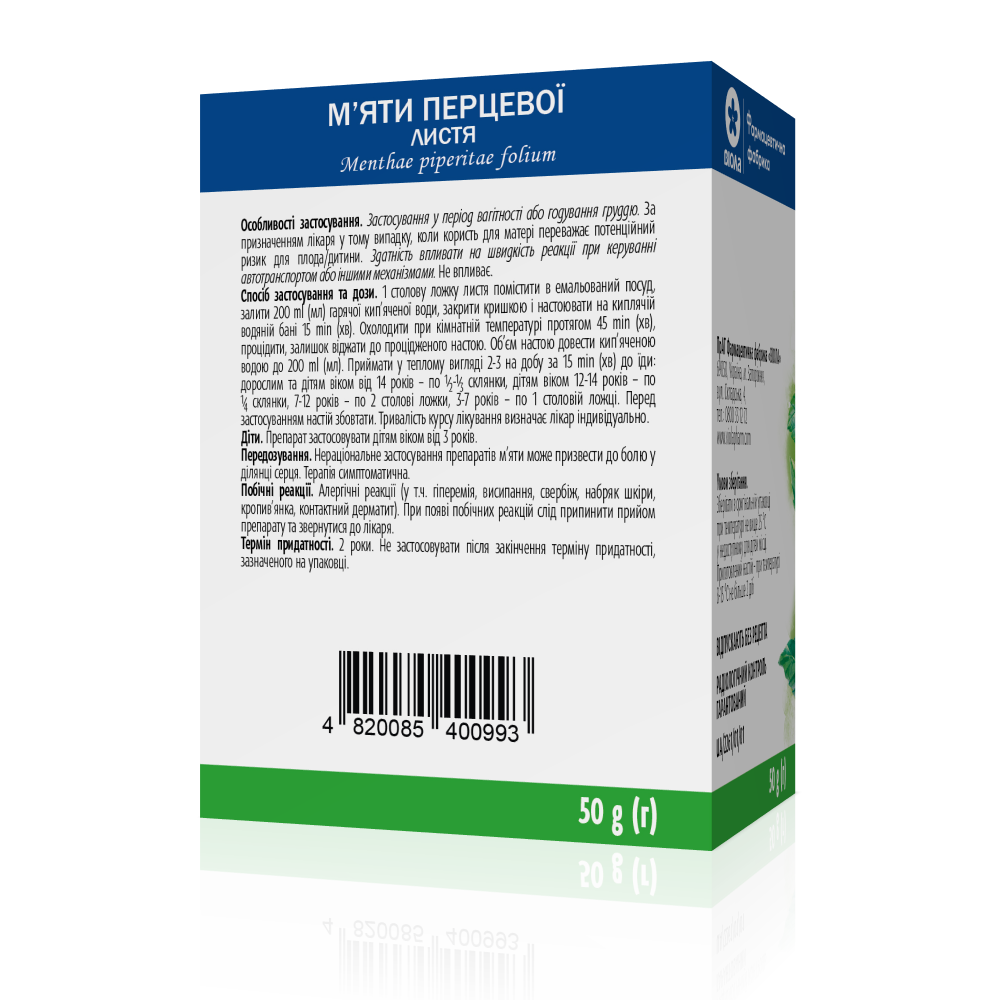
Using during pregnancy or breastfeeding. As prescribed by a doctor in the event that the benefits to the mother outweigh the potential risk to the fetus / baby.
The ability to influence the speed of reaction when driving vehicles or other mechanisms. Does not affect.
Method of application and dosage.
Place 1 tablespoon of leaves in an enamel bowl, pour 200 ml of hot boiled water, close the lid and insist on a boiling water bath for 15 minutes. Cool at room temperature for 45 minutes, strain, squeeze the rest to the filtered infusion. Bring the volume of infusion to 200 ml with boiled water.
Take in the form of heat 2-3 times a day for 15 minutes before meals: adults and children over 14 years old – 1/2-1/3 cup, children aged 12-14 years – 1/4 cup, 7-12 years old – 2 tablespoons, 3-7 years old – 1 tablespoon. Shake the infusion before use.
Place 2 filter bags in a glass or enamel container, pour 200 ml of boiling water, close and infuse for 15 minutes. Take in the form of heat 3-4 times a day 15 minutes before meals: adults and children over 14 years old – 1 glass, children 12-14 years old – 1/2 cup, 7-12 years old – 1/3 cup, 3-7 years old 2 tablespoons.
The duration of treatment is determined by the doctor individually.
Children.
The drug should be used in children from 3 years of age.
Overdose.
Irrational use of mint preparations can lead to pain in the heart area. The therapy is symptomatic.
Adverse reactions.
Allergic reactions (including hyperemia, rashes, itching, swelling of the skin, urticaria, contact dermatitis). If adverse reactions occur, you should stop taking the drug and consult a doctor.
Expiration date. 2 years.
Do not use the drug after the expiration date indicated on the package.
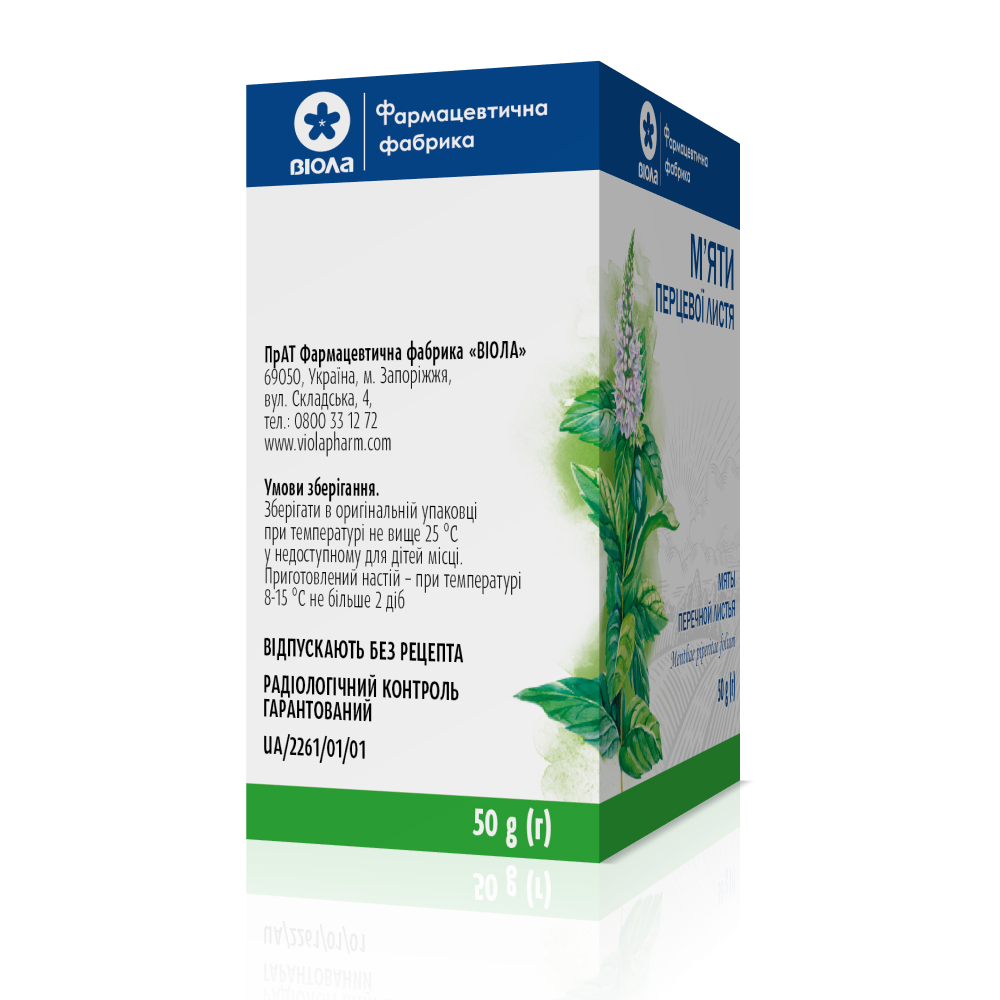
Storage conditions.
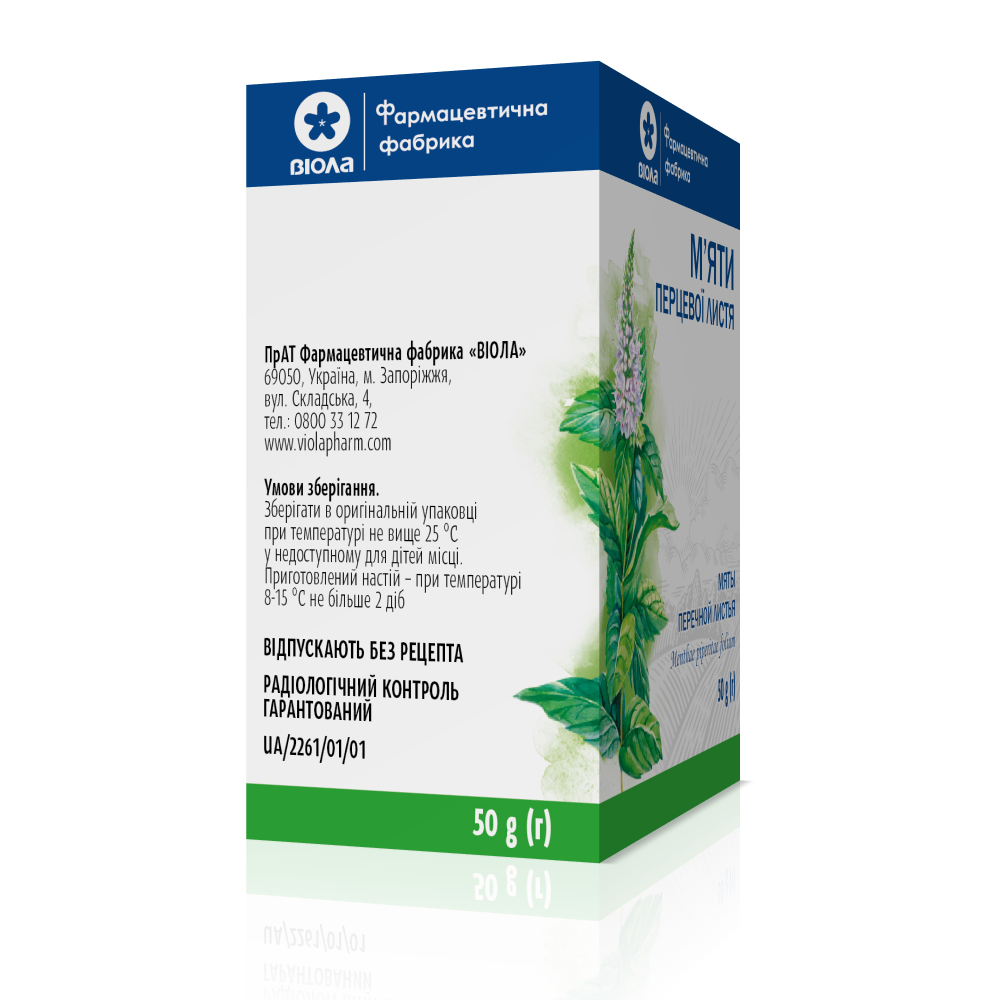
Store in the original packaging at a temperature not exceeding 25 °C out of the reach of children. Prepared infusion – at a temperature of 8-15 °C for no more than 2 days.
Packaging.
50 g in packs with an internal package, 1.5 g in filter bags in package No. 20.
Leave category. Without a prescription.
Producer. PrJSC Pharmaceutical factory “Viola”.
The location of the manufacturer and its address of the place of business.
69050,Ukraine, m. Zaporozhye, Skladska, 4.
The applicant PrJSC Pharmaceutical factory “Viola”.
Location of the applicant.
69063, Ukraine, Zaporozhye, Akademika Amosova, 75.
Instructions
Reviews
Articles
-
 Herbs to calm the nerves: what are and how to apply
The life of a modern person is oversaturated with stressful situations, and disorders of the nervous system in the future often become a source of other diseases. The cardiovascular system suffers, sleep is disturbed.
Read more » -
 Effective sedatives
Сейчас каждый человек испытывает чрезмерное нервное напряжение. Из-за постоянных стрессов и переживаний трудно справиться с эмоциями. Нормализовать работу нервной системы помогают успокаивающие препараты, но не спешите покупать сильно действующее лекарство.
Read more » -
 TOP antiviral, anti-inflammatory and antimicrobial herbs
Oregano is a herbaceous plant in the Lamiaceae family that is known for its antiviral and anti-inflammatory properties.
Read more » -
 Peppermint: medicinal properties, description, benefits, indications, use in medicine
Learn about the medicinal properties of peppermint, its health benefits, contraindications, and effective ways to use it in medicine.
Read more » -
 Winter herbs for the prevention of colds: plants that work
The winter season is a test for immunity. Cold air, temperature changes, dryness in rooms and vitamin deficiencies make the body more vulnerable. That is why pre-thought-out prevention of colds helps to endure the winter more calmly and fall out of the usual rhythm of life less often. Winter grasses can be a mild support, especially as part of comprehensive measures.
Read more » -
 Bloating and gas: causes and how to get rid of discomfort
Bloating is a common symptom that can occur after eating, overeating, dietary changes, stress, or indigestion. It is often accompanied by a feeling of heaviness, fullness, rumbling, discomfort and increased gas formation.
Read more »