
- What bloating and flatulence are
- The main symptoms of bloating
- Why bloating occurs: the main causes
- How to get rid of bloating at home
- What can you drink for bloating
- Diet for bloating: what you can eat and what is better to limit
- What not to do with bloating
- When bloating can be dangerous
- Bloating in children: what is important to know
- Prevention of bloating
- Conclusion
- Frequently Asked Questions
- Why does my stomach bloat in the evening?
- Why does bloating occur before menstruation?
- Does dill help with bloating?
- Is it possible to drink peppermint for bloating, and when is it better not to use it?
- Does chamomile help with stomach discomfort?
- Can children drink herbal teas for bloating?
- Why does bloating occur?
- How to get rid of bloating at home?
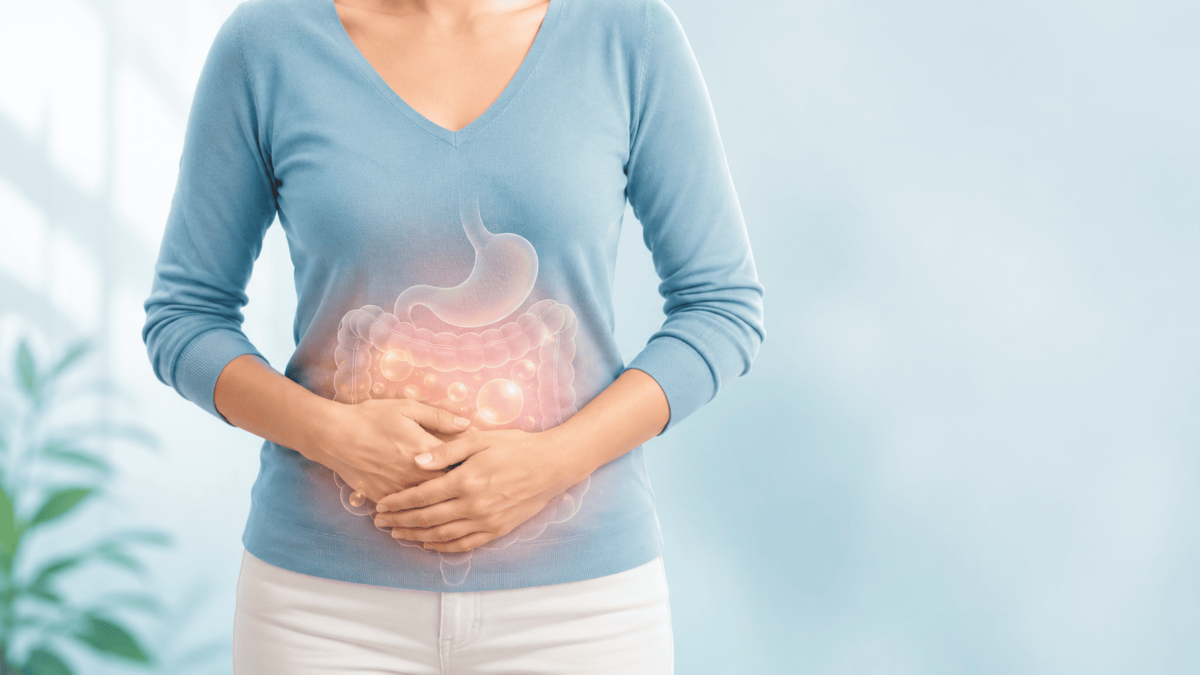
Bloating is a common symptom that can occur after eating, overeating, dietary changes, stress, or indigestion. It is often accompanied by a feeling of heaviness, fullness, rumbling, discomfort, and increased gas formation.
Flatulence can be triggered by legumes, cabbage, dairy products, carbonated drinks, sweets, fresh pastries, and other foods. But the cause is not always nutrition alone: intestinal function is influenced by microflora, digestive tract motility, stress, hormonal changes, and diseases of the gastrointestinal tract.
In this article, we will analyze why bloating occurs, how to reduce discomfort at home, which foods can increase gas formation, what you can drink for flatulence, and when you should see a doctor.
The material is for informational purposes only and does not replace a doctor’s consultation. If bloating recurs regularly or is accompanied by pain, vomiting, blood in the stool, weight loss, fever, or changes in bowel movements, it is necessary to consult a specialist.
What bloating and flatulence are
Bloating is a feeling of fullness, pressure, or distension in the abdomen. A person may notice that the abdomen becomes larger, clothes feel tighter, heaviness appears after eating, or there is a desire to unfasten the belt. Sometimes bloating is accompanied by rumbling, spasms, belching, or frequent gas.
Flatulence is an excessive accumulation of gas in the digestive tract or increased gas passing. Gas in the intestines is formed naturally: some enters the body when air is swallowed, and some appears during food digestion and fermentation of food components by intestinal bacteria.
Gas in the digestive tract itself is not dangerous. It is a normal part of digestion. The problem occurs when gas becomes excessive, bloating interferes with daily life, recurs almost every day, or is combined with other symptoms.
It is important to distinguish between temporary discomfort after eating and a condition that may be associated with medical conditions. If the abdomen swells after a large portion of food, a carbonated drink, or a product that is poorly tolerated, the symptom may disappear after dietary adjustment. If bloating occurs regardless of nutrition, intensifies, or is accompanied by alarming signs, a doctor’s consultation is required.
The main symptoms of bloating
Bloating can manifest itself in different ways. For some, it is only a slight feeling of heaviness after eating, while for others, it is pronounced fullness, rumbling, and spasms. Most often, people describe the following symptoms:
- feeling of fullness in the abdomen;
- visible increase in abdominal volume;
- rumbling, gurgling, increased gas formation;
- belching or frequent passing of gas;
- discomfort after certain foods;
- heaviness after eating;
- cramps or short-term pain;
- unstable bowel movements — a tendency to constipation or diarrhea.
Sometimes bloating gets worse in the evening. This may be due to gas accumulation during the day, long intervals between meals, overeating in the evening, insufficient activity, or foods that ferment for a long time in the intestines.
The simplest guideline is the time when symptoms appear. If the abdomen bloats after 30 minutes, a few hours, or in the evening after certain foods, the cause may be related to the diet. Discomfort often recurs after milk, legumes, fresh pastries, large amounts of fruit, sweets, or carbonated drinks.
Another clue is recurrence. If symptoms occur after the same foods or their combinations, it is worth temporarily reducing their amount and observing the reaction. It is not necessary to completely exclude large groups of foods without need, because this can make the diet poorer.
Why bloating occurs: the main causes
Nutrition and overeating
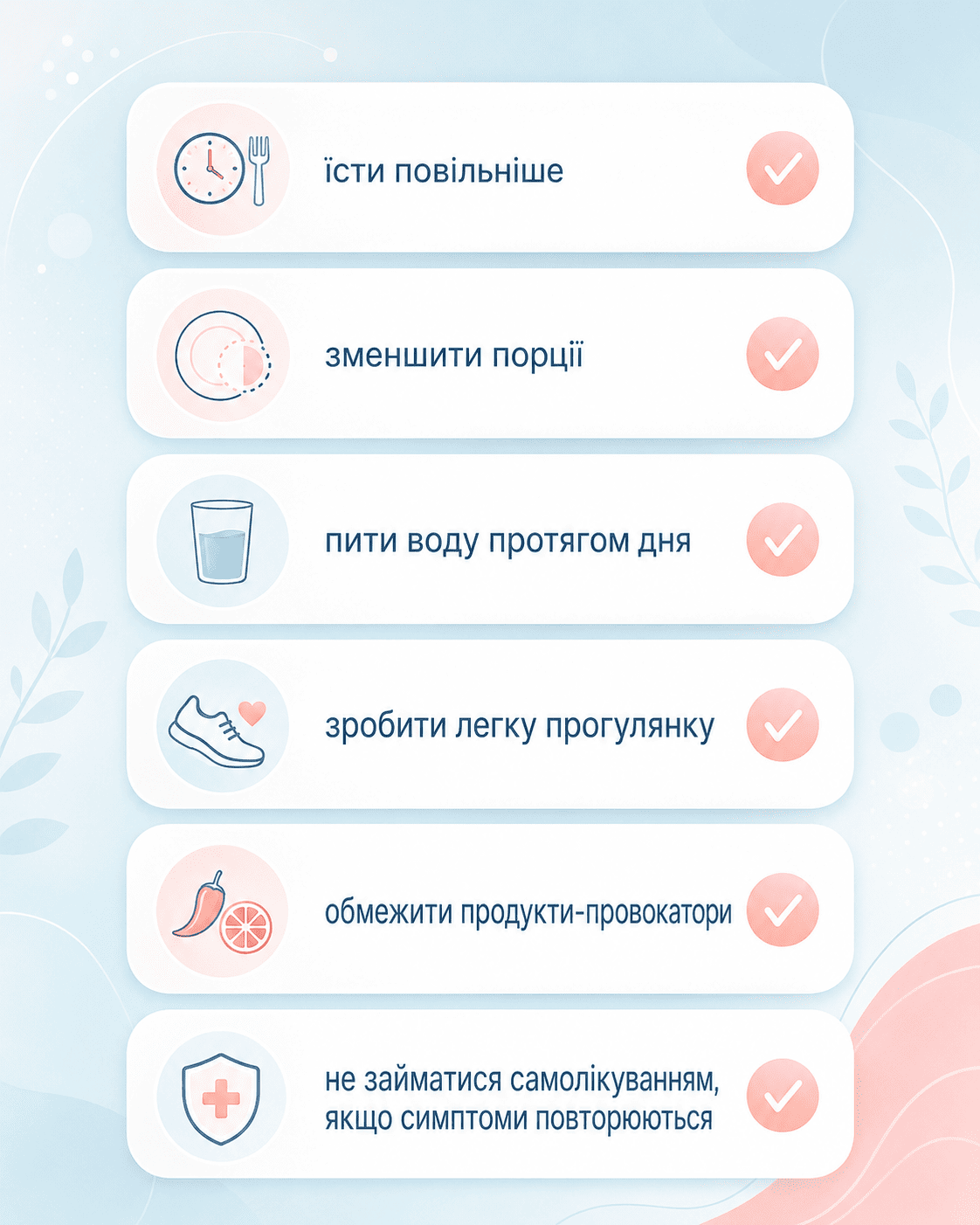
Overeating is one of the most common causes of bloating. A large portion of food stretches the stomach, slows down digestion, and creates a feeling of heaviness. If the food is fatty, fried, or very sweet, it can remain in the digestive tract longer, and discomfort may increase.
Bloating can also occur if a person eats in a hurry. During a quick meal, it is easier to swallow air, chew food poorly, and not notice the moment of satiety. As a result, the stomach receives more food and air than it needs.
Irregular eating also matters. When a person does not eat for a long time and then consumes a large portion, it is more difficult for the digestive system to cope with the load. This is often manifested by evening bloating, rumbling, and a feeling of fullness.
Foods that cause gas
Some foods are more likely to cause gas because they are high in fiber, fermentable carbohydrates, lactose, fructose, or sweeteners. They are not always fully digested in the small intestine and can reach the colon, where they are fermented by bacteria. During fermentation, gases are formed.
This does not mean that such foods are harmful. On the contrary, many of them are healthy: legumes, vegetables, fruits, and whole grains contain nutrients and fiber. But if the intestines are sensitive, the portion is too large, or the product is poorly tolerated, bloating may appear.
Separately, it is worth mentioning FODMAPs, a group of short-chain carbohydrates that can be poorly absorbed in the small intestine and actively fermented by bacteria. In people with irritable bowel syndrome or hypersensitivity of the digestive tract, such foods can increase bloating, pain, and gas.
Food intolerance
Food intolerance is a condition in which it is difficult for the body to digest a certain component of food. One common example is lactose intolerance. If there is not enough lactase enzyme, milk sugar is not broken down completely and can cause bloating, rumbling, gas, diarrhea, or abdominal pain.
Another option is sensitivity to fructose, certain sweeteners, or foods high in fermentable carbohydrates. The reaction can be individual: one product may be well tolerated in small quantities but cause discomfort in a large portion.
You should not diagnose yourself based only on symptoms. If bloating recurs after dairy products, fruit, bread, sweets, or other food groups, it is best to discuss this with your doctor. A specialist will help determine whether examinations, temporary restriction of certain foods, or a different approach are needed.
Disorders of the intestinal microflora
The intestinal microflora is involved in digestion, fermentation of dietary fiber, the formation of some nutrients, and maintenance of the normal functioning of the intestinal barrier. When the balance of microorganisms changes, digestion can become less comfortable.
Disruption of the microflora can occur after antibiotics, intestinal infections, sudden changes in diet, chronic stress, or diseases of the digestive system. It may be accompanied by bloating, unstable bowel movements, rumbling, and discomfort after eating.
At the same time, bloating alone does not prove that there is dysbiosis or another microflora disorder. This is just one of the possible factors. If symptoms persist for a long time, it is important not to treat the “microflora” at random, but to find out the cause together with your doctor.
Stress and nervous tension
The intestines are very sensitive to nervous tension. Stress can alter digestive tract motility, affect appetite, increase spasms, and increase sensitivity to a normal gas volume. Therefore, sometimes a person experiences severe bloating even when the amount of gas is not excessive.
During stress, eating behavior also changes. Some people eat faster, overeat, choose sweet or fatty foods more often, skip meals, or drink more coffee. All this can increase abdominal discomfort.
If bloating appears before important events, during overwork, or during emotional stress, you should pay attention not only to the diet, but also to sleep patterns, rest, physical activity, and stress reduction skills.
Hormonal changes
In women, bloating may increase before menstruation or in the first days of the cycle. This is due to hormonal fluctuations, fluid retention, changes in intestinal motility, and increased sensitivity to discomfort.
Such bloating is often accompanied by a feeling of heaviness, a change in appetite, pulling sensations in the lower abdomen, and unstable bowel movements. If the symptoms are mild and recur cyclically, they may be part of premenstrual syndrome.
But severe pain, a sharp increase in the abdomen, unusual discharge, high fever, or symptoms that have not occurred before require a doctor’s consultation. Do not attribute any discomfort to hormones alone.
Diseases of the gastrointestinal tract
Bloating can be a symptom of diseases of the digestive system. It can occur with irritable bowel syndrome, gastritis, gallbladder diseases, pancreatic disorders, inflammatory bowel disease, constipation, intestinal infections, celiac disease, or other conditions.
It is especially important to see a doctor if bloating is combined with pain, vomiting, diarrhea or constipation, blood in the stool, weight loss, fever, anemia, nocturnal symptoms, or a sharp change in the nature of the stool.
In such cases, home methods can temporarily relieve symptoms, but they do not eliminate the cause. The doctor can prescribe an examination, evaluate the diet, medications, and accompanying symptoms, and choose treatment.
How to get rid of bloating at home
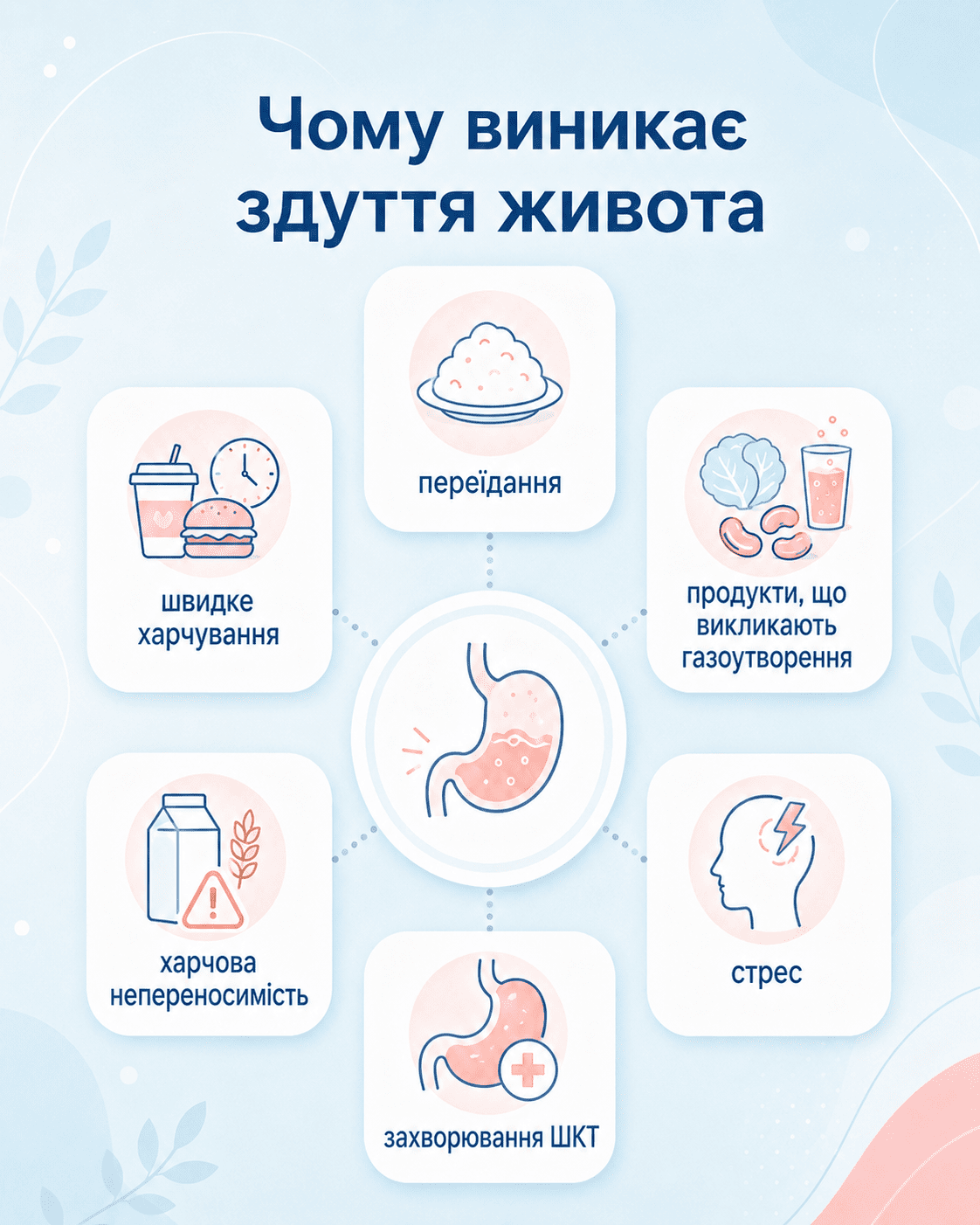
Eat more slowly and in smaller portions
Slow eating helps you chew food better, swallow less air, and feel full in time. It is worth eating without haste, avoiding overly active conversations during meals, and not washing food down with large amounts of carbonated drinks.
Smaller portions may be helpful if bloating occurs after large meals. Sometimes it is enough not to change the entire diet, but to reduce the portion size, especially in the evening. If necessary, you can switch to a more regular routine — 3 main meals and light snacks as needed.
Temporarily limit trigger foods
If certain foods are suspected of causing bloating, they can be temporarily limited while monitoring your well-being. It is important to do this gradually and not exclude half of the diet at once.
A more detailed list of foods that often provoke bloating is given below in the section “Diet for bloating.” This is where it is convenient to check the diet and understand which food groups may be individual triggers.
Drink enough water
Water is needed for normal digestion and bowel function. If there is not enough fluid, the tendency to constipation may increase, along with bloating, heaviness, and a feeling of incomplete bowel movements.
At the same time, you should not try to “relieve” bloating by drinking a lot of water at once. It is better to drink evenly throughout the day. It is also worth limiting carbonated drinks if they provoke belching, fullness, or increased gas formation.
Light activity after eating
A short walk after eating can support natural intestinal motility and help reduce the feeling of heaviness. It does not have to be an intense workout. Calm walking, light movement, or normal household activity is enough.
Sitting for a long time after a large portion of food can increase discomfort. If the work is sedentary, it is useful to take short breaks, get up, move, and not stay in the same position for many hours in a row.
Abdominal massage
A light abdominal massage can help with a feeling of fullness, especially if bloating is associated with gas retention or constipation. The movements should be gentle, without strong pressure, in the direction of the natural movement of the intestines.
Do not massage in case of sharp pain, suspected acute condition, fever, vomiting, blood in the stool, or if touching the abdomen worsens the pain. In such situations, medical attention is required.
Warm drinks
Warm drinks can reduce the sensation of cramping and create a feeling of comfort in the stomach. This can be warm water or a herbal infusion, if it suits the person and there are no contraindications.
It is important not to treat herbal drinks as a universal treatment. They can be an auxiliary way to support digestion, but they do not replace a doctor’s consultation if symptoms recur or are accompanied by warning signs.
What to do with bloating at home
What can you drink for bloating
Fragrant dill fruits for flatulence
For flatulence, herbal remedies with carminative action can be used, in particular fragrant dill fruits. This remedy is used for excessive gas formation when bloating is associated with gas accumulation and requires gentle digestive support.


Fragrant dill fruits may be appropriate when bloating is associated with excessive gas formation and gentle plant-based support is needed. But it is important not to expect such a remedy to “quickly cure” any bloating. If the cause is food intolerance, a gastrointestinal disease, or another condition, an integrated approach is required.
Before using fragrant dill fruits, it is important to read the instructions, take into account contraindications, and use the product according to the instructions. The dosage and duration of use should not be determined independently, especially for children, pregnant women, breastfeeding women, or people with chronic diseases.
Peppermint leaves for spasms and discomfort
Peppermint leaves can be used as a herbal remedy in comprehensive support of the digestive tract, in particular for flatulence, intestinal colic, and cramps. In the context of bloating, peppermint is appropriate primarily when discomfort is combined with spastic sensations.
At the same time, peppermint is not suitable for everyone. People with heartburn or gastroesophageal reflux should use it with caution, as peppermint can aggravate heartburn. If sour belching, a burning sensation behind the sternum, or an unpleasant sensation in the esophagus appears after a peppermint drink, it is better to stop using it and consult a doctor.
Before using peppermint leaves, you need to read the instructions and take contraindications into account. Peppermint should not be recommended to everyone: the choice of herbal remedy depends on symptoms, concomitant diseases, age, and individual tolerance.
Chamomile flowers as an alternative herbal tea for the stomach
If you need a mild herbal drink to support digestion, you can consider chamomile flowers. They can be mentioned as an alternative herbal tea for the stomach, but not as a universal remedy for all causes of bloating.
Chamomile flowers can be used to support digestion, but they are not a substitute for treatment if bloating is associated with gastrointestinal disease or is accompanied by alarming symptoms. In such cases, it is important not to limit yourself to home remedies, but to consult a doctor.
Before using chamomile flowers, you should read the instructions and take contraindications into account. Chamomile infusion can be part of home support for mild discomfort, but it is not a substitute for treatment if bloating is related to a disease or accompanied by dangerous symptoms.
Why you should not self-medicate
Self-medication for bloating is dangerous because you can suppress the symptom for a long time, but fail to notice the true cause. For example, bloating can be associated not only with food, but also with constipation, inflammation, gallbladder dysfunction, enzyme deficiency, intestinal infection, or other conditions.
You should not take several medicines at the same time on your own, exceed the recommended doses, use laxatives for a long time, or completely exclude large food groups without consultation. Such actions can worsen the condition or complicate diagnosis.
If bloating recurs, it is best to consult a doctor and find out the cause. This is especially important for children, older adults, pregnant women, patients with chronic diseases, and those who have new or unusual symptoms.
Diet for bloating: what you can eat and what is better to limit
A bloating diet does not mean a strict ban on all foods that can cause gas. The task is different — to find individual triggers, reduce portions of foods that are difficult to digest, and make meals more regular.
The same product can affect different people in different ways. For example, someone tolerates yogurt well but does not react well to milk. A small amount of stewed cabbage may be suitable for one person, while raw cabbage salads cause bloating in another. Therefore, it is important to observe your own reaction.
Foods that often provoke bloating
| Group | Examples |
| Legumes | beans, peas, lentils |
| Cabbage | cabbage, broccoli, cauliflower |
| Dairy products | milk, cream, ice cream in case of lactose intolerance |
| Baked goods | fresh yeast pastries |
| Drinks | carbonated drinks, beer, kvass |
| Fruit | apples, pears, grapes |
| Sweets | foods with a lot of sugar or sweeteners |
These foods do not have to be eliminated forever. It is often enough to reduce the portion, change the cooking method, or avoid combining several potential triggers in one meal.
For example, legumes can be better tolerated after soaking and prolonged cooking, vegetables in stewed or baked form, and dairy products in fermented form if a person tolerates them better. But if even small portions regularly cause symptoms, it is worth discussing this with your doctor.
What can be better tolerated
With a tendency to bloating, simple meals without excess fat, sugar, and carbonated drinks are often better tolerated. These can include cereals, lean protein foods, soups, and stewed or baked vegetables.
Not only the product itself is important, but also the portion size and method of preparation. Even healthy foods can cause discomfort if there is too much of them or if they are combined with other trigger foods.
Food diary
A food diary helps you understand which foods or habits can aggravate bloating. It should record what exactly you ate and drank, when the symptoms appeared, how severe they were, and whether there was pain, belching, gas, constipation, or diarrhea.
It is enough to keep a diary for 1–2 weeks. If bloating recurs frequently, these notes can be shown to the doctor — they will help identify possible causes of discomfort more quickly.
What not to do with bloating
With bloating, you should not immediately go on a strict diet. Abruptly excluding a large number of foods can lead to a deficiency of fiber, vitamins, and minerals, and make the diet monotonous. It is better to gradually identify individual triggers.
You should not constantly take laxatives without a doctor’s prescription. If bloating is associated with constipation, it is important to find out its cause, not just stimulate bowel movements. Improper or prolonged use of laxatives can impair bowel function.
Do not ignore recurring symptoms. If bloating has become regular, the nature of the stool has changed, or pain or discomfort affects daily life, a specialist consultation is required.
Also, you should not take antibiotics, enzyme preparations, sorbents, choleretic drugs, or combinations of medicines “just in case” on your own. Even over-the-counter remedies have limitations, and the wrong choice may not help or may cause harm.
When bloating can be dangerous
Bloating requires special attention if it is severe, does not go away, intensifies, or is accompanied by other symptoms. A doctor should be consulted if you have:
- severe or increasing abdominal pain;
- nausea or vomiting;
- blood in the stool;
- prolonged diarrhea or constipation;
- drastic weight loss without explanation;
- fever;
- constant weakness;
- anemia;
- inability to pass gas or have a bowel movement;
- a sharp change in the nature of the stool;
- bloating that appeared for the first time and does not go away.
Such symptoms do not necessarily mean that there is a serious illness, but they need to be checked. It is better to seek help in time than to try to cope on your own for a long time.
People with chronic diseases of the gastrointestinal tract, those who have had abdominal surgery, pregnant women, children, and older adults need to be especially careful. In these groups, it is best to discuss any new or severe symptoms with a doctor.
Bloating in children: what is important to know
In children, bloating can occur due to immaturity of the digestive system, dietary changes, overeating, swallowing air, constipation, intestinal infections, or intolerance to certain foods. In infants and young children, it is more difficult for parents to assess the symptoms, so it is important to pay attention to the child’s general condition.
If the child is active, eats normally, and does not have fever, vomiting, diarrhea, severe pain, or other disturbing symptoms, bloating may be temporary. But if the child cries, pulls their legs up, refuses to eat, vomits, has blood in the stool, has a fever, or the abdomen is sharply tense, medical attention is needed.
Herbal teas and herbal remedies should not be given to children without consulting a pediatrician. Even if the remedy is herbal, it may have age restrictions, contraindications, and a risk of allergic reaction.
Prevention of bloating
To reduce the risk of bloating, you should eat slowly, chew your food well, avoid overeating, and avoid making dinner the heaviest meal of the day. It is also advisable to limit carbonated drinks and monitor which foods most often provoke discomfort.
The diet should remain varied. If legumes, cabbage, dairy products, fresh pastries, or sweets cause bloating, they can be consumed in smaller portions, cooked differently, or temporarily limited. It is not necessary to completely exclude large groups of foods without need.
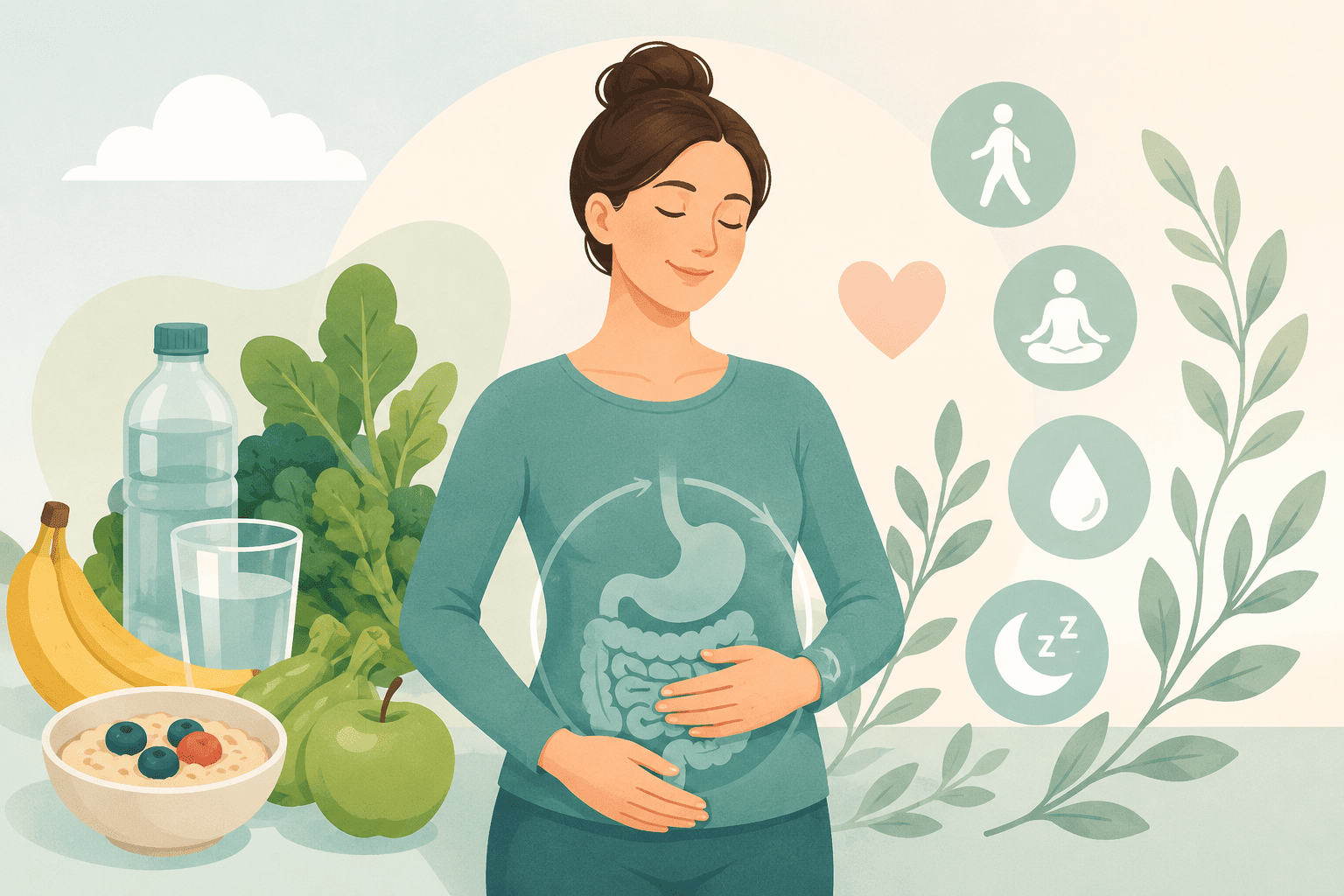
Regular physical activity, adequate water intake, normal sleep, and stress control are also beneficial. These habits support bowel function and help reduce the frequency of bloating episodes.
Conclusion
Bloating and gas can occur for a variety of reasons, from rushed eating and overeating to food intolerances, stress, changes in microflora, or diseases of the digestive system. In most cases, mild discomfort can be reduced with simple steps: eating more slowly, reducing portions, temporarily limiting trigger foods, drinking enough water, and moving more.
Herbal remedies, in particular fragrant dill fruits, peppermint leaves, or chamomile flowers, can be considered as part of support for individual manifestations of digestive discomfort. But they must be used according to the instructions, taking into account contraindications and after consulting a specialist if in doubt.
If bloating recurs regularly, worsens, or is accompanied by pain, vomiting, blood in the stool, weight loss, fever, or changes in bowel movements, you should not self-medicate. In such a situation, it is important to consult a doctor and find out the cause.
Frequently Asked Questions
Why does my stomach bloat in the evening?
Most often, this is due to gas accumulation during the day, overeating in the evening, inactivity, or foods that ferment in the intestines for a long time. If the symptom recurs regularly, it is worth reviewing the diet and eating routine.
Why does bloating occur before menstruation?
Before menstruation, bloating can occur due to hormonal changes, fluid retention, and changes in intestinal motility. If the discomfort is severe or unusual symptoms appear, it is better to consult a doctor.
Does dill help with bloating?
Fragrant dill fruits have indications for flatulence and can be used according to the instructions. But if bloating recurs frequently, it is important to find out its cause.
Is it possible to drink peppermint for bloating, and when is it better not to use it?
Peppermint leaves can be used for flatulence and cramps. People with heartburn or reflux should use peppermint with caution, as it can aggravate heartburn.

Does chamomile help with stomach discomfort?
Chamomile flowers can be considered as a mild herbal remedy to support digestion. At the same time, chamomile does not replace treatment if bloating is associated with a disease.
Can children drink herbal teas for bloating?
Children should be given herbal teas and herbal remedies only after consulting a pediatrician. This is important due to age restrictions, contraindications, and the risk of allergic reaction.
Why does bloating occur?
Bloating can occur due to overeating, fast eating, carbonated drinks, trigger foods, stress, food intolerances, or gastrointestinal diseases.
How to get rid of bloating at home?
You can eat more slowly, reduce portions, drink enough water, move more after eating, and temporarily limit trigger foods. If bloating recurs or is accompanied by pain, a doctor’s consultation is required.
Literature
- National Institute of Diabetes and Digestive and Kidney Diseases. Gas in the Digestive Tract: Symptoms & Causes (https://www.niddk.nih.gov/health-information/digestive-diseases/gas-digestive-tract/symptoms-causes).
- Mayo Clinic. Gas and gas pains: symptoms, causes and when to see a doctor (https://www.mayoclinic.org/diseases-conditions/gas-and-gas-pains/symptoms-causes).
- NHS. Bloating: causes and when to get medical advice (https://www.nhs.uk/symptoms/bloating/).
Author: Natalia Kandybey, Candidate of Pharmaceutical Sciences, Quality Director of PJSC Pharmaceutical Factory “VIOLA”


