
- What is the intestinal microflora and why is it important
- Why the intestinal microflora is disturbed
- Symptoms of intestinal microflora disorders
- How to restore intestinal microflora: a basic approach
- Nutrition to restore intestinal microflora
- Probiotics, prebiotics, and synbiotics: what is the difference?
- How to restore microflora after antibiotics
- Supportive products for the gastrointestinal tract
- When to see a doctor
- Typical mistakes when restoring microflora
- How to maintain the intestinal microflora every day
- Conclusion
- Frequently Asked Questions
The intestinal microflora affects not only digestion. The absorption of nutrients, the functioning of the immune system, regular bowel movements, comfort after meals, and general well-being depend on its condition. Therefore, after antibiotics, food poisoning, diarrhea, severe stress, or a prolonged unbalanced diet, people often think about how to support the intestines and restore a feeling of normal digestion.
It is important to understand: microflora disorders are not always a separate problem. Bloating, discomfort, unstable stools, or pain can be associated with various gastrointestinal conditions. Therefore, the task is not to “treat dysbiosis” on your own, but to understand the possible cause, support recovery with diet and routine, and consult a doctor in case of prolonged or severe symptoms.
What is the intestinal microflora and why is it important
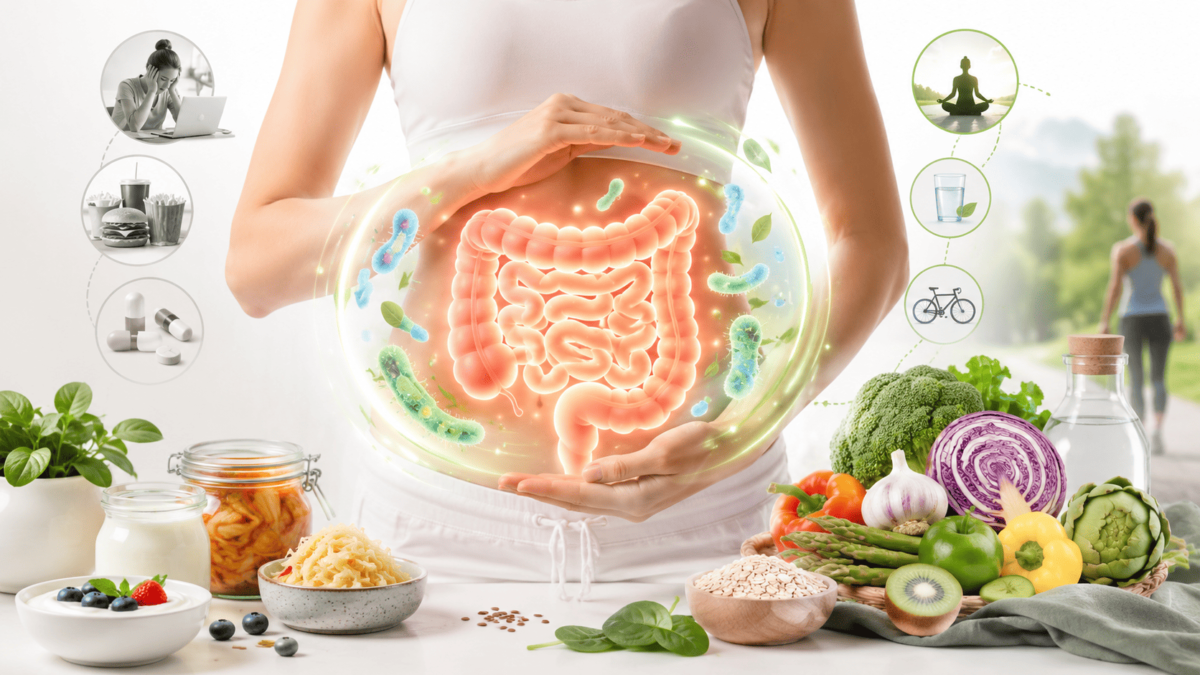
The gut microflora, or microbiota, is a collection of bacteria and other microorganisms that live in the gut. Some of them are involved in the normal functioning of the digestive system, help maintain the body’s defense mechanisms, and affect how a person feels after eating.
Microflora performs several important functions at once:
- participates in digestion and the breakdown of fiber;
- helps absorb nutrients;
- participates in the synthesis of certain vitamins;
- supports the intestinal mucosa;
- affects the functioning of the immune system;
- inhibits the excessive growth of opportunistic microorganisms;
- is associated with regular bowel movements and general well-being.
Why the intestinal microflora is disturbed
Antibiotics and other medicines
Antibiotics are needed to fight bacterial infections, but they can affect not only pathogenic bacteria, but also beneficial ones. That is why, after a course of antibiotics, diarrhea, bloating, discomfort, or changes in bowel movements may sometimes appear.
In this case, antibiotics should not be stopped on your own, even if abdominal discomfort occurs. They should be taken only as prescribed by a doctor and in accordance with the recommended course. If severe or unusual symptoms occur during treatment, it is better to consult a specialist rather than change the treatment regimen yourself.
Certain other medicines can also affect the condition of the intestines. Therefore, when taking medicines for a long time, you should carefully read the instructions and inform your doctor about adverse reactions from the gastrointestinal tract.
Unbalanced diet
The diet directly affects the microflora. If the diet is high in sugar, fast food, fatty and fried foods, but low in vegetables, fruits, legumes, whole grains, and fiber, beneficial bacteria receive less nutrient substrate.
Strict diets can also be a problem. When a person severely restricts their diet, removes entire food groups unnecessarily, or eats monotonously for a long time, the intestines may react with unstable stools, bloating, or heaviness after eating.
Intestinal infections and diarrhea
After food poisoning, an intestinal infection, or prolonged diarrhea, the intestines may need time to recover. During this period, the mucous membrane and microflora may be more sensitive, and familiar foods may sometimes be tolerated worse.
It is important not to rush into heavy meals, not to overload the digestive system, and to monitor water balance. If diarrhea lasts a long time, is accompanied by fever, severe pain, signs of dehydration, or blood in the stool, medical attention is required.
Stress, sleep deprivation, and lifestyle
The intestines are closely connected to the nervous system. Because of this, chronic stress, lack of sleep, irregular meals, and a sedentary lifestyle can affect digestion. For some people, this manifests as cramps and diarrhea; for others, as constipation, bloating, or a feeling of heaviness.
If a person constantly eats in a hurry, skips meals, moves little, and sleeps only a few hours, even the right foods may not give the expected result. Restoring microflora is not only about probiotics, but also about daily habits.
Chronic diseases of the gastrointestinal tract
Prolonged discomfort, abdominal pain, unstable stools, frequent nausea, or a sharp deterioration in well-being may not simply be a “microflora disorder.” These may be manifestations of diseases of the stomach, intestines, gallbladder, pancreas, or other conditions that require diagnosis.
Therefore, if symptoms recur, intensify, or interfere with normal life, you should not attribute everything only to microflora. In such a situation, a doctor’s consultation is required.
Symptoms of intestinal microflora disorders
Microflora imbalance can manifest in different ways. Most often, people notice digestive changes, but sometimes general weakness, loss of appetite, or skin problems are also added.
Possible symptoms:
- bloating, flatulence, rumbling;
- heaviness after eating;
- unstable stools, diarrhea, or constipation;
- nausea, discomfort, or abdominal cramps;
- loss of appetite;
- weakness, fatigue;
- frequent colds;
- skin rashes.
These symptoms can be related to various conditions, not only microflora. If discomfort lasts for a long time, recurs, intensifies, or is accompanied by alarming signs, you should consult a doctor.
How to restore intestinal microflora: a basic approach
Step 1. Find out the cause of the disorder
First, it is worth understanding what triggered the symptoms. The approach after antibiotics, after diarrhea, with constipation, stress, or chronic gastrointestinal diseases may differ.
For example, after antibiotics, it is important to follow the doctor’s prescription and correctly take additional products if they are recommended. After food poisoning, it is important not to overload the intestines and to restore water balance. In case of prolonged constipation, it is worth assessing the amount of fiber, water, movement, and possible medical causes.
Step 2. Improve nutrition
Diet is the basis for maintaining microflora. Gut bacteria need a nutrient substrate, so it is important to gradually add fiber-rich foods, a variety of plant foods, and fermented foods if they are well tolerated.
Do not drastically change your diet in one day. If a person previously ate little fiber, a sharp increase in vegetables, legumes, or bran can increase bloating. It is better to move gradually and monitor the body’s reaction.
Step 3. Add foods and products with probiotics and prebiotics
Probiotics are live beneficial microorganisms, and prebiotics are substances that serve as a nutrient substrate for a person’s own beneficial microflora. In nutrition, they can complement each other.
Probiotics, prebiotics, or synbiotics can be part of bowel support, but the choice of a specific product is best agreed with a doctor or pharmacist, especially when it comes to children, pregnant women, people with chronic diseases, or weakened immunity.
Step 4. Support the work of the gastrointestinal tract
If the imbalance is accompanied by bloating, flatulence, cramping, or nausea, supportive products may be needed to help digestion. They do not replace diet restoration and are not products “for restoring microflora,” but they can be used as part of an integrated approach — in accordance with the instructions and taking contraindications into account.
Step 5. Monitor routine, sleep, water, and stress
The intestines need regularity. It is worth drinking enough water, not skipping meals, moving throughout the day, and not ignoring sleep. If stress is constant, the digestive system can react even to the usual diet, so microflora recovery should be combined with lifestyle normalization.
Nutrition to restore intestinal microflora
Foods with probiotics
Probiotics are live beneficial microorganisms. In the diet, they can be obtained from some fermented foods. They do not “cure dysbiosis,” but they can support a varied diet and a healthy approach to nutrition.
Foods with probiotics include:
- natural yogurt without sugar;
- kefir;
- fermented baked milk;
- fermented vegetables;
- sauerkraut without vinegar;
- kimchi;
- kombucha;
- some fermented cheeses.
It is important to choose foods without excess sugar and to take individual tolerance into account.
Foods with prebiotics
Prebiotics are “food” for good bacteria. We are mainly talking about dietary fiber found in plant products. They help maintain a person’s own microflora and contribute to normal intestinal function.
Sources of prebiotics in the diet:
- vegetables;
- fruits;
- apples with peel;
- bananas;
- garlic;
- onions;
- asparagus;
- broccoli;
- legumes;
- oats;
- bran;
- whole grains;
- flax seeds.
It is better to add fiber gradually, because a sharp increase in legumes, raw vegetables, or bran can increase bloating.
What is better to limit
To maintain microflora, it is important not only to add healthy foods, but also to reduce what can overload digestion or worsen well-being.
It is worth limiting:
- excess sugar and sugary carbonated drinks;
- alcohol;
- fast food and ultra-processed foods;
- fried and very fatty foods;
- excess coffee if it causes discomfort;
- strict restrictive diets without a clear need.
Probiotics, prebiotics, and synbiotics: what is the difference?
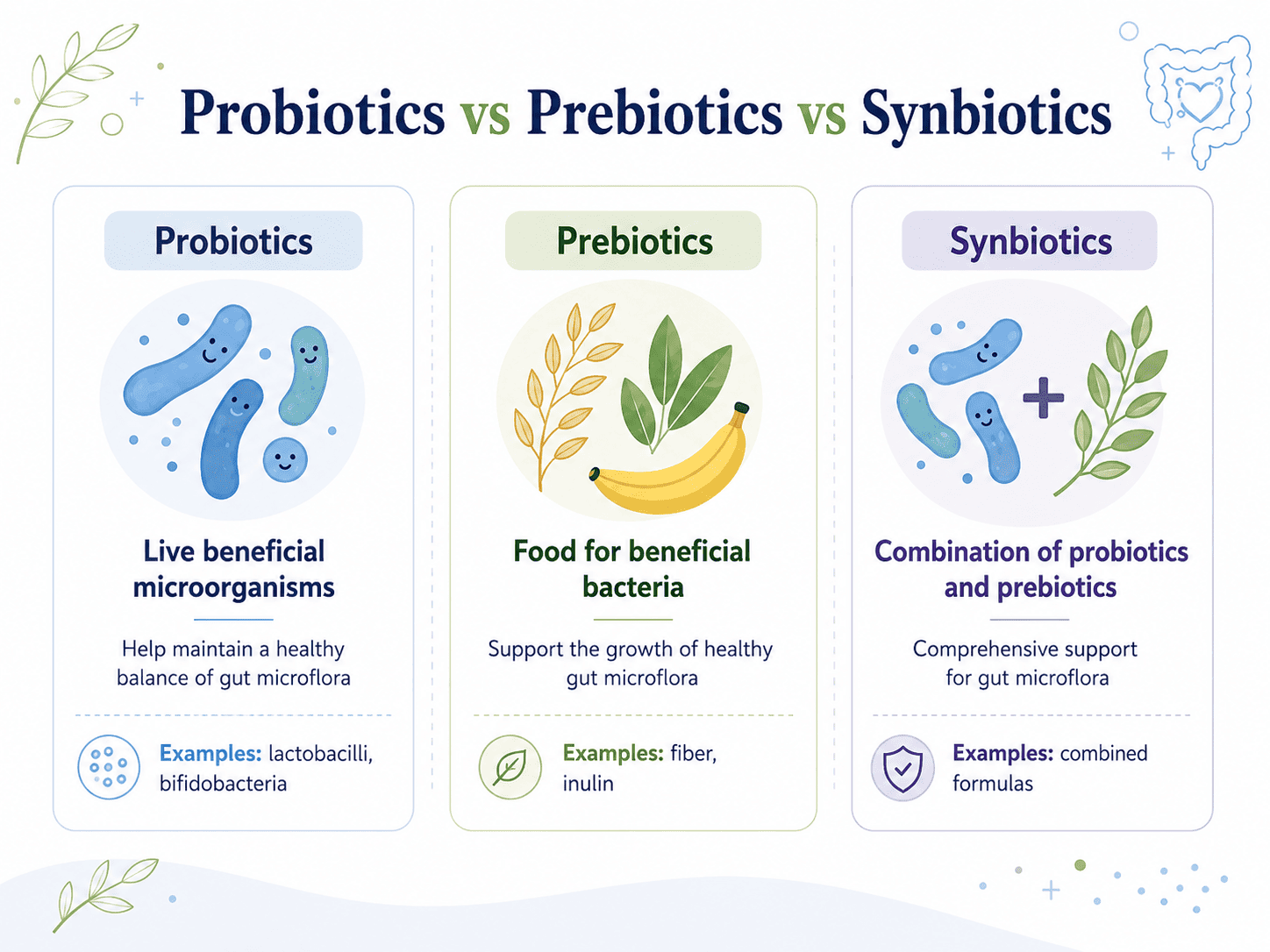
Probiotics, prebiotics, and synbiotics are often mentioned together, but they are not the same thing. To avoid confusion, it is worth separating these concepts.
| Type | What it is | What it is used for | Examples |
| Probiotics | Live beneficial microorganisms | Help maintain microflora balance | Lactobacilli, bifidobacteria |
| Prebiotics | Substances that serve as a nutrient substrate for beneficial bacteria | Support the growth of a person’s own microflora | Fiber, inulin, oligosaccharides |
| Synbiotics | Combination of probiotics and prebiotics | Comprehensive support | Combined supplements |
Probiotics may differ in composition, number of microorganisms, form of release, and recommendations for use. Therefore, it is better to coordinate the choice of probiotics or supplements with your doctor or pharmacist, especially for children, pregnant women, people with chronic diseases, or immunodeficiency conditions.
How to restore microflora after antibiotics
After antibiotics, the intestines may need support, but you cannot change or stop treatment on your own.
What can be done to support the intestines after or during a course of antibiotics:
- do not stop antibiotics on your own;
- follow the doctor’s prescription;
- support the diet with fiber;
- add fermented foods if they are well tolerated;
- take probiotics according to the instructions for a particular product;
- do not drink probiotics with hot drinks;
- maintain the interval between the antibiotic and the probiotic, if provided for in the instructions or doctor’s recommendation.
Not all probiotics are taken in the same way. Some products may have recommendations for the interval with the antibiotic, while others may have specific storage requirements or instructions for intake with food. Therefore, it is important not to rely on general advice from the Internet, but to read the instructions for a particular product.
Supportive products for the gastrointestinal tract
Restoring intestinal microflora should begin with nutrition, routine, sufficient water, and elimination of the cause of discomfort. But if, along with indigestion, bloating, flatulence, cramps, or nausea appear, supportive herbal products for the gastrointestinal tract may be appropriate as part of an integrated approach. They do not restore the microflora directly, but can be used to alleviate certain manifestations of discomfort.
Chamomile flowers
Chamomile flowers can be used as an herbal product to support digestion, in particular for abdominal discomfort, flatulence, or inflammatory processes of the digestive system. Such a product should be considered as part of an integrated approach, and not as a product for restoring microflora or treating dysbiosis.


Peppermint leaves
Peppermint leaves may be appropriate when abdominal discomfort is accompanied by cramps, intestinal colic, flatulence, or nausea. It is an aid to maintaining gastrointestinal function, so it is important to take into account health condition, possible restrictions, and individual tolerance before use.

Fragrant dill fruits
Fragrant dill fruits are traditionally used for bloating, gas formation, and flatulence. In the context of recovery from digestive disorders, they can be considered as an aid for excessive gas production, but not as a way to eliminate the cause of microflora imbalance.
Self-medication can be harmful to health. If symptoms persist, worsen, or recur frequently, it is best to see a doctor.
When to see a doctor
Sometimes intestinal symptoms should not be explained only by microflora. There are situations when a doctor’s consultation and, possibly, additional diagnostics are required. Self-medication can be harmful to health.
It is worth seeing a doctor if you have:
- severe or increasing abdominal pain;
- blood in the stool or black stools;
- prolonged diarrhea or prolonged constipation;
- high fever;
- sudden weight loss;
- signs of dehydration;
- symptoms after a course of antibiotics that do not go away;
- symptoms in a child;
- pregnancy;
- chronic gastrointestinal diseases.
Also, do not postpone a consultation if symptoms recur, interfere with eating, sleeping, or working, or are accompanied by a sharp deterioration in well-being.
Typical mistakes when restoring microflora
Maintaining microflora is not limited to a probiotic, yogurt, or herbal tea. To avoid delaying recovery, it is important to avoid common mistakes:
- Taking probiotics at random. Different probiotics have different compositions and usage characteristics, so a random choice may not provide the expected support.
- Ignoring nutrition. Probiotics do not compensate for a diet without fiber, vegetables, fruits, and whole grains.
- Eating a lot of sugar and waiting for results. Excess sweets, sugary drinks, and ultra-processed foods can interfere with normal bowel function.
- Sharply increasing fiber. It is better to add legumes, bran, seeds, and raw vegetables gradually; otherwise, bloating and gas formation may increase.
- Stopping antibiotics yourself. If abdominal discomfort appears during the course, you need to consult a doctor, not stop treatment yourself.
- Calling all symptoms “dysbiosis.” Pain, diarrhea, constipation, nausea, or bloating can have various causes and require diagnosis.
- Using herbs without considering contraindications. Herbal remedies can also have limitations, especially in chronic diseases, pregnancy, or when taking other medicines.
- Giving a child products without consulting a pediatrician. In children, the causes of abdominal discomfort can vary, so probiotics, supplements, or herbal remedies are best agreed with a doctor.
How to maintain the intestinal microflora every day
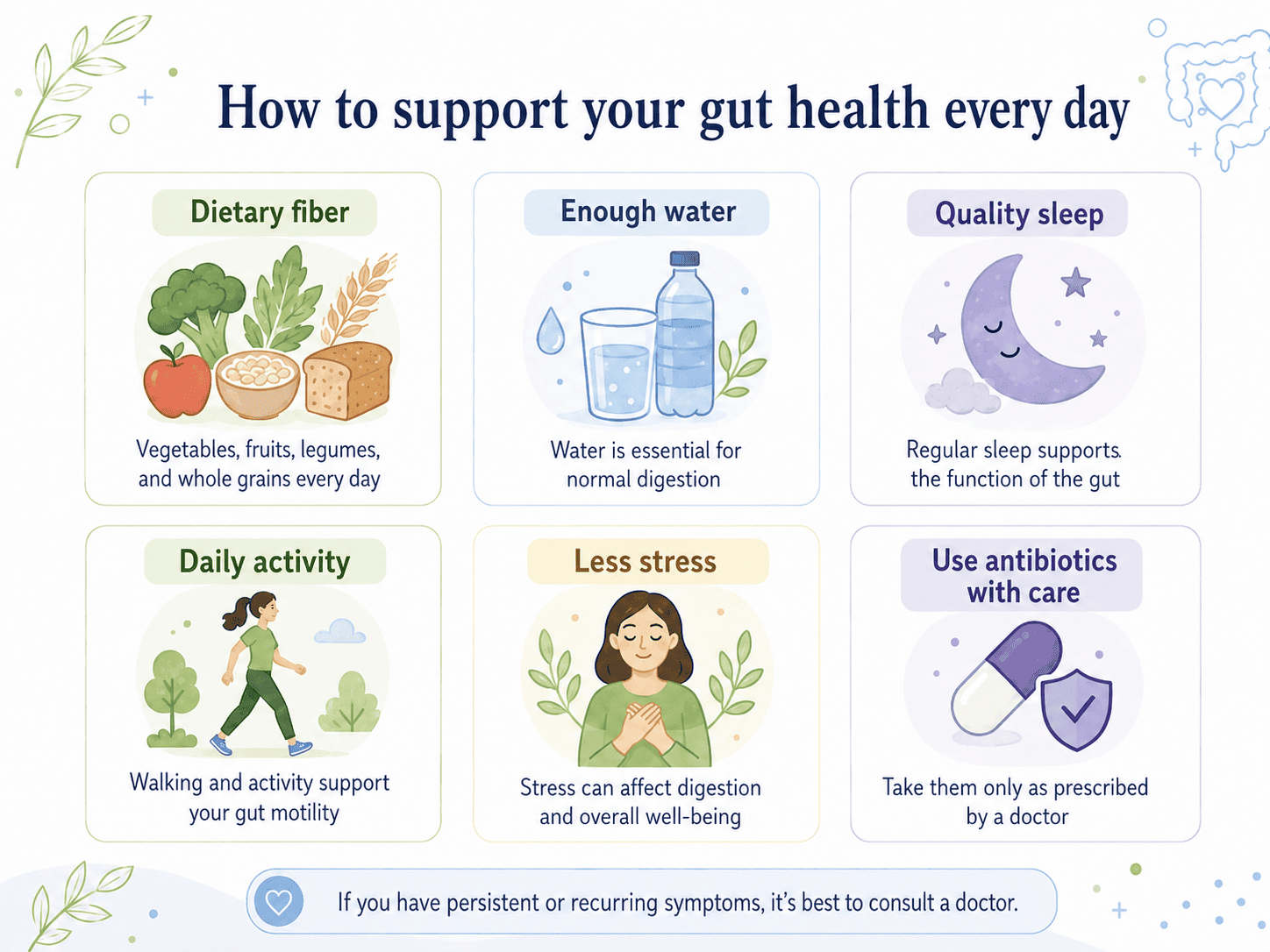
Microflora is formed gradually, so stable daily habits are important for maintaining it:
- Eat enough fiber and plant foods. Vegetables, fruits, legumes, whole grains, seeds, and herbs help make the diet more varied.
- Drink enough water. This is important for normal digestion, especially if there is more fiber in the diet.
- Maintain a sleep routine. Lack of sleep can affect appetite, stress levels, and gastrointestinal function.
- Move every day. Walking, light exercise, or more movement throughout the day supports bowel motility.
- Reduce stress. Calm meals, breaks from work, walks, and rest help reduce the load on the digestive system.
- Do not misuse antibiotics. They should be taken only as directed by a doctor, not “just in case.”
- Do not ignore long-term gastrointestinal symptoms. If bloating, diarrhea, constipation, pain, or nausea recur, it is better to find out the cause.
- Read medicine recommendations. Even familiar products may have limitations, administration features, and contraindications.
Conclusion
The intestinal microflora is important for digestion, immunity, nutrient absorption, and general well-being. Its balance can be disturbed after antibiotics, intestinal infections, diarrhea, stress, lack of sleep, an unbalanced diet, or against the background of gastrointestinal diseases.
Recovery requires an integrated approach. The basis is a diet with a sufficient amount of fiber, fermented foods if well tolerated, water, sleep, movement, and attention to symptoms. Probiotics, prebiotics, synbiotics, and herbal products can be supportive, but they should be used according to the instructions and taking the person’s condition into account.
If symptoms are prolonged, severe, or accompanied by alarming signs, it is better not to self-diagnose, but to consult a doctor.
Frequently Asked Questions
How can you understand that the intestinal microflora is disturbed?
Possible signs include bloating, rumbling, unstable stools, discomfort after eating, or loss of appetite. If symptoms persist for a long time, you should consult a doctor.
Is it possible to restore microflora without probiotics?
Yes, support often starts with nutrition, fiber, water, sleep, and routine. Probiotics can be an additional option, but they are not always the main solution.
Do herbal remedies help with bloating and discomfort?
Some herbal remedies can be used for flatulence, spasms, or gastrointestinal discomfort. They do not restore microflora directly and do not replace a visit to the doctor.
Can children be given probiotics or herbal remedies?
Children should not be given such products without consulting a pediatrician. First, it is important to understand the cause of pain, diarrhea, constipation, or bloating.
References
- Hill C., Guarner F., Reid G., Gibson G. R., Merenstein D. J., Pot B. et al. Expert consensus document: The International Scientific Association for Probiotics and Prebiotics consensus statement on the scope and appropriate use of the term probiotic (https://pubmed.ncbi.nlm.nih.gov/24912386/).
- Gibson G. R., Hutkins R., Sanders M. E., Prescott S. L., Reimer R. A., Salminen S. J. et al. Expert consensus document: The International Scientific Association for Probiotics and Prebiotics consensus statement on the definition and scope of prebiotics (https://pubmed.ncbi.nlm.nih.gov/28611480/).
- Tkach S. M. Modern clinical ideas about the influence of intestinal microbiota on the gastrointestinal tract, metabolism and human health (https://health-ua.com/multimedia/3/0/7/8/7/1506413717.pdf).
Author: Natalia Kandybey, Candidate of Pharmaceutical Sciences, Quality Director of PJSC Pharmaceutical Factory “VIOLA”


