
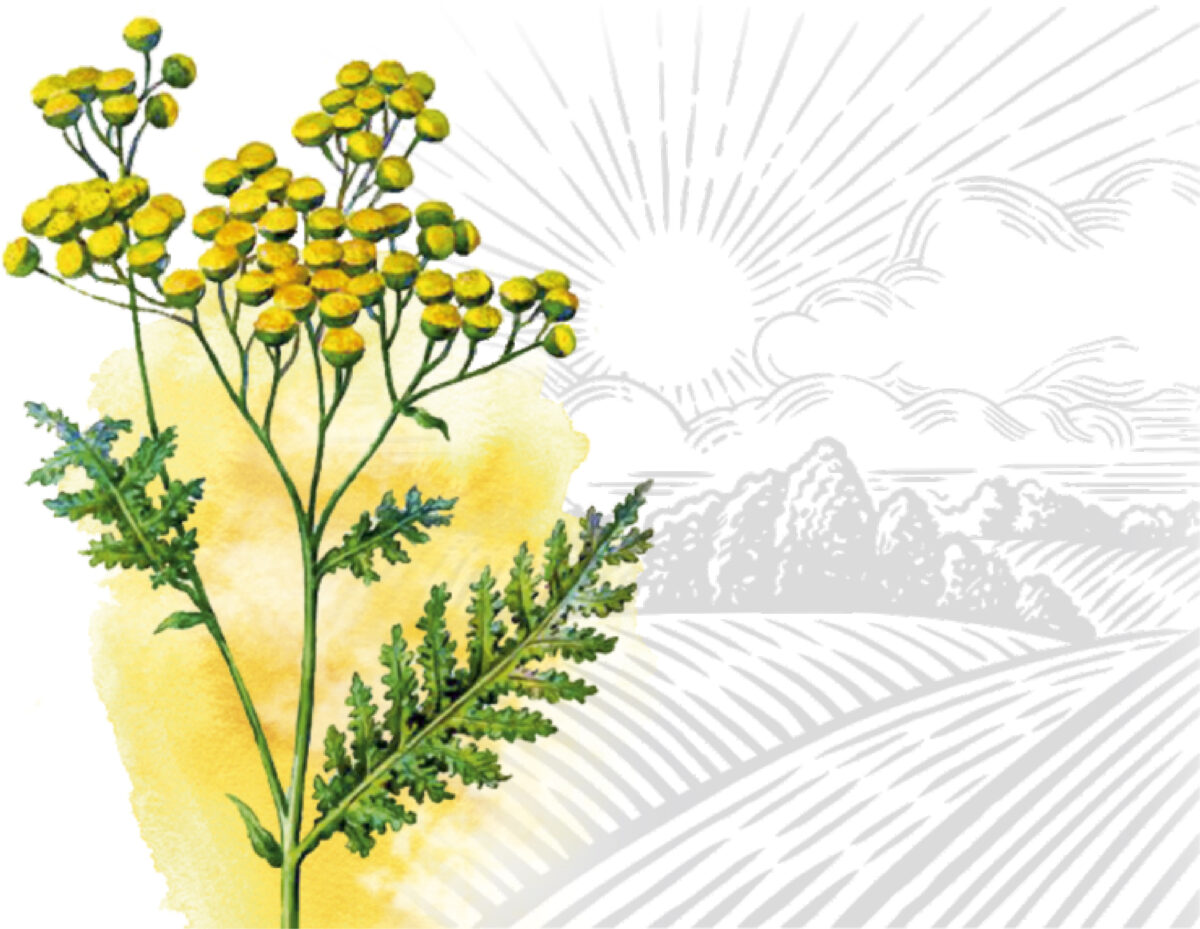
Tansy (Tanacetum vulgare L.) is a perennial herbaceous plant of the Asteraceae family, reaching 50-150 cm in height. It is easily recognizable by dense bright yellow inflorescences-baskets with a bitter aroma. It blooms from July to September and is widespread throughout Europe and Asia – it is found along roads, in meadows and forest edges. Tansy flowers have long been used in folk medicine as an effective natural remedy for helminthic invasions, inflammation of the digestive tract, disorders of the biliary system and skin diseases. Due to its composition, tansy has an antiseptic, antispasmodic, antiparasitic and choleretic effect, but requires careful use.
Tansy was used in folk medicine in various countries of Europe and Asia. It was used as a remedy for expelling intestinal parasites, abdominal pain, menstrual irregularities and skin inflammation. In the phytotherapeutic traditions of Germany and France, infusions of flowers were recommended for spasms, fever and poor digestion. In the British Isles, tansy was added to dishes as a spice and used in cleansing preparations. In oriental medicine, it was used to stimulate digestion and eliminate flatulence.
Chemical composition
Essential Oils
The main active component of tansy is thujone – a monoterpene with a pronounced anthelminthic, antispasmodic and neurotropic effect. The oil also contains camphor, borneol and pinene, which enhance the antimicrobial and tonic properties of the plant. Thanks to the essential oil, the plant is effective in minimal doses and has a complex effect on the smooth muscles of the internal organs.
Flavonoids, organic acids, tannins
Flavonoids (luteolin, apigenin, quercetin), as well as phenolic acids and tannins enhance the anti-inflammatory effect, strengthen blood vessels and promote epithelial regeneration. Tannin compounds have an astringent effect and are useful for diarrhea and inflammation of the mucous membranes. These components also slow down the reproduction of bacteria and maintain the balance of intestinal microflora.
Vitamins (ascorbic acid, carotene)
Tansy flowers contain vitamin C, β-carotene and rutin – substances that strengthen immune defenses, stimulate collagen synthesis and promote tissue repair. With chronic fatigue, decreased appetite or a lingering cold, tansy can be used as a general tonic as part of herbal teas.
Beneficial features
Antihelminthic action
Tansy is one of the few plants that has a pronounced antiparasitic effect, confirmed by both folk and official medicine. The main active ingredient thujone causes paralysis in helminths, as a result of which they lose their ability to stay in the intestinal lumen and are excreted naturally. Tansy is especially effective against pinworms, roundworms and giardia. In some phytotherapeutic schemes, tansy is combined with cloves and wormwood: such a triplet covers a wide range of parasites, affecting their different stages of development. Tansy also helps to normalize digestion after deworming, eliminating the effects of intoxication.
Choleretic and antispasmodic effects
Tansy essential oils enhance the synthesis and secretion of bile, promote the contraction of the gallbladder and relax the sphincter of Oddi, facilitating the outflow. This makes the plant useful for hypokinetic dyskinesia, chronic cholecystitis, post-cholecystectomy syndrome. Taking tansy infusion relieves the feeling of heaviness in the right hypochondrium, eliminates bitterness in the mouth, and improves the digestion of fatty foods. Due to the pronounced antispasmodic effect, tansy flowers can be used as part of combined preparations for spasmodic pain in the intestines and uterus.
Anti-inflammatory and antibacterial effects
The flavonoid and essential oil complex of tansy provides bactericidal and fungistatic activity against a wide range of pathogens. Infusions are used for inflammation of the gastrointestinal tract, candidiasis, dysbiosis. External use of tansy decoction or infusion helps with eczema, boils, seborrhea. Lotions with tansy are used in dermatology as an adjuvant in the treatment of acne and psoriasis. The anti-inflammatory effect is also manifested in the reduction of swelling and itching from insect bites and allergic rashes.
Improved digestion
The bitterness of tansy activates the taste buds and reflexively increases the secretion of gastric juice, which makes the plant a valuable component in gastritis with low acidity and functional dyspepsia. Tansy infusion can be used as an aperitif before meals to stimulate appetite, especially in the elderly and during the recovery period after illness. Also, the plant normalizes the motor activity of the intestines and contributes to the mild elimination of the symptoms of flatulence. In preparations with fennel and mint, tansy reduces bloating and eliminates heaviness after eating.
Indications
Tansy flowers are used for a wide range of conditions, especially those associated with parasitic and biliary disorders. The most common indications are:
Helminthic infestations, including pinworms, roundworms and giardia. The plant is especially effective in the early stages of infection and can be used as an independent remedy or as part of a complex therapy with antiparasitic drugs.
Liver and gallbladder diseases: chronic cholecystitis, hypokinetic dyskinesia, initial forms of steatosis. Tansy improves bile secretion, reduces congestion, and reduces the risk of sand formation.
Chronic inflammatory diseases of the stomach and intestines, including gastritis with low acidity, dyspepsia, enterocolitis. Tansy normalizes the secretion of gastric juice, has an antiseptic and astringent effect.
Menstrual disorders: with scanty and painful menstruation, the plant helps to normalize the rhythm and relieve spasmodic pain due to the action of essential oils.
Skin diseases – eczema, psoriasis, allergic dermatitis. External use of the decoction reduces inflammation, itching and peeling.
Seborrheic dermatitis, dandruff. Rinsing your hair with tansy infusion strengthens hair follicles, regulates the secretion of sebaceous glands and eliminates itching of the scalp.
Contraindications
Despite the wide spectrum of action, tansy requires a careful approach. The list of contraindications includes:
Pregnancy and lactation. Thujone can cause uterine contractions, which is dangerous at any stage of pregnancy. When breastfeeding, its use is also not recommended.
Age under 7 years. Children may experience hypersensitivity to active substances, as well as the risk of toxic effects.
Cholelithiasis. Stimulation of bile outflow can provoke the movement of stones and cause biliary colic.
High blood pressure. In sensitive patients, tansy may contribute to a short-term increase in blood pressure.
Allergy and individual intolerance. Skin rashes, itching, swelling are possible, especially with hay fever or cross-reaction to asteraceae.
Methods of administration
Infusions and decoctions: pour 1 tbsp. l. dried flowers with 200 ml of boiling water, infuse under the lid for 30 minutes, strain. Take 1/4 cup 2-3 times a day before meals. The duration of the course is 5-7 days for parasitosis, up to 14 days for chronic diseases of the gastrointestinal tract and liver.
Flower powder: take 0.3-0.5 g 1 time a day on an empty stomach with water. This method is effective for enterobiasis, but requires strict adherence to the dosage.
External use: decoction (2 tbsp. l. per 300 ml of water) is used for rinsing, lotions and gargles. In case of seborrhea, rinse the hair with an infusion 2 times a week.
Conclusion
Tansy is a powerful herbal remedy with proven antiparasitic, choleretic, anti-inflammatory and digestive effects. However, due to the presence of thujone and a strong ester complex, it requires competent dosing and compliance with contraindications. When used within therapeutic limits, tansy becomes an effective ally in many chronic and acute conditions. Before starting use, especially in children, the elderly and people with concomitant diseases, it is recommended to consult a specialist.
Literature:
- Toxicity and pharmacological activities of Tanacetum vulgare L. (common tansy) (https://pubmed.ncbi.nlm.nih.gov/28925535/)
- In Vitro Study of Biological Activity of Tanacetum vulgare Extracts (https://www.researchgate.net/publication/368491572)
- Anthelmintic effect of Tanacetum vulgare extracts against gastrointestinal parasites (https://www.researchgate.net/publication/336807857)
Author: Natalia Kandybey, Candidate of Pharmaceutical Sciences, Quality Director of PJSC Pharmaceutical Factory “VIOLA”
The information provided is not medical advice and does not replace professional health recommendations.
The information is based on scientific literature and is provided for informational purposes only.


