
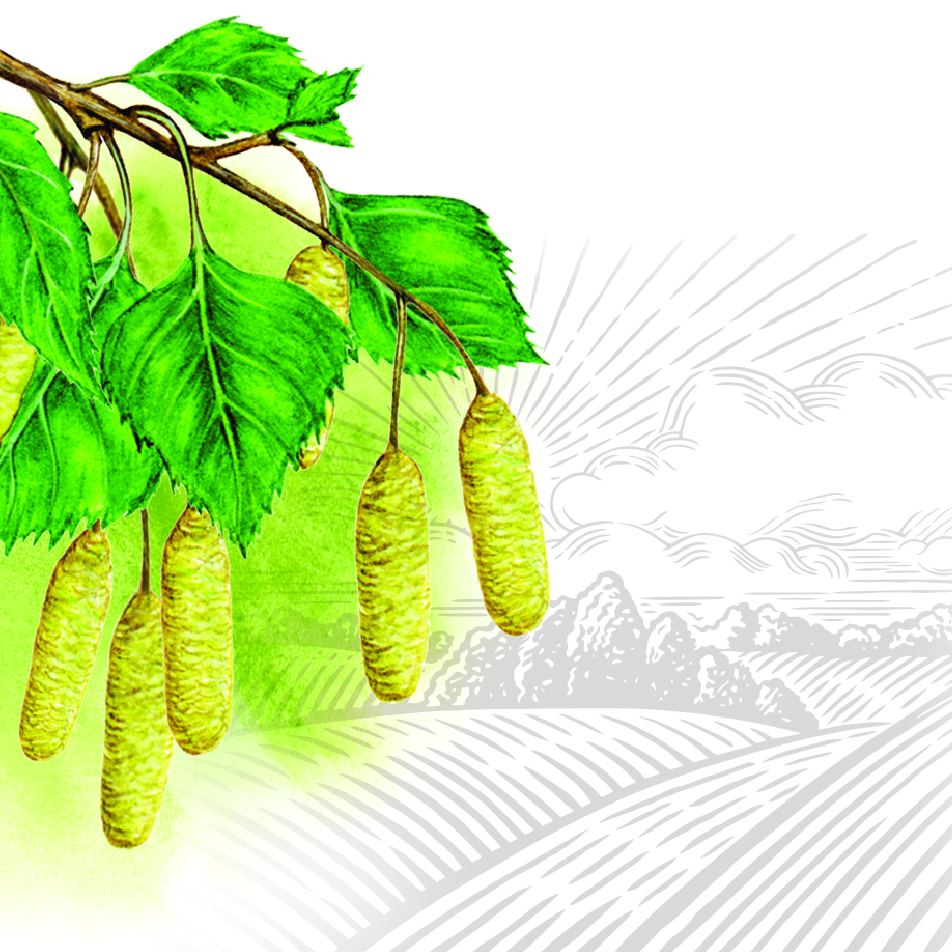
Phytotherapy is gaining popularity again, and birch buds are an affordable traditional raw material with a modernly proven complex effect: they gently increase diuresis, stimulate the outflow of bile, suppress inflammation, supplying the body with triterpenes, flavonoids and essential oils with antioxidant and antimicrobial properties. Natural origin does not exclude the risk of kidney irritation or allergies, so it is important to consult a doctor before starting the course and take into account compatibility with other drugs – these are the practical aspects that the following article is devoted to.
What are birch buds
Description and external characteristics
Birch buds (Gemmae Betulae) are small, elongated-conical formations 3-7 mm long. The color varies from dark brown to green-brown at the base, the smell is characterized by pronounced balsamic notes, the taste is tart-resinous. Such a structure protects germ tissues from waterlogging and microbial attacks, and the high concentration of resins facilitates the preservation of biologically active substances during the storage of raw materials.
The vegetation cycle of birch makes buds a raw material “micropreserved” by nature itself. They form in late autumn, but are harvested in early spring, while the scales have not yet opened. It is at this time that the maximum concentration of phytohormones, flavonoids and essential oils is observed, which determines the therapeutic value of the drug.
History of use in medicine
Archaeobotanical finds indicate that the resinous secretions of birch buds were used by the inhabitants of northern Eurasia as early as the II millennium B.C. Later, in the treatises of ancient Russian herbalists of the XII-XIV centuries, the infusion of the buds is referred to as “water from dropsy”, that is, a mild diuretic. In the XIX century, pharmacists of the Russian Empire standardized “Gemmae Betulae” and included them in the “Collection against dropsy griffith”.
The modern pharmacopoeia of Eastern European countries leaves birch buds with the status of medicinal plant raw materials: the drug belongs to the group of non-thiazide diuretics of moderate activity (ATC code C03BX). Regulatory documentation regulates humidity, resin content and extraction rate, which ensures the reproducibility of the clinical effect.
Gemmotherapy and birch buds
Gemmotherapy is a branch of phytotherapy that uses extracts of young embryonic tissues of plants (buds, shoots, roots). It is believed that at the time of active cell division, plants accumulate a maximum of phytohormones, amino acids and nucleotides that are able to gently “drain” target organs. The French school of gemmotherapy recommends the glycero-alcoholic macerate of the kidneys Betula pendula as the drug of choice for lymphatic congestion and chronic edema. Experimental data confirm that such extracts enhance tubular filtration in the kidneys and accelerate the excretion of nitrogenous metabolites.
Chemical composition and biologically active substances
Essential oils and resins
Kidney essential oil contains more than 25 compounds, up to 80% of which are sesquiterpenes. The main places are occupied by germancrene-D (≈21%) and δ-cadinene (≈17%). In in vitro experiments, the oil showed pronounced antibacterial activity against Proteus vulgaris and Klebsiella pneumoniae, as well as an antioxidant effect on the DPPH reaction. The resinous fraction is rich in betulin and betulonic acid, which are precursors of anti-inflammatory triterpenes.
Such a combination of volatile and resinous components explains the characteristic balsamic smell and a slight irritating effect that stimulates local blood circulation when used externally.
Flavonoids and saponins
According to gas-liquid chromatography, more than 600 low-molecular metabolites were detected in the kidneys of Betula pubescens, of which 25% are flavonoids (quercetin, hyperoside, myricetin) and up to 7% are saponins of the triterpene structure. The flavonoid complex stabilizes the capillary walls and enhances diuresis, and saponins have a mild choleretic effect, which favorably distinguishes the kidneys from most “narrow-profile” plant diuretics, for example, bearberry leaf.
Vitamins and trace elements
The vitamin profile of birch buds is modest in quantity, but functionally important: ascorbic acid (up to 30 mg%) enhances the antioxidant potential of flavonoids, tocopherols protect the lipid membranes of the bile tubules, and carotenoids serve as precursors of retinoids that affect the epithelium of the urinary tract. Of the trace elements, copper and manganese predominate, which are necessary for antioxidant defense enzymes.
Medicinal properties of birch buds
Diuretic and decongestant effect
Birch buds belong to natural diuretics of a mild type: they increase glomerular filtration and slightly inhibit the reabsorption of sodium and chlorides in the distal tubules, minimally affecting potassium metabolism. In a clinical case (Krakow, 2021), in patients with edema syndrome against the background of PK II heart failure, daily diuresis increased by 38% without clinically significant hypokalemia. This effect is comparable to that of horsetail, but unfolds more smoothly, which is important for elderly patients.
Due to the moderation of the action, birch buds can be used in long-term courses for chronic edema of lymphatic or venous genesis: gradual excretion of fluid reduces the risk of orthostatic collapses and electrolyte imbalance.
Choleretic effect
Triterpene saponins of the kidneys stimulate choleresis, increasing the volume and reducing the viscosity of bile. At the same time, flavonoids reduce the tone of the sphincter of Oddi, facilitating the passage of bile into the duodenum. In a rat model of congestive cholestasis, kidney extract reduced alkaline phosphatase and bilirubin activity by 30% by day 10.
Anti-inflammatory properties
Essential oil and methanol extract inhibit the synthesis of pro-inflammatory cytokines IL-6 and TNF-α. An in vitro experiment on RAW 264.7 showed that a renal extract with a concentration of 25 μg/mL reduced nitric oxide production by 45% compared to the control group. This mechanism explains the traditional use of the drug in chronic bronchitis and arthralgia.
Other therapeutic effects
Antioxidant activity, due to the high content of flavonoids and terpenes, is realized through the inhibition of lipid peroxidation. In addition, there is a mild antispasmodic and expectorant effect, which makes the infusion of the kidneys useful for dry cough and laryngitis. The potential cytotoxic effect of individual triterpenes on breast and cervical cancer cell lines is also being investigated, but these data are still experimental.
Indications for the use of birch buds
Diseases of the genitourinary system
Kidney infusion is indicated for chronic pyelonephritis without exacerbation, cystitis and urolithiasis with urate and phosphate concrements up to 5 mm in diameter.
Liver and gallbladder diseases
In hypomotor biliary dyskinesia and chronic cholecystitis without stones, birch buds improve bile flow and reduce the feeling of heaviness in the right hypochondrium. The mechanism is associated with an increase in bile synthesis and the elimination of the “stagnant” fraction rich in cholesterol and bilirubin.
Edema of cardiac origin
In cardiology practice, birch bud infusion is prescribed as an adjuvant for congestive heart failure. It enhances the effect of loop diuretics, but does not cause a sharp loss of potassium, so it is suitable for long-term combined regimens.
Respiratory diseases
Kidney essential oil has a moderate expectorant and antiseptic effect. Hot infusion facilitates the separation of viscous sputum in tracheobronchitis, and steam inhalation of tincture reduces nasal congestion in rhinosinusitis.
Other indications for use
In dermatology, the infusion is used externally to treat chronic wounds and eczema, since resinous fractions accelerate epithelialization. In rheumatology, it is used as part of baths for arthralgia, and in sports medicine, compresses with tincture of the kidneys are used to accelerate the resorption of hematomas.
Methods of administration and recipes
Infusions and decoctions for internal use
Classic method: pour 1 tablespoon (≈8 g) of dry buds with 200 ml of boiling water, heat in a water bath for 15 minutes, then infuse for 45 minutes and bring the volume to 200 ml. Adults – 1/3 cup (≈70 ml) 2-3 times a day 15-20 minutes before meals; teenagers 12-14 years old – 1/4 cup. The infusion is good for no more than 48 hours at 8-15 ° C. Shake before use.
If increased diuresis (edema, arthritis) is necessary, the course lasts 3-4 weeks; for the maintenance choleretic effect – 10–14 days with a break of 1 month.
Tincture with alcohol
Fresh buds are poured with 70% ethanol in a ratio of 1:5 and infused for 7 days in a dark place. Take 20-25 drops 3 times a day, diluted in water. The tincture is convenient in “field” conditions, when it is difficult to prepare a decoction, but due to the alcohol content, it is not indicated for children and patients with liver disease.
External use
For the treatment of wounds and skin rashes, a 10% oil extract is used: the raw material is infused in heated vegetable oil (40 °C) for 6 hours. The oil is applied in a thin layer 2 times a day. Resins form a protective film that prevents infection.
Baths and compresses
200 ml of concentrated decoction (20 g of buds per 400 ml of water) is added to a warm bath (37 °C). The 15-minute procedure improves peripheral circulation and reduces rheumatism pain. In case of joint edema, gauze compresses moistened with tincture are fixed for 30 minutes; The course is 10 procedures.
Contraindications and side effects
Who is contraindicated birch buds
It is not prescribed for acute and chronic renal failure, exacerbation of glomerulonephritis, severe anemia, epilepsy, as well as with a tendency to bleeding from the pelvic organs.
Possible adverse reactions
If the dose is exceeded, diarrhea or irritating effect on the renal parenchyma is possible, manifested by aching pain in the lower back and microhematuria. Allergic reactions are also recorded – itching, urticaria, rhinitis; If they appear, stop taking and consult a doctor.
Use in pregnancy and lactation
Security data is limited; Essential oils of the kidneys can theoretically increase the tone of the myometrium. Therefore, pregnant and lactating women are allowed only external use under the supervision of a specialist.
Features of use in different age groups
Adult Dosage
The average single dose is 70 ml of infusion, the daily dose is up to 200 ml. When combined with loop diuretics (furosemide), the dose is reduced to 50 ml to avoid excessive diuresis.
Pediatric use
It is permissible only in children over 12 years old. A single dose is 50 ml of infusion, the course is no more than 10 days. In pediatrics, the kidneys are considered as a second-line remedy after lingonberry and bearberry leaves.
Use in the elderly
In patients over 65 years of age, it is preferable to reduce the baseline dose by 25% and monitor electrolyte levels every 10 days with long-term therapy. The mild action of the kidneys allows you to avoid sharp fluctuations in the volume of circulating blood, in contrast to fast-acting diuretics.
Frequently Asked Questions
Can birch buds be taken with medicines?
Yes, but it should be remembered that the infusion enhances the excretion of sodium and can potentiate the effect of thiazide and loop diuretics. When taken together with lithium preparations, toxicity is possible due to a decrease in the level of lithium in the blood.
How long can the course of treatment be carried out?
The optimal duration for the diuretic effect is 3-4 weeks, after which a break is made for at least 14 days. For choleretic purposes, a 10-day course is enough.
What is the difference between birch buds and leaves and sap?
The kidneys contain more resins, volatile terpenes, and phytohormones; The leaves are richer in potassium and ascorbic acid, and birch sap contains practically no resins and acts mainly as a mild osmotic diuretic.
Where to buy high-quality birch buds?
Pharmacy packages with the “Gemmae Betulae” label and standardized indicators (mass fraction of resins, moisture, packaging date) are preferable. When harvesting on your own, it is important to choose trees away from roads and industrial zones, cut off the buds in February-March, dry at 30-35 ° C and store for no more than 24 months in a dark place.
Literature:
- Cytotoxicity of white birch bud extracts: Perspectives for therapy of tumours (https://pmc.ncbi.nlm.nih.gov/articles/PMC6091957/)
- Common birch (Betula pendula Roth.): Chemical composition and biological activity of isolates (https://www.researchgate.net/publication/334302555_Common_birch_Betula_pendula_Roth_Chemical_composition_and_biological_activity_of_isolates)
- Medicinal plants of the genus Betula—Traditional uses and a phytochemical–pharmacological review (https://www.sciencedirect.com/topics/pharmacology-toxicology-and-pharmaceutical-science/betulaceae)
Author: Natalia Kandybey, Candidate of Pharmaceutical Sciences, Quality Director of PJSC Pharmaceutical Factory “VIOLA”


