Why do you need a first aid kit?
A first aid kit is an essential element of a safe home space, car or office. It is designed to provide emergency care in case of accidents, injuries, exacerbations of chronic diseases or sudden ailments. The presence of a first aid kit allows you to quickly and efficiently provide first aid before the arrival of medical specialists.
What are the types of first aid kits?
First aid kits can be of different types, each of which is designed for specific cases:
- Home First Aid Kit: This is the most common option designed for home use. It usually includes supplies to help with minor household injuries, medicines for common diseases (colds, flu), as well as necessary drugs for family members who have chronic disorders.
- Car first aid kit: This type of first aid kit must always be in the car without fail. It includes first aid in case of an accident (bandages, tourniquets, antiseptics, etc.), as well as drugs to alleviate motion sickness, headaches and others.
- Portable First Aid Kit: Ideal for tourism, travel, and sporting events. It is compact and lightweight, includes first aid for injuries, insect bites, burns, as well as drugs for allergies and for the elimination of gastrointestinal disorders.
- Specialized first aid kits: for example, for climbers, drivers, athletes. Such first-aid kits are compiled taking into account possible specific injuries during specific activities or certain sports. For climbers, for example, the first aid kit may include means for the treatment of altitude sickness, for drivers – means to help with injuries in an accident, for athletes – drugs to relieve symptoms and treat sprains and bruises.
These types of first-aid kits help to be prepared for various situations that require first aid and significantly increase the level of safety in everyday life, travel and various activities.
The main components of a first aid kit
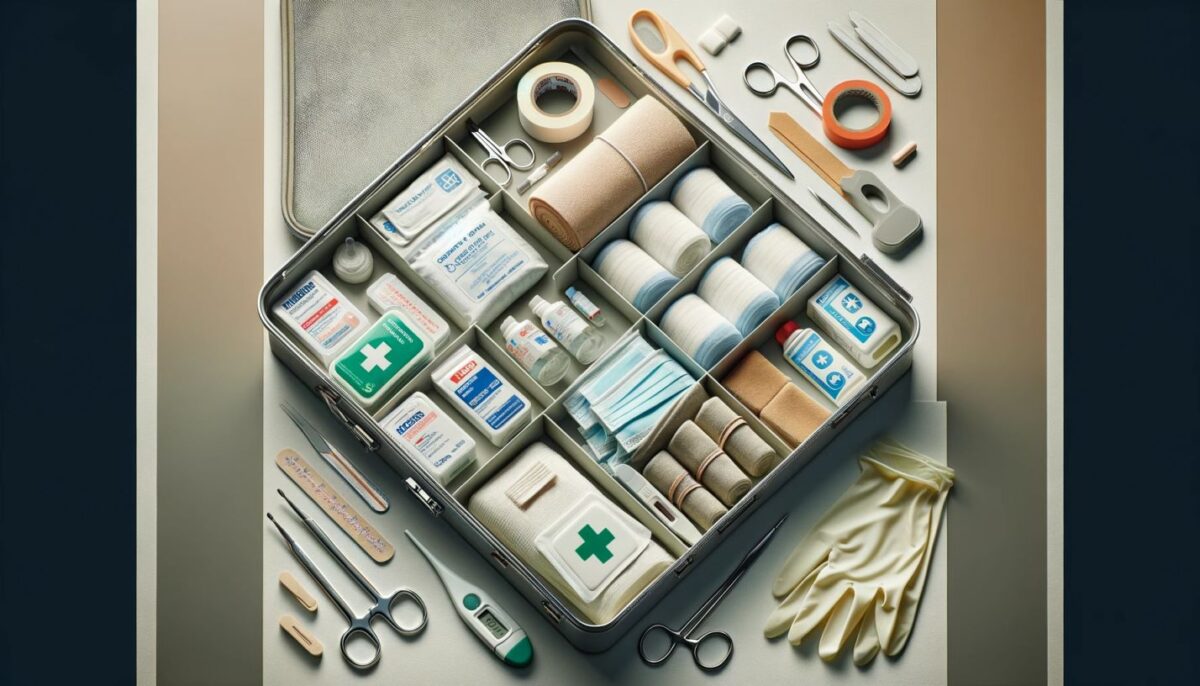
The main components of the first aid kit include:
- Wound care products
Antiseptics: iodine, hydrogen peroxide, chlorhexidine are necessary for disinfection of open wounds and abrasions.
Bandages: sterile and non-sterile bandages of various sizes to fix bandages and protect open wounds.
Sterile wipes: used to treat wounds and prevent infections.
Patches (including bactericidal): for minor cuts and scrapes.
Tourniquets: Essential to stop bleeding from serious injuries.
- Remedies for pain and inflammation
Painkillers to relieve pain.
- Drugs to treat the most common diseases
Antipyretic and anti-cold drugs.
Antihistamines needed to relieve allergic reactions.
- First aid for burns and insect bites.
Gels or ointments for burns: contain substances that accelerate the healing of burns on the skin and relieve pain.
Preparations for insect bites: remedies that relieve itching and inflammation.
- Individual medications
For people with chronic diseases: e.g. inhalers for asthmatics, nitroglycerin for patients with heart disease.
It is important to regularly check the condition and expiration date of all drugs and components in the first aid kit, as well as update them as needed. This will ensure that the first aid kit is ready for use at any time.
How to store and update the first aid kit?
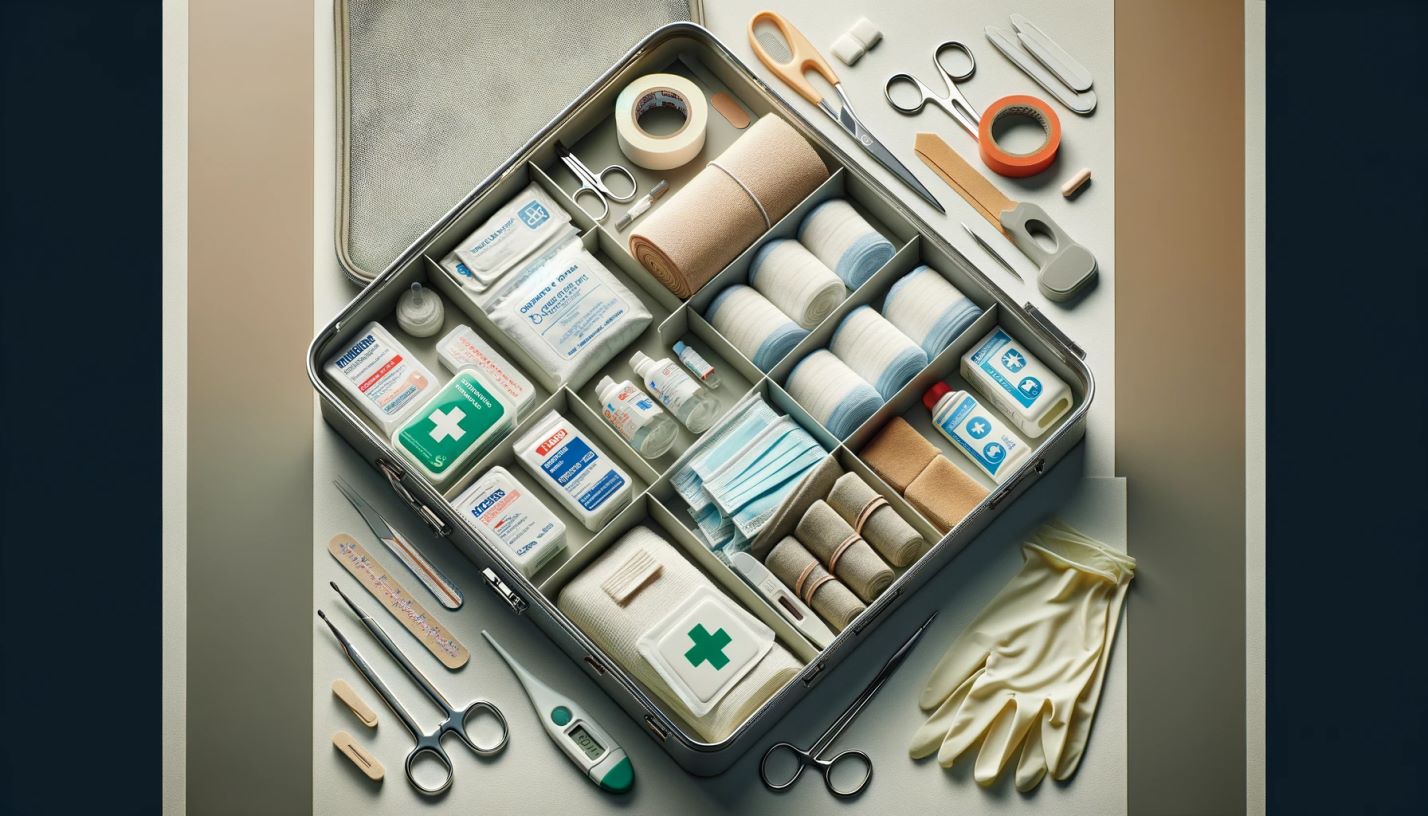
Proper storage and regular updating of the contents of the first aid kit ensure that it is ready for use at any time. Here are the key rules to keep in mind when storing and updating your first aid kit:
- First aid kit storage
Find a comfortable place: The first aid kit should be kept easily accessible, but out of the reach of children. Dry, cool places, protected from direct sunlight and humidity, are ideal.
Maintaining order in the middle of the first aid kit: it is worth placing drugs and supplies in the first aid kit in such a way as to quickly find everything you need. Using split tabs or labeling will help with this.
- Updating the contents of the first aid kit
Checking expiration dates: You should regularly (at least once a year) check the expiration dates of all medicines and medical supplies. Expired medications should be replaced.
Replenishment: If any medications or supplies have been used, it is important to replenish them as soon as possible.
Adaptation to changes: changes in the health of family members should be taken into account by adding specific medications or remedies needed for the relevant diseases.
- Checking the condition of medical equipment
Not only medicines, but also medical instruments (scissors, tweezers, etc.) must be in good condition and clean.
Tools should be inspected regularly for rust or damage.
- Educating and informing
It is important that all family members or office staff know where the first aid kit is and how to use it.
It is recommended to occasionally conduct small first aid briefings using a first aid kit.
Frequently Asked Questions
How often should you update your first aid kit?
It is recommended to check the contents of the first aid kit at least once a year. It is important to renew expired medicines and replenish stocks of used medicines.
What medicines should be in the home first aid kit?
As a rule, the home first aid kit should contain antiseptics, painkillers, antipyretics, bandages, plasters, sterile wipes, allergy remedies, as well as individual medicines for family members.
What to do with expired medicines?
Expired medications should be disposed of. They can be handed over to special recycling points or pharmacies offering such a service.
Do I need instructions for using the first aid kit?
Yes, it is advisable to have instructions on how to administer first aid and use the contents of the first aid kit, especially if there are children or elderly people in the house.
What are the options for using a first aid kit at home?
At home, the first aid kit is used to provide first aid for minor injuries, such as cuts, bruises, burns. It is also used for sudden ailments: headache, fever, allergic reactions.
Author: Natalia Kandybey, Candidate of Pharmaceutical Sciences, Quality Director of PJSC Pharmaceutical Factory “VIOLA”