Sage (Salvia officinalis) is a spicy-aromatic plant, the leaves of which are used in herbal medicine and home care. In practice, it is more often used for the oral cavity and throat (gargling, topical application), as well as – according to some traditional schemes – internally for mild digestive discomfort and excessive sweating. Below are the main properties, methods of application and limitations.


What is sage
Sage officinalis and ornamental: what is the difference
There are dozens of species under the name sage. Ornamental forms are grown for their appearance and aroma, but their composition and concentration of active substances may differ. Salvia officinalis (leaves) is traditionally used as a medicinal plant raw material.
Brief botanical description and origin
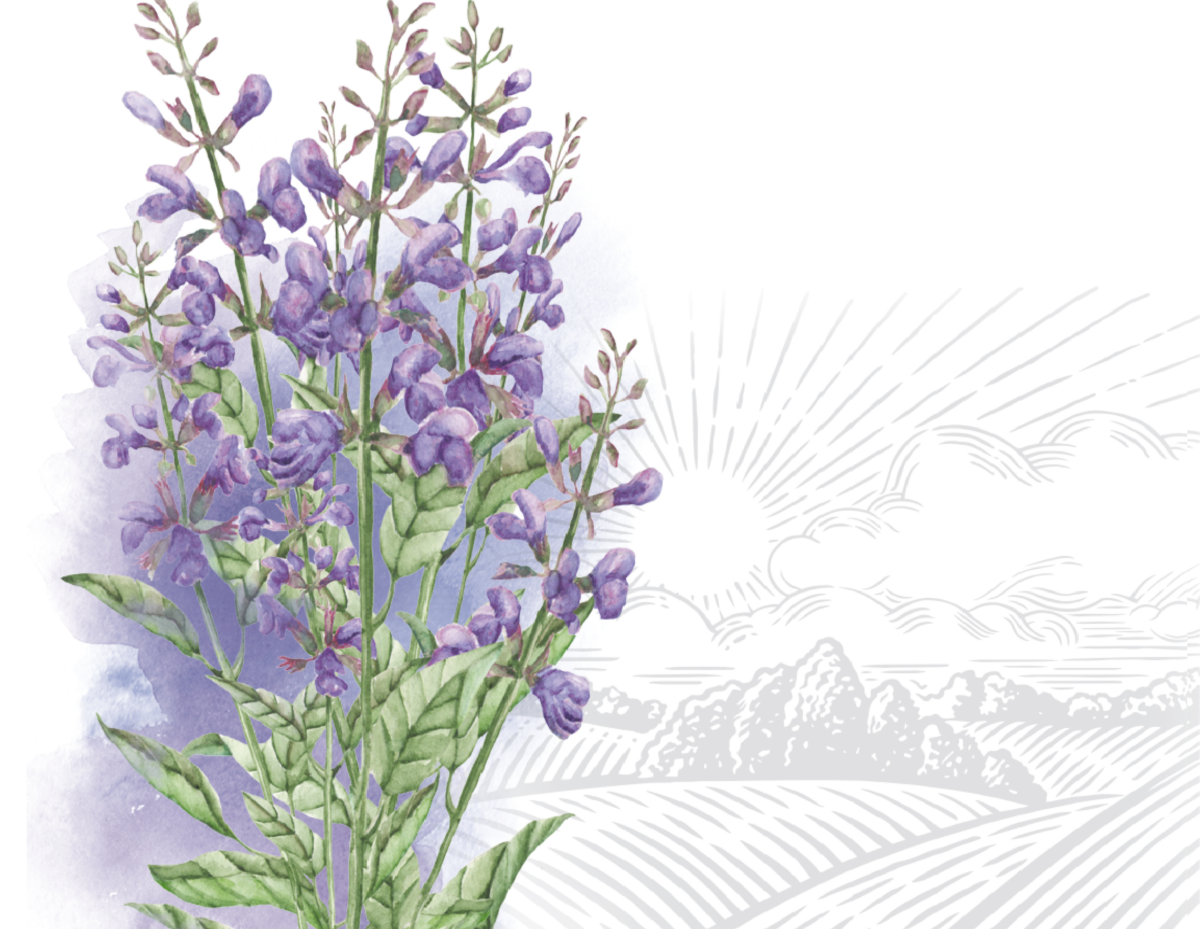
It is a perennial subshrub with pubescent grayish-green leaves and a characteristic spicy smell. The Mediterranean is considered its homeland, but the plant is widely cultivated. The raw material usually looks like pieces of leaves of different shapes with a small number of other parts of the plant; the color is green or grayish-green with possible blue-violet inclusions; The taste is bitter-spicy, slightly astringent.
Chemical composition of sage
Essential oils, flavonoids, tannins
The most significant groups of substances are essential oils, flavonoids, tannins, and phenolic compounds. It is they who form the aroma, the “astringent” effect and the properties for which the plant is valued in the care of mucous membranes and skin.
Why the composition determines the beneficial properties
Tannins can “dry” and thicken surface tissues, helping to reduce irritation and redness. Essential oil components maintain a feeling of freshness, and flavonoids are involved in antioxidant protection. Taken together, this explains why sage’s beneficial properties are most often associated with oral and throat care.
Useful and medicinal properties of sage
Anti-inflammatory and antiseptic effects
Sage leaves are traditionally used as a remedy with an astringent effect and support for the hygiene of the oral mucosa and throat; It is used as part of local care to relieve discomfort.
Benefits for the throat and respiratory tract
Sage for the throat is more often used for gargling with irritation and discomfort in the oral cavity and throat (tickling, discomfort, “sadness”). This is a local care that helps maintain mucosal hygiene. If symptoms persist for longer than 1 week or worsen, it is better to consult a doctor.
Women’s Health Benefits
The topic “sage for women” usually refers to use in herbal medicine during hormonal changes (for example, hot flashes) and functional discomfort. The approach should be individual: in case of diseases, taking hormonal drugs, planning a pregnancy and during lactation, self-prescription is undesirable.
Digestive benefits
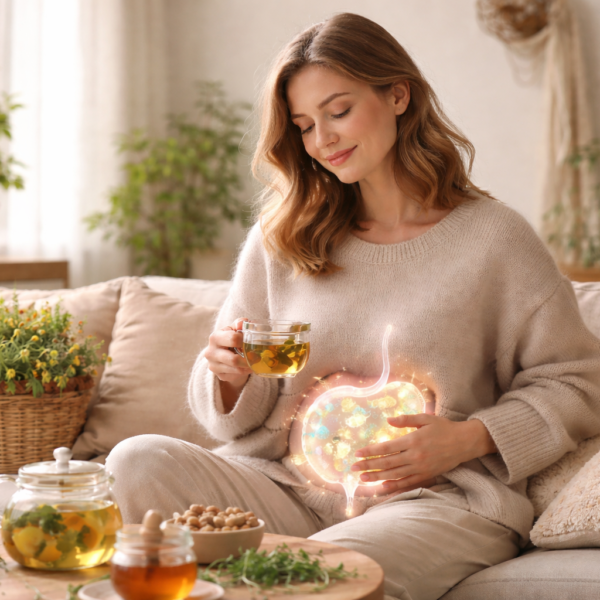
Sage is sometimes used internally for mild digestive discomfort – for example, heartburn and bloating. If such symptoms persist for more than 2 weeks while taking it, you need to consult a specialist so as not to miss the cause of the complaints.
Benefits for skin and hair
Externally, infusions are used for lotions, rubbing and rinsing. The astringent effect can be useful for oily skin and a tendency to irritation, and the aromatic components give a feeling of freshness. For sensitive skin, gentle concentrations and a reaction test are important.
The use of sage in folk medicine
For what conditions is it used?
The most typical options are:
- gargling for discomfort and irritation in the oral cavity and throat;
- local care of the mucous membrane for stomatitis, gingivitis, periodontitis (as an element of hygiene and an integrated approach);
- external use for minor skin irritations;
- Ingestion – according to traditional schemes for mild dyspeptic complaints (for example, heartburn, bloating) and with increased sweating.
As part of herbal preparations and complex phytotherapy
In preparations, the leaves are often combined with chamomile, calendula, linden, thyme and other herbs. It is important to remember: interactions with drugs may be unknown, so in case of chronic diseases and constant therapy, it is better to coordinate the collection with a specialist.
How to use sage: forms and methods
Infusion and decoction
The classic scheme of the infusion of crushed leaves: place 1 tablespoon of raw materials in an enamel bowl, pour 200 ml of hot boiled water, close the lid and soak in a boiling water bath for 15 minutes. Cool at room temperature for 45 minutes, strain and squeeze the raw materials. Bring the volume of the infusion with boiled water to 200 ml. Apply externally for inhalation and rinsing 3-4 times a day.
Sage tea
Tea is made weaker in concentration (usually softer than gargling solution): infuse for 7-10 minutes. For long-term daily use, it is not suitable for everyone because of the essential oils – it is better to focus on your well-being and doctor’s recommendations.
Rinsing and external use
Age dilution schemes for rinsing: adults and children from 12 years old – undiluted; children 7–12 years old – dilute 4 tablespoons of infusion in 200 ml of boiled water; for children 3-7 years old – dilute 2 tablespoons of infusion in 200 ml of boiled water. If a filter mold is used: pour 3 filter bags with 200 ml of boiling water and infuse for 15 minutes; Apply externally 3-4 times a day according to the same rules of dilution.
How to take: general recommendations
Course Duration
For external use, the frequency is usually adhered to 3-4 times a day. The duration of the treatment course is determined by the doctor individually, depending on the cause of the symptoms and the general scheme of care.
Why Taking Breaks Is Important
Essential oils and tannins require moderation: long-term uncontrolled use can increase the risk of irritation of the mucous membrane or undesirable reactions. Store the finished infusion in a cool place for no more than 2 days; raw materials are in their original packaging at a temperature not exceeding 25 °C, out of the reach of children.
Contraindications and possible harm
Who is sage contraindicated for?
The main contraindication is hypersensitivity (allergy) to sage. The safety of use during pregnancy and breastfeeding has not been reliably established, so sage is usually not recommended during these periods; A separate point is that sage is traditionally used to reduce lactation, but there is little quality data, so it is better to discuss any “courses” for breastfeeding with a doctor.
As for children: in international monographs, the use in children and adolescents under 18 years of age is considered unestablished/not recommended due to lack of data; If we are talking about a specific pharmacy product, focus on age restrictions and the dilution scheme on the package and use only as prescribed by a doctor.
Possible side effects and limitations
Allergic reactions (including redness, rash, itching, swelling of the skin) are possible. In case of adverse reactions, stop using and consult a doctor. In case of overdose, an increase in adverse reactions is likely. If the symptoms do not go away or worsen, this is a reason for a face-to-face consultation.
Frequently Asked Questions
Can you drink sage everyday?
Usually it is better to use courses and by task. Long-term daily intake without monitoring may be undesirable; If necessary, discuss the regimen with your doctor.
Is sage suitable for gargling children?
Yes, but from the age of 3 and as prescribed by a doctor, with mandatory dilution by age (3-7 and 7-12 years). From the age of 12, it is more often used without dilution.
Can sage be used during pregnancy?
Only as prescribed by a doctor, when the expected benefits outweigh the potential risks.
What are the benefits of sage for women?
More often, it is considered as a component of herbal medicine for functional discomfort and menopause, but the regimen should be individual and safe, taking into account concomitant conditions and therapy.
Can sage be combined with other herbs?
In everyday life, yes (for example, with chamomile or calendula for gargling), but with constant medications and chronic diseases, it is better to agree on the composition: interactions may be unknown.
Conclusions and recommendations
Sage is valued for its combination of astringent, anti-inflammatory and antiseptic effects, so sage is most often used in oral and throat care (gargles, inhalations) and for external use. Observe the concentrations, store the infusion for no longer than 2 days and take into account sage contraindications. During pregnancy, lactation, in children and with persistent symptoms, it is wiser to act together with a doctor.
Literature
- WHO Monographs on Selected Medicinal Plants (Salvia officinalis). (https://iris.who.int/server/api/core/bitstreams/64ddcde7-127f-455d-827e-3ba757a4fabd/content)
- Assessment report (Salvia officinalis L., folium / aetheroleum). (https://www.ema.europa.eu/en/documents/herbal-report/final-assessment-report-salvia-officinalis-l-folium-and-salvia-officinalis-l-aetheroleum-revision-1_en.pdf)
- Sage: Usefulness and Safety (https://webprod.hc-sc.gc.ca/nhpid-bdipsn/dbImages/mono_Sage_Oral_EN.pdf)
Author: Natalia Kandybey, Candidate of Pharmaceutical Sciences, Quality Director of PJSC Pharmaceutical Factory “VIOLA”
Subscribe to our pages on social networks: Facebook and Instagram