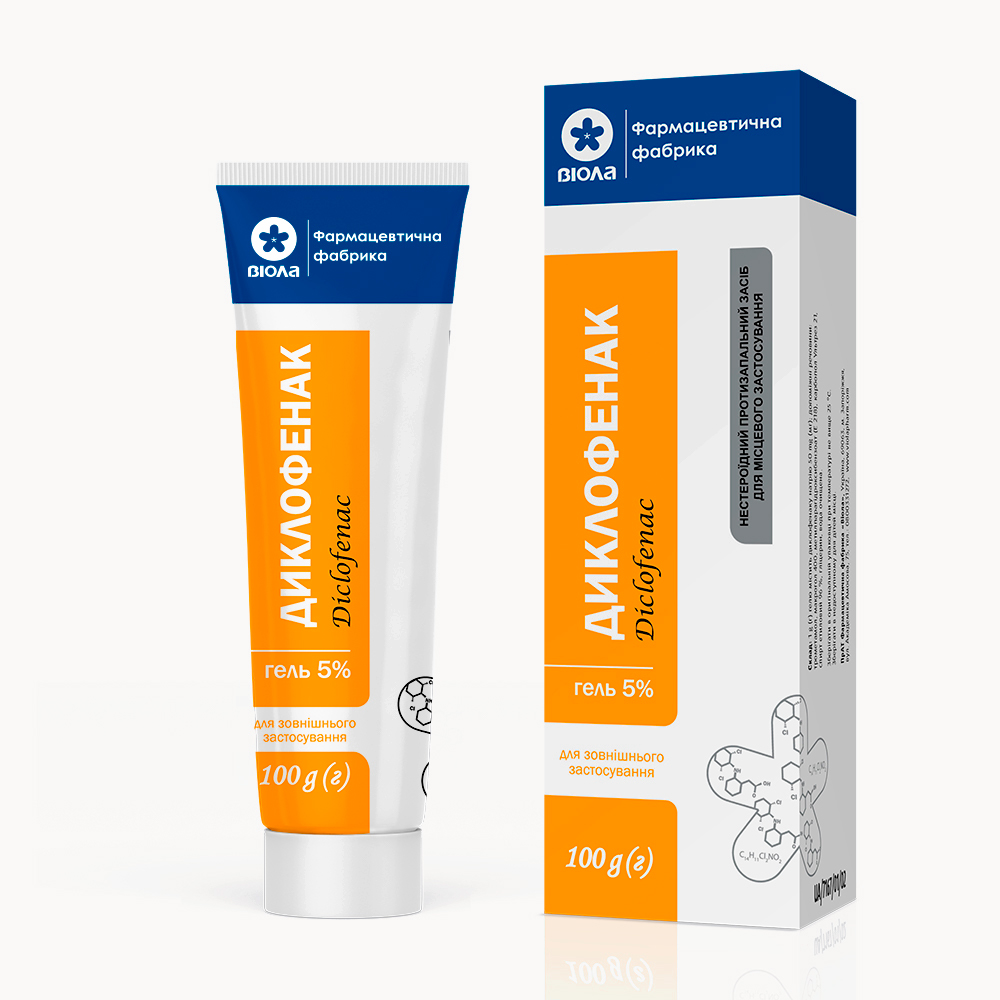
Pain and inflammation are frequent companions of injuries, diseases of the joints and muscles. When the usual rhythm of life is disturbed due to discomfort, it is important to find an effective and safe remedy that can quickly restore comfort and mobility. Diclofenac is one of the most popular non-steroidal anti-inflammatory drugs (NSAIDs), which is used to relieve pain and treat inflammatory processes.
What is Diclofenac and how does it work?
Diclofenac is a time-tested remedy that is actively used to treat inflammatory processes and eliminate pain. It belongs to the group of non-steroidal anti-inflammatory drugs (NSAIDs) and has a complex effect: it relieves pain, reduces inflammation and lowers the temperature in the affected tissues.
Due to its versatility, Diclofenac is used for diseases of the joints, spine, muscles and ligaments, as well as for injuries, sprains and bruises. The drug helps not only to alleviate the condition, but also helps to restore mobility, reducing stiffness and discomfort in the affected area. This makes it one of the most sought-after remedies both in medical practice and in the daily lives of people who lead an active lifestyle.
Composition and release forms
Diclofenac comes in several forms, each designed for specific situations.
- The gel and ointment are applied to the skin, penetrating into the deep tissues and having an analgesic and anti-inflammatory effect. They are convenient to use for injuries, sprains and joint diseases, as they work directly at the site of inflammation.
- Tablets have a more systemic effect and are prescribed for severe pain syndromes caused by inflammatory diseases of the joints, spine or internal organs. They help relieve pain quickly, but require caution with prolonged use due to their possible effects on the gastrointestinal tract.
- Injections are used in acute cases when quick and strong anesthesia is required. They provide an instant effect, as the active substance enters the bloodstream, quickly reaching the focus of inflammation.
All forms of the drug are based on the active ingredient diclofenac sodium, which provides a powerful analgesic and anti-inflammatory effect.


Mechanism of action of the drug
Diclofenac works by blocking the production of prostaglandins, substances that are responsible for the development of inflammatory reactions in the body. Prostaglandins contribute to fever, increased pain and tissue swelling. When their synthesis is inhibited, the inflammatory process slows down, swelling decreases, and pain becomes less intense.
The drug penetrates into the affected tissues, is concentrated in the inflamed area and begins to work almost immediately after application. When a gel or ointment is applied, it is absorbed through the skin and gradually released into the deep layers of tissues, where its therapeutic effect continues. When taken with pills or injections, diclofenac spreads rapidly through the body, reaching the inflamed area through the bloodstream.
How quickly does Diclofenac relieve pain and inflammation?
The speed of action of the drug depends on the form.
- When using a gel or ointment, the first noticeable improvements are felt within 30-60 minutes after application. The drug begins to act locally, relieving pain and reducing inflammation at the site of injury. The maximum effect is usually achieved after a few hours, and with regular use for several days, the symptoms of inflammation are completely eliminated.
- The tablets begin to work faster – about 30 minutes after ingestion. The active substance is absorbed in the stomach, enters the bloodstream and reaches the affected tissues, providing systemic pain relief and relief of inflammation.
- Injections provide the fastest effect. Within 10-20 minutes after the injection, the pain decreases significantly, and the inflammation begins to gradually subside. That is why this method is most often used for severe pain that requires immediate relief.
The duration of action of Diclofenac also depends on the form of release. The gel and ointment are applied several times a day, the tablets are taken at intervals of 8-12 hours, and injections are usually prescribed no more than once a day. This allows you to maintain a stable therapeutic effect and effectively control inflammation and pain.
Main indications for use
Diclofenac is one of the most versatile drugs among non-steroidal anti-inflammatory drugs. It is actively used to relieve pain and inflammation in various diseases of the musculoskeletal system, injuries, soft tissue injuries and other pathologies. Thanks to its mechanism of action, it not only relieves the patient’s condition, but also helps to restore the functions of joints, muscles and ligaments.
Treatment of inflammation and joint pain
Joint diseases are one of the most common causes of chronic pain and limited mobility. Diclofenac is effectively used for arthritis, arthrosis, gout, rheumatism and other pathologies accompanied by inflammation of the joints.
In rheumatoid arthritis, it reduces the severity of pain, reduces swelling and helps maintain joint mobility. In arthrosis, the drug reduces the destruction of cartilage tissue, facilitating movement and reducing discomfort. It is also widely used in gouty attacks, quickly eliminating inflammation and acute pain.
The form of release of the drug is selected depending on the severity of the disease. Gel and ointment are used for local pain relief, and tablets and injections are used for the complex treatment of chronic inflammatory processes.
Use for injuries and bruises
Injuries, sprains, and ligament damage can be a serious problem, especially for people who lead an active lifestyle. In such cases, Diclofenac helps not only relieve pain, but also accelerate the recovery of damaged tissues.
In bruises, it reduces swelling and inflammation, which is especially important in the first hours after injury. In case of sprains and ruptures of the ligaments, the drug reduces pain, allowing you to quickly return to your usual physical activity.
The most convenient form for treating injuries is a gel or ointment. They are applied directly to the damaged area, ensuring the rapid penetration of the active substance into the tissues and giving a cooling effect. In severe cases, when the pain is very severe, tablets or injections can be used for a complex effect.
Diclofenac for osteochondrosis and myositis
Diseases of the spine are often accompanied by chronic pain and limited mobility. Osteochondrosis associated with degenerative changes in the intervertebral discs can cause discomfort in the neck, back and lower back, as well as provoke headaches and numbness of the limbs.
Diclofenac in such cases is used to relieve inflammation and relieve pain. It reduces swelling of the tissues surrounding the nerve roots, which helps to reduce pressure on nerve endings and reduce pain.
Myositis – inflammation of the muscles that occurs due to hypothermia, overload or infections, also requires anti-inflammatory treatment. Diclofenac helps relieve pain, eliminate inflammation and restore normal muscle function.
With osteochondrosis and myositis, an integrated approach is most often used: tablets or injections for systemic action, as well as a gel or ointment for local pain relief. This allows you to achieve the maximum therapeutic effect and speed up the healing process.
Instructions for use
Diclofenac is an effective remedy for relieving pain and inflammation, but for maximum results, it is important to use it correctly. The dosage and method of use depend on the form of release of the drug, the nature of the disease and the individual characteristics of the body.
Dosages and dosage regimens
Diclofenac gel and ointment are applied to the skin 3-4 times a day, rubbing in with light movements. The amount of the drug depends on the area of the affected area. Usually 2-4 g of the product (the size of a cherry or walnut) is enough to treat an area of 400-800 cm².
The tablets are taken orally, the standard daily dosage is 50-100 mg, divided into 2-3 doses. The maximum dose is 150 mg per day.
Injections are used for severe pain. It is administered intramuscularly, 75 mg once a day, if necessary, twice, but not more than 2-3 days in a row, after which the patient is transferred to other forms of the drug.
The duration of therapy depends on the patient’s condition, but topical application should not exceed 14 days, and taking tablets or injections – 5-7 days without consulting a doctor.
How to properly apply ointment and gel?
The drug is applied only to intact skin, avoiding contact with wounds, mucous membranes and eyes. After application, you must wash your hands if they are not a treatment area.
It is not recommended to use occlusive dressings, but light fixation with a bandage is allowed in case of ligament injuries. If symptoms persist or worsen within seven days, a doctor should be consulted.
Contraindications and possible side effects
Despite the effectiveness of Diclofenac in the fight against pain and inflammation, its use is limited by a number of contraindications. The drug requires caution during long-term use, especially in patients with chronic diseases.
Who should not take Diclofenac?
The drug is contraindicated in people with hypersensitivity to diclofenac or other non-steroidal anti-inflammatory drugs. It is forbidden to use it for bronchial asthma, urticaria or allergic reactions caused by aspirin or other non-steroidal anti-inflammatory drugs.
Diclofenac is not prescribed for patients with severe forms of peptic ulcer disease, gastrointestinal bleeding, serious liver and kidney disease. It is also contraindicated in severe cardiovascular pathologies, such as severe heart failure or a high risk of heart attack.
Diclofenac during pregnancy and for children
The use of Diclofenac is strictly prohibited in the third trimester of pregnancy, as it can provoke weakness of labor and premature closure of the ductus arteriosus in the fetus. In the first and second trimester, the drug can be prescribed only according to strict indications of a doctor.
When breastfeeding, Diclofenac should be used with caution. If there is a need to use it, especially in the form of tablets or injections, breastfeeding is stopped.
Children under 14 years of age are not prescribed the drug in the form of gel and ointment. In rare cases, if the doctor considers it necessary, a short course of treatment is possible, but under strict control.
Effects on the gastrointestinal tract and cardiovascular system
Diclofenac, like other non-steroidal anti-inflammatory drugs, can negatively affect the gastrointestinal tract and cardiovascular system. It can irritate the gastric mucosa, increasing the risk of gastritis, ulcers and even internal bleeding. Long-term use, especially in tablets, requires caution and supervision by a doctor.
The drug may also increase the risk of thrombosis, heart attack, and stroke, especially in people with pre-existing cardiovascular disease. Therefore, patients with hypertension, heart failure or coronary heart disease are advised to choose safer alternatives or use Diclofenac in minimal doses and short courses.
Can it be used for gastritis, kidney disease, allergies?
Patients with chronic diseases of the stomach and intestines, such as gastritis, peptic ulcer or colitis, should use Diclofenac with caution, preferably in the form of a gel or ointment. If you need to take pills, the doctor may additionally prescribe drugs that protect the gastric mucosa.
In kidney and liver diseases, the metabolism of the drug may slow down, which increases the load on the body. In such cases, the dosage should be minimal, and the duration of treatment should be shortened.
Allergy sufferers are advised to consult a doctor beforehand, as Diclofenac can cause skin reactions, angioedema and bronchospasm. If there have previously been allergic reactions to non-steroidal anti-inflammatory drugs, it is better to refuse its use.
Analogues and comparison with other drugs
Diclofenac is one of the most popular non-steroidal anti-inflammatory drugs (NSAIDs), but it is far from the only one in its group. Depending on the individual characteristics of the body and the specific diagnosis, the doctor may recommend alternative drugs that have a similar or milder effect.
| Medication | Analgesic potency | Anti-inflammatory effect | Main dosage forms | Duration of action* | Side effects (common/significant) | Suitable for long-term use | Availability / price in Ukrainian pharmacies |
| Diclofenac | High | High | Tablets, capsules, rectal suppositories, gel, injection solutions | 6–8 h | GI ulcers, ↑ liver enzymes, cardiovascular risk | No (limit ≤ 2 weeks due to toxicity) | Very available; low price (generics) |
| Ibuprofen | Medium | Medium | Tablets, capsules, suspension, syrup, gel | 4–6 h | Dyspepsia, elevated BP, ulcers less common | Conditionally yes (≤ 3 months with breaks) | Very available; inexpensive mass-market option |
| Nimesulide | Moderately high | High (COX-2-preferential) | Tablets, granules, suspension, gel | 8–12 h | Hepatotoxicity, dyspepsia, pruritus | No (course ≤ 15 days) | Available; mid-range price |
| Paracetamol | Moderate | Weak (almost absent) | Tablets, capsules, syrup, suppositories, infusion solution | 4–6 h | Hepatotoxicity at > 4 g/day | Yes (within recommended doses) | Very available; cheapest |
| Meloxicam | High | High (selective COX-2) | Tablets, capsules, injection solution, suppositories | 12–24 h | Dyspepsia, rare ulcers, thrombosis | Yes (often prescribed in courses for arthritis) | Available; mid-range price |
| Ketoprofen | High | High | Tablets, sustained-release capsules, gel, patch, suppositories, injections | 6–12 h (up to 24 h SR) | Ulcers, bronchospasm in asthmatics | Limited (GI monitoring required) | Available; mid-range price |
* Approximate duration of a single oral dose; may vary depending on dosage form and individual factors.
How to read the table
- Analgesic potency / anti-inflammatory effect — averaged clinical strength for acute pain at standard doses.
- Duration of action — the usual length of effect after administration; sustained-release (SR) forms last longer.
- Long-term use — indicates whether the drug is suitable for chronic conditions provided side effects are monitored and laboratory control is in place.
Attention: the information is provided for educational purposes and does not replace medical advice. When choosing an analgesic, consider individual contraindications (peptic ulcer disease, liver or heart disorders, pregnancy, etc.) and potential interactions with other medicines.
What is the difference between Diclofenac and Ibuprofen and Nimesulide?
Diclofenac, Ibuprofen and Nimesulide belong to the same pharmacological group, but have differences in mechanism of action, efficacy and safety.
Ibuprofen has a milder effect on the body. It is less likely to cause gastrointestinal side effects, but its anti-inflammatory effect is considered less pronounced than that of Diclofenac. Most often it is prescribed for moderate pain and inflammation, as well as headaches and toothaches.
Nimesulide differs from Diclofenac in a selective mechanism of action, which means a lower risk of damage to the gastric mucosa. It reduces inflammation and pain faster, but with prolonged use it can adversely affect liver function. It is more often recommended for acute inflammation such as injuries, febrile conditions, and severe joint pain.
If Diclofenac is the “gold standard” in the treatment of diseases of the joints and spine, then Ibuprofen is more suitable for relieving mild to moderate pain, and Nimesulide is often used for inflammatory processes with pronounced pain.
What are some safe alternatives?
For patients who are contraindicated in Diclofenac or other classic non-steroidal anti-inflammatory drugs, there are more gentle analogues.
Paracetamol is a safe analgesic that does not have a pronounced anti-inflammatory effect, but effectively copes with pain and fever. It has practically no effect on the stomach and cardiovascular system, but with chronic joint pain, its effect may not be sufficient.
Meloxicam is a selective non-steroidal anti-inflammatory drug that acts similarly to diclofenac, but has a milder effect on the stomach. It is well suited for the long-term treatment of arthritis and osteoarthritis, as it is less likely to cause complications from the digestive system.
Ketoprofen is a drug that is similar to Diclofenac in terms of potency, but penetrates into tissues faster, providing a more pronounced analgesic effect. It is often used in gels and ointments for external use for injuries, sprains and joint diseases.
The choice of analogue depends on the individual characteristics of the body and the patient’s condition. If Diclofenac causes side effects or is contraindicated, you should consult your doctor to choose the safest option.
Answers to popular questions
Ointment or gel: what to choose?
Both forms of the drug are intended for topical use, but have certain differences.
- The gel has a lighter texture, absorbs quickly, does not leave greasy residue and provides a slight cooling effect. It penetrates the skin better and begins to act faster. The gel is preferred for acute pain, injuries, sprains and inflammation of the joints, especially if surgical relief of symptoms is necessary.
- The ointment has a thicker base, is absorbed more slowly and stays on the skin longer, creating a prolonged effect. It is better suited for the long-term treatment of chronic diseases such as arthritis and osteochondrosis, as well as, if necessary, a warming effect.
If you need quick pain relief, it is better to choose a gel. If the treatment is long-term and long-term action is important, an ointment is preferable.
How long can the drug be used without harm to health?
The duration of use of Diclofenac depends on the form of release.
- The gel and ointment can be used for up to 14 days in a row, after which a doctor’s consultation is required. Long-term use on large areas of the skin can lead to the accumulation of the active substance in the body and increase the risk of side effects.
- Tablets and injections are not recommended for long-term use. Usually the course of treatment is 5-7 days. If it is necessary to continue therapy, the doctor may adjust the dosage or suggest more gentle analogues.
Exceeding the recommended period of use of Diclofenac can lead to skin irritation (when applied topically), problems with the gastrointestinal tract, kidneys and cardiovascular system (when taken systemically). If symptoms persist after a few days of treatment, you should consult a specialist to select a safer therapy option.
What is the difference between diclofenac in ointment and tablet forms?
An ointment or gel acts locally: the active substance penetrates the skin and concentrates right at the injured area, so the risk of ulcers, cardio- and hepatotoxicity is minimal. Tablets are absorbed into the bloodstream, spread throughout the body and provide a stronger systemic anti-inflammatory effect, but they also carry more classical side effects involving the GI tract, heart, and liver.
When is it better to use diclofenac—for arthritis or for injuries?
For chronic arthritis, where inflammation affects several joints or the pain is constant, tablets or prolonged-release capsules are usually more effective. After acute injuries (sprains, contusions), it is more reasonable to choose a topical form—a gel or ointment that quickly reduces pain and swelling at the specific site. If necessary, a short course of tablets can be combined with topical application.
How to choose a dosage form: gel, ointment, or tablets?
A gel is rapidly absorbed and suits acute swelling and superficial injuries; an ointment has a fattier base, works longer, and is convenient for chronic joint pain. Tablets are selected when pain or inflammation is widespread or topical agents are insufficient, but they should be taken with caution in peptic ulcer disease or cardiac and hepatic disorders. Agree on the optimal form and dosage with your physician, especially for long-term treatment.
Literature:
- Diclofenac: Uses, Interactions, Mechanism of Action | DrugBank Online (https://go.drugbank.com/drugs/DB00586)
- Diclofenac – StatPearls – NCBI Bookshelf ( https://www.ncbi.nlm.nih.gov/books/NBK557879/ )
Author: Natalia Kandybey, Candidate of Pharmaceutical Sciences, Quality Director of PJSC Pharmaceutical Factory “VIOLA”