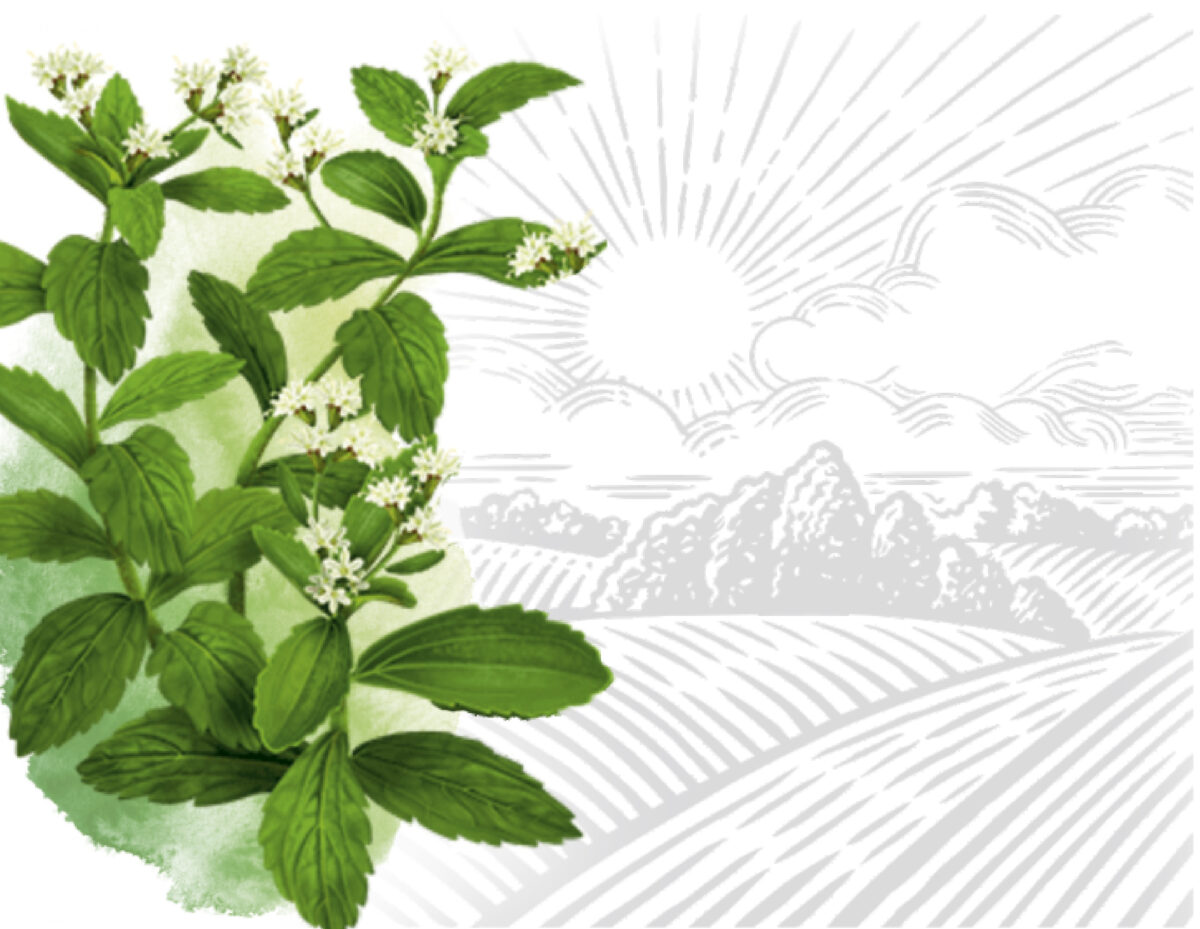
Stevia (Stevia rebaudiana Bertoni) is a perennial herbaceous plant from the Asteraceae family, native to South America. Its leaves contain natural steviol glycosides, including stevioside and rebaudioside, which provide a sweet, calorie-free taste. In its natural environment, stevia reaches 80 cm in height and is used by the indigenous peoples of Paraguay and Brazil as a means not only to sweeten drinks, but also to improve digestion, reduce blood pressure and relieve symptoms of fatigue.
Today, stevia is actively cultivated in Asia, South America and Europe and is used around the world as a natural sweetener suitable for people with diabetes, metabolic syndrome and overweight. In addition to replacing sugar, it has a number of useful properties: it supports metabolism, strengthens blood vessels, does not cause glucose spikes and does not provoke hunger. In Japan, China, and South Korea, stevia has been included in dietary standards for decades.
Chemical composition
Steviosides and rebaudiosides
The main active components of stevia are steviol glycosides, which are natural compounds that provide sweetness without calories. The best known of them are stevioside and rebaudioside A. They are 200-300 times sweeter than sugar, do not cause insulin release and are not metabolized as carbohydrates. Rebaudiosides are considered milder in taste, with less bitterness. These compounds are resistant to heat and do not break down during cooking, making them easy to cook.
Vitamins, minerals and other active substances
In addition to glycosides, stevia leaves contain flavonoids (rutin, quercetin), tannins, ascorbic acid, B vitamins, iron, zinc, potassium, magnesium. These components enhance antioxidant activity, strengthen the vascular wall and contribute to the detoxification of the body. The composition also contains terpenes and essential oils that have a mild antimicrobial and tonic effect.
Beneficial features
Lowering blood sugar levels
One of the main advantages of stevia is its ability to lower blood glucose levels without the need for insulin stimulation. Steviosides are not metabolized in the body as carbohydrates and do not cause sugar levels to rise, making stevia safe for people with type 1 and type 2 diabetes. In addition, some studies point to stevia’s ability to improve tissue sensitivity to insulin and reduce insulin resistance when used regularly.
Maintaining a normal weight
Stevia contains no calories and does not cause hunger, unlike some artificial sweeteners, which can provoke an increase in appetite. It does not affect the level of ghrelin and leptin, hormones that regulate the feeling of satiety, which means it can be used in weight correction programs. Also, stevia does not retain fluid and does not cause edema, which is important for diets with limited sugar and salt.
Antioxidant and anti-inflammatory properties
The flavonoids and polyphenols contained in stevia protect cells from the action of free radicals, reducing the risk of chronic inflammation and slowing down the aging process. These substances contribute to the normalization of metabolism, improve liver function and support the activity of the immune system. Some components of stevia show moderate antibacterial activity against pathogenic microflora of the oral cavity, helping to prevent caries and gingivitis.
Cardiovascular support
Regular consumption of stevia can help lower blood pressure in patients with hypertension due to its mild vasodilator and diuretic effects. Magnesium, potassium and flavonoids in the composition help strengthen blood vessels, normalize heart rhythm and reduce triglyceride levels. At the same time, stevia does not affect blood pressure in people with normotonia, which makes it safe even with long-term use.
Indications
Stevia is recommended for use as a safe natural sweetener for people with carbohydrate metabolism disorders, in particular with type 1 and type 2 diabetes mellitus. It can be useful for insulin resistance and metabolic syndrome, as it does not cause sharp fluctuations in glucose levels and helps to improve metabolism. Stevia is also used for overweight and obesity as part of comprehensive weight loss programs, due to its lack of calories and ability to regulate appetite.
In addition, it is advisable to include stevia in the diet for hypertension and high cholesterol levels – it helps to gently reduce blood pressure and improves the lipid profile. Due to its antiseptic and anti-inflammatory properties, it is used for a tendency to caries and inflammatory diseases of the oral cavity. Stevia is also suitable for those who seek to reduce sugar consumption in everyday life – with allergies to sucrose, gastrointestinal diseases, as well as as part of the prevention of age-related and metabolic disorders.
Contraindications
Despite its high safety profile, stevia can cause individual reactions, especially when the dosage is exceeded. In rare cases, symptoms of intolerance are observed: skin itching, rash, nausea or a feeling of pressure in the stomach. During pregnancy and lactation, the use of stevia is not recommended, since there is no convincing data on its complete safety for the fetus and newborn. Stevia should also be used with caution if you are prone to low blood pressure – its mild hypotensive effect can increase the symptoms of hypotension. Children younger than 3 years of age should not be given stevia due to a lack of clinical studies and digestive sensitivity at an early age.
In general, when used judiciously, stevia is well tolerated by most people. However, if you have chronic diseases, especially endocrine or cardiovascular, you should consult a doctor or nutritionist before starting to take it.
Methods of administration
Stevia is used in the form of:
- dry leaf powder – for brewing or adding to food;
- aqueous and alcoholic extracts – for sweetening drinks, yogurts, cereals;
- tablets and drops – dosed form for easy use;
- syrups are a soft form for children and cosmetic purposes.
For tea drinks, brew 1-2 crushed leaves per glass of boiling water. In cooking, stevioside is used in a concentration of 1/5–1/10 of the volume of sugar (depending on the form). In diabetes, the dosage is selected individually.
Comparison with other sweeteners
Below is a comparison table of stevia with other popular sweeteners, considering their calorie content, effects on sugar levels, origin, and possible side effects:
| Sweetener | Caloricity | Influence for glucose | Naturalness | Undesirable effects |
| Stevia | 0 | No | Yes | Intolerance, hypotension may occur |
| Erythritol | ≈0.2 kcal/g | No | Yes | In large doses, it can cause flatulence |
| Sucrose (sugar) | 4 kcal/g | Yes | Yes | Increases glucose, causes caries |
| Aspartame, sucralose | 0 | No | No | Controversy about carcinogenicity, possible headaches |
Conclusion
Stevia is a natural sweetener with a wide range of health benefits. It helps control blood sugar levels, promotes weight loss, has antioxidant and anti-inflammatory effects, and supports the functioning of the heart and blood vessels. Due to its zero calorie content and lack of glycemic load, stevia is suitable for people with diabetes, metabolic syndrome and a tendency to obesity.
Literature:
- Steviol glycosides: Chemical diversity, metabolism, and function (https://pubmed.ncbi.nlm.nih.gov/32054283/)
- Health effects of Stevia rebaudiana: A review of preclinical and clinical studies (https://www.ncbi.nlm.nih.gov/pmc/articles/PMC4890837/)
- Stevia (Stevia rebaudiana Bertoni): Sweet medicine for a healthier world (https://www.sciencedirect.com/science/article/pii/S2666154325003515)
Author: Natalia Kandybey, Candidate of Pharmaceutical Sciences, Quality Director of PJSC Pharmaceutical Factory “VIOLA”
The information provided is not medical advice and does not replace professional health recommendations.
The information is based on scientific literature and is provided for informational purposes only.