
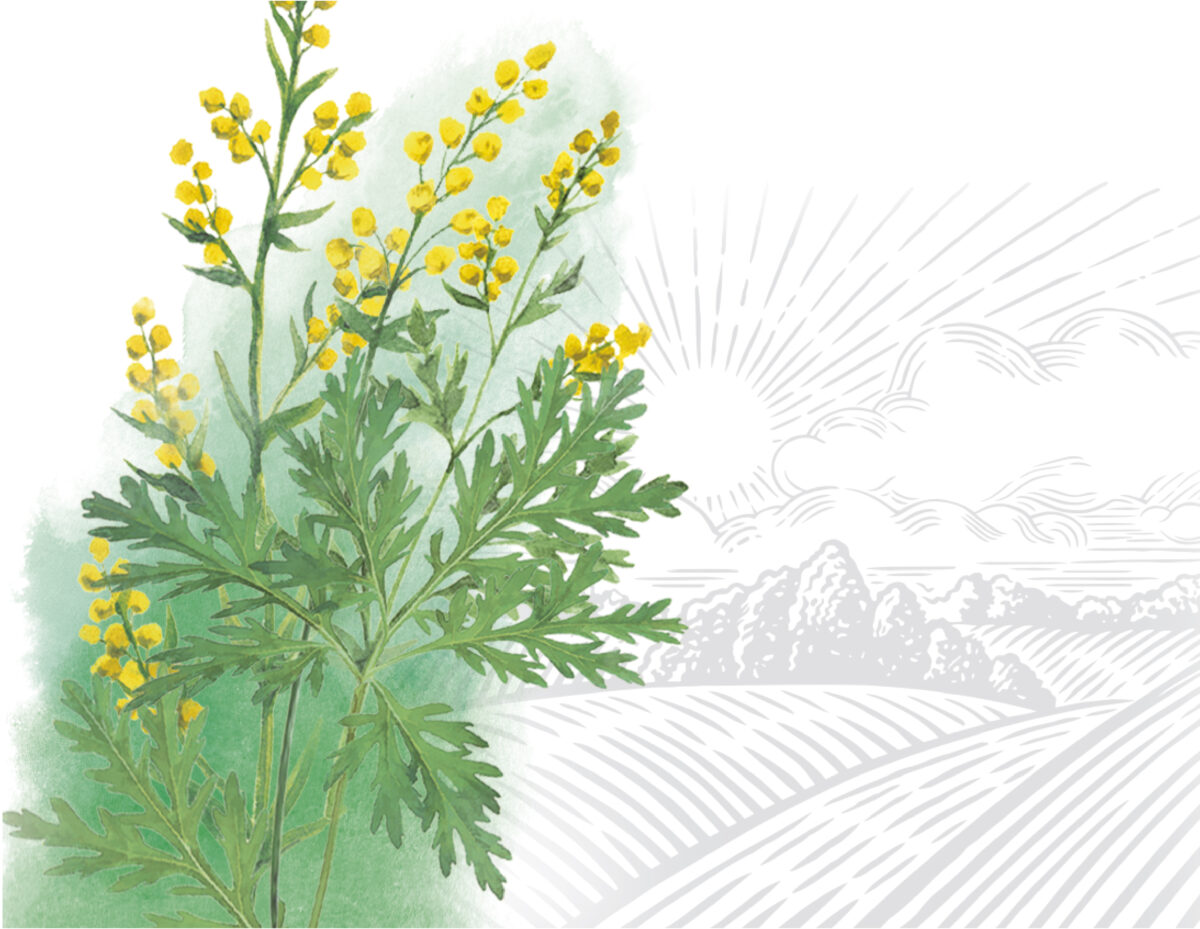
Bitter wormwood (Artemisia absinthium L.) is a perennial subshrub of the Asteraceae family up to 120 cm tall with silvery-pubescent branchy stems, pinnately dissected leaves and panicles of small yellow-green baskets. Its pungent spicy-bitter aroma is due to a rich complex of essential oils, bitter glycosides and polyphenols: they form the reputation of the plant as one of the strongest phytoremedies for cleansing the body and supporting digestion.
The raw materials are leafy shoots and leaves collected in the budding phase, when the concentration of biologically active components reaches its peak. Today, the standardized wormwood herb is included in pharmacy herbal teas, tinctures and essential oils, confirming the relevance of ancient recipes with modern research.
Historical use in folk medicine
Mentions of wormwood are found in the papyrus of Ebers (XVI century BC) and the works of Hippocrates: the infusions of the plant were used as a tonic elixir, “cleansing the insides”. In medieval Europe, Benedictine monks added the bitter herb to “healing wines” to stimulate appetite and prevent food poisoning. Slavic herbalists hung bunches of wormwood over the entrance to the house as a talisman, and fumigated the premises with a decoction during epidemics of typhus and plague.
Chemical composition
Wormwood is unique in its combination of bitter glycosides, essential oils and polyphenols, which determines a wide pharmacological effect.


Essential oils (up to 2%): thujone, thuyol, pinene, sabinene, cadinene, camphene. It is believed that the synergy of thujone and pinene not only “explodes” the taste, but also enhances antimicrobial activity against gram-negative bacteria.
Flavonoids, organic acids, tannins: artemethin, quercetin, kaempferol, caffeic and malic acids, catechinic tannins. Their antioxidant potential is comparable to the effect of green tea extract, which additionally protects liver cells from lipid peroxidation.
Vitamins: ascorbic acid (up to 30 mg %), carotene (provitamin A), nicotinic acid. Together, micronutrients support immunity and accelerate the regeneration of the gastrointestinal mucosa, enhancing the effects of the main active ingredients.
Together, these substances create a powerful phytochemical profile that provides the plant with a characteristic aroma, pronounced bitterness and multi-vector medicinal activity.
Beneficial features
Antihelminthic action
Bitterness and thujone change the pH environment of the intestine, making it unfavorable for helminths and their larvae. Clinical observations show that the course scheme “wormwood + tansy + cloves” reduces the frequency of reinfection with pinworms by almost half compared to monotherapy.
Choleretic and antispasmodic effects
Flavonoids stimulate the synthesis and secretion of bile, while relieving spasm of the sphincter of Oddi and the bile ducts. Regular infusions reduce the severity of post-cholecystectomy syndrome, normalizing intestinal trophism in the early rehabilitation period.
Anti-inflammatory and antibacterial effects
Essential oils show bacteriostatic activity against Staphylococcus aureus, Escherichia coli and inhibit the growth of Candida fungi, and tannins complement the effect by “drying” the inflamed mucous membrane. Additional studies have shown that wormwood extract reduces the production of the pro-inflammatory cytokines IL-6 and TNF-α in a model of acute colitis.
Improved digestion
Wormwood bitterness reflexively increases the secretion of gastric juice and pancreatic enzymes, accelerating digestion, eliminating heaviness and flatulence. In hypoacid gastritis, an increase in acidity contributes to better absorption of protein and a decrease in fermentation factors in the large intestine.
Indications
Wormwood is recommended for helminthic invasions (roundworms, pinworms, giardia), biliary dyskinesia and acalculous cholecystitis, hypo- or anacid gastritis with decreased appetite, pancreatic enzyme deficiency, as well as for flatulence and heaviness after fatty foods; In dermatology, the plant is part of a complex of cleansing schemes for acne and seborrhea, as it normalizes bile flow and indirectly reduces the intoxication load on the skin.
Contraindications
Wormwood should be abandoned during pregnancy and lactation (thujone increases the tone of the uterus), with cholelithiasis with concrements, peptic ulcer in the exacerbation phase, hyperacid gastritis and reflux esophagitis. Caution is required in patients with epilepsy, severe neurological disorders and children under 12 years of age without medical supervision; In case of individual hypersensitivity, any use is unacceptable.
Methods of administration
Infusion: pour 1 tbsp. l. chopped herbs with 200 ml of water 90 ° C, infuse for 20 minutes, strain. Take 1/3 cup 30 minutes before meals 2-3 times a day for a course of 7-10 days.
Decoction: boil 10 g of raw materials in 250 ml of water for 5 minutes, leave for 30 minutes.
Alcohol tincture 20%: 15-20 drops per 50 ml of water three times a day for a course of 14 days to stimulate appetite.
Powder: dry herb is ground in a coffee grinder, taken “on the tip of a knife” (≈ 0.3 g) washed down with water in the morning and evening for 5 days, then a break for 2 days and repeat.
Essential oil: 0.5-1 drop per slice of bread to improve bile flow; externally mixed with base oil (1:5) for muscle pain.
It is important to remember that the daily dose of raw materials should not exceed 3 g, and the total course of intake is 4 weeks per year; For longer use, consult your doctor. Filter bags and capsules of standardized mugwort extract are available at the pharmacy, which simplify accurate dosing at home.
Wormwood and other herbs: what to choose?
Wormwood is often compared to other plants that are used for similar problems. Below is a visual comparison of the properties of the most popular of them.
Comparison of mugwort with other medicinal herbs
| Criterion | Bitter wormwood | Tansy | Milfoil | Calendula |
| Main action | Antihelminthic, choleretic | Antihelminthic, antispasmodic | Disinfecting | Antiseptic, wound healing |
| It is most effective in | Parasites, bloating, bitterness in the mouth | Parasites, abdominal pain | Inflammation of the gastrointestinal tract, spasms | Superficial inflammation |
| Toxicity/Precautions | Middle (thujone) | Moderate (thujone) | Low | Low |
| Who is it for? | Adults, without chronic ulcers | Adults, not pregnant women | Suitable for most | Suitable for most |
| Taste/aroma | Very bitter | Bitter, tart | Bitter and spicy | Tender |
Importantly! Be sure to consult your doctor before using any antiparasitic or cleansing herbs. Especially when it comes to wormwood and tansy – they can be toxic in case of overdose.
Literature
- Assessment report on Artemisia absinthium L., herba (https://www.ema.europa.eu/en/documents/herbal-report/final-assessment-report-artemisia-absinthium-l-herba_en.pdf)
- Bioactive Compounds, Pharmacological Actions, and Pharmacokinetics of Wormwood (Artemisia absinthium) (https://pubmed.ncbi.nlm.nih.gov/32585887/)
- Artemisia absinthium L.—Importance in the History of Medicine, the Latest Advances in Phytochemistry and Therapeutical, Cosmetological and Culinary Uses (https://www.mdpi.com/2223-7747/9/9/1063)
Author: Natalia Kandybey, Candidate of Pharmaceutical Sciences, Quality Director of PJSC Pharmaceutical Factory “VIOLA”
The information provided is not medical advice and does not replace professional health recommendations.
The information is based on scientific literature and is provided for informational purposes only.


