

What are varicose veins and why do they occur?
Varicose veins are a pathological condition in which the veins lose their normal functionality, become excessively dilated, tortuous and visible under the skin. This process most often affects the lower extremities, leading to visual and functional impairments.
The main cause of varicose veins is a malfunction of the venous valves, which are responsible for the return flow of blood to the heart. When these valves weaken or become damaged, blood begins to pool in the veins, causing them to dilate and become distorted. Factors that contribute to the development of varicose veins include genetic predisposition, age-related changes, hormonal imbalances (such as during pregnancy), prolonged standing or sitting, excess weight and lack of physical activity.
To effectively treat varicose veins in the legs, ointments such as Troxevenol gel can be used, which contain active ingredients in the form of troxerutin and indomethacin, which help to reduce swelling, improve blood circulation and strengthen the walls of the veins, as well as have an anti-inflammatory effect, relieving symptoms and preventing the further development of the disease.
Varicose veins are not just a cosmetic defect, but also a serious disease that can lead to pain, swelling and even serious complications such as trophic ulcers and venous insufficiency.
Early signs and symptoms of varicose veins
Identifying early signs is important to start treatment for varicose veins in a timely manner and prevent their progression. Early symptoms of varicose veins include:
- Feeling heavy and tired in the legs: These sensations are often worse in the evening or after prolonged standing/sitting.
- Swelling: The legs can be swollen, especially in the ankle area, which is usually more noticeable at the end of the day.
- Pain and cramps in the legs: Pain and cramps, especially at night, can indicate the initial stage of varicose veins.
- Itching and discoloration of the skin: The skin on the legs may itch and change its color, becoming darker or bluish.
- Spider veins: These are small, dilated vessels visible on the surface of the skin.
Paying attention to these early signs is important for a timely visit to a specialist and the start of treatment, which can significantly slow or stop the progression of the disease.
Main causes of varicose veins
Varicose veins are a disease that can be caused by various factors. One of the main reasons is genetic predisposition. If there is a family history of varicose veins, the likelihood of developing them increases. In addition, with age, the walls of the veins lose their elasticity and the venous valves weaken, which also contributes to the development of varicose veins.
In women, varicose veins of the lower extremities are often associated with hormonal changes during pregnancy, menopause, or when taking hormonal medications. Other important factors are excess weight, which increases stress on the veins of the legs, and prolonged static tension, which interferes with normal blood circulation.
Influence of lifestyle on the development of varicose veins
Lifestyle has a significant impact on the development of varicose veins. Lack of physical activity, especially in people who lead a sedentary lifestyle or work in conditions of prolonged standing, contributes to the stagnation of blood in the veins and the deterioration of venous outflow. Smoking and alcohol consumption also have a negative effect on the condition of blood vessels, reducing the tone of veins and contributing to the development of varicose veins.
Proper nutrition aimed at maintaining a normal weight and preventing constipation also plays an important role, as excess weight increases pressure on the veins of the lower extremities. Regular exercise, such as walking, swimming, or cycling, helps improve circulation and strengthen the venous walls, which can slow the development of varicose veins or prevent them.
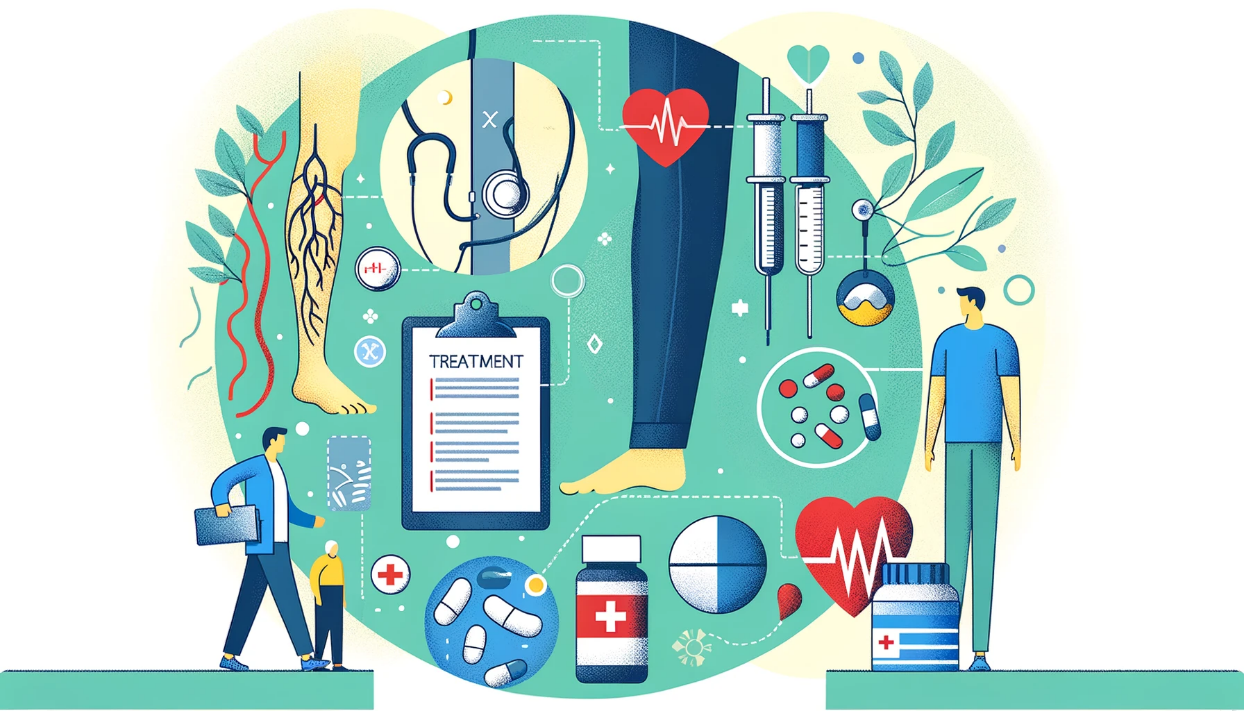
Stages of varicose veins and their diagnosis
Varicose veins in the legs develop gradually and go through several stages, each of which has its own characteristics and symptoms.
In the first stages of varicose veins, vascular “stars”, small dilated veins, as well as a feeling of heaviness and fatigue in the legs may appear.
In stage 2, the veins become more noticeable and bulging, and swelling and nocturnal cramps may occur.
Stage 3 adds constant pain, constant swelling, discoloration of the skin and possible formation of trophic ulcers to the symptoms.
Various methods are used to diagnose varicose veins. A visual examination by a phlebologist makes it possible to assess the external signs and the degree of vein damage. However, the most informative and accurate method of diagnosis is an ultrasound examination of the veins (duplex scanning), which allows you to assess the condition of the veins, the presence of reverse blood flow (reflux) and the performance of the venous valves.
Additional blood tests may also be ordered, especially in cases where thrombosis is suspected. Early diagnosis and proper treatment play a key role in preventing the progression of varicose veins and the development of complications.
Methods of self-diagnosis of varicose veins
Self-diagnosis of varicose veins can help you notice the first signs of the disease in time and consult a specialist. It is important to regularly inspect your legs, paying attention to any changes in the veins, the appearance of spider veins, dilated or protruding veins. Particular attention should be paid to the areas behind the knees and around the ankles.
In addition to visual inspection, you can pay attention to symptoms such as a feeling of heaviness, fatigue, pain in the legs, especially after prolonged standing or sitting, as well as swelling at the end of the day. Any suspicious signs, especially if they are accompanied by pain or discomfort, should be a reason to see a doctor. It is worth remembering that self-diagnosis is not a substitute for professional examination and diagnosis, but it can be useful for the early detection of vein problems.
Modern methods of treatment of varicose veins
Modern medicine offers several effective methods to treat this disease, which can be both conservative and surgical. In the initial stages of varicose veins, special attention is paid to conservative methods aimed at improving the condition of the veins and preventing their further damage. Conservative treatment of varicose veins in the legs includes the prescription of venotonics – medications that improve vein tone and blood circulation, the use of compression hosiery, which helps to reduce the load on the veins and prevents blood stagnation.
Physiotherapeutic methods are also used, for example, lymphatic drainage massage, which helps to improve the outflow of fluid from the tissues and reduces swelling. In more complex cases, when conservative treatment is ineffective, surgical methods are used. This can be a classic venectomy, which removes the affected areas of the veins, or more modern techniques such as laser or radiofrequency ablation.
Minimally invasive procedures in the treatment of varicose veins
Minimally invasive procedures have become a real breakthrough in the treatment of varicose veins. They suggest a lower risk of complications and faster recovery compared to traditional surgery. One of these procedures is sclerotherapy, in which a special drug is injected into the affected vein, causing its “sticking” and subsequent resorption.
Endovenous laser therapy is another popular method in which the affected veins are “sealed” from the inside with the help of a laser. Radiofrequency ablation is also widely used to treat varicose veins; This method consists of destroying the walls of the veins with the help of radio frequency waves. These procedures are usually performed on an outpatient basis, do not require lengthy hospitalization, and allow the patient to return to normal life in the shortest possible time.
Prevention of varicose veins: effective approaches
Prevention of varicose veins includes a number of measures aimed at maintaining vein health and preventing the development of the disease. One of the main aspects of prevention is maintaining an active lifestyle. Regular exercise, such as walking, running, swimming, or cycling, helps to improve blood circulation and strengthen the leg muscles, which prevents blood from stagnating in the veins. It is also important to avoid sitting or standing still for long periods of time; It’s a good idea to take short breaks to warm up or just alternate between standing on your toes and heels to stimulate blood flow.
Another important element of prevention is weight control. Being overweight increases the load on the veins in the legs, which can contribute to the development of varicose veins. Therefore, maintaining a healthy weight through a balanced diet and regular exercise is key. In addition, it is recommended to avoid wearing high-heeled shoes and tight clothing, which can impair blood circulation. Wearing compression garments, especially in cases of increased risk of varicose veins, such as during pregnancy or when working for long periods of time, can also be effective. It is also important to avoid smoking, as tobacco smoke negatively affects the blood vessels, impairing their tone and elasticity.
Recommendations for lifestyle changes to prevent varicose veins
To prevent varicose veins, it is important to take active measures to make lifestyle changes. First of all, it concerns the increase in physical activity: regular sports such as walking, jogging, swimming or cycling help to improve blood circulation and strengthen the venous walls. It is also recommended to avoid standing or sitting motionless for long periods; If your job involves sitting for long periods of time, try to take short breaks every hour for walking or a simple warm-up.
In addition, it is important to maintain a healthy weight, as being overweight increases pressure on the veins in the legs. To do this, you should stick to a balanced diet, limiting the consumption of fatty, fried foods and increasing the amount of fresh fruits and vegetables in the diet. Avoiding smoking is also important, as nicotine constricts blood vessels and impairs circulation. In addition, it is worth paying attention to the choice of shoes: it is preferable to wear comfortable shoes with low heels and avoid tight clothing, especially in the waist and leg area, which will help prevent blood stagnation in the veins.
Author: Natalia Kandybey, Candidate of Pharmaceutical Sciences, Quality Director of PJSC Pharmaceutical Factory “VIOLA”
References:
- Goldman, M.P., & Guex, J.J. (eds.). “Phlebology: Venous diseases of the lower extremities”. Elsevier Health Sciences, 2017.
- Bergan, J.J. “Varicose veins: Basic Principles and Practice.” CRC Press, 2018.
- Gloviczki, P., & Comerota, A.J. “Handbook of Venous Surgery.” Springer, 2015.
- Rutherford, R.B. “A Guide to Venous Diseases.” Elsevier Health Sciences, 2014.
- Wittens, C., Davies, A.H., Bækgaard, N., Broholm, R., Cavezzi, A., Chastanet, S., … & De Maeseneer, M. “Management of Chronic Venous Diseases.” European Society for Vascular Surgery, 2015.
- Perrin, M. “Guidelines for the Diagnosis and Treatment of Varicose Veins.” Springer, 2016.


