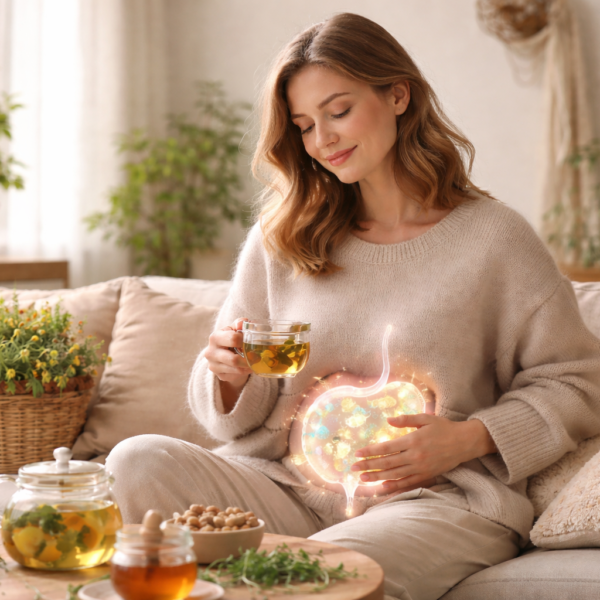
Linden flowers are one of the popular natural remedies with proven anti-inflammatory, diaphoretic and sedative effects. They contain flavonoids, essential oils, and vitamin C, but require caution for allergies and cardiovascular disease.
What are linden flowers
Botanical description and varieties of linden
Linden is a deciduous tree of the Malvaceae family, which can live for several hundred years. In the European flora, there are two main species: heart-shaped linden (Tilia cordata) and broad-leaved linden (Tilia platyphyllos). Both species form large umbel inflorescences of 3-7 fragrant flowers, covered with a light green bract leaf-“wing”, which helps the seeds to spread by the wind. The flowers open in June-July, exuding a sweetish aroma with subtle honey notes.
History of use in folk medicine
Among the ancient Slavs, linden was considered a talisman against diseases and lightning: its leaves were cut out on log cabins, and the infusion was used for fever. In the “Healing” of the XVII century, linden blossom is mentioned as “a sweat drink that drives away colds”. German monastic herbalists recommended a decoction for “inflamed breasts”, and healers of Galicia gargled it with sore throats.
Chemical composition and active substances
Linden flowers contain useful substances such as flavonoids (tylirin, quercetin), phenolic acids and mucous polysaccharides. They relieve inflammation and protect the mucous membranes. The composition also contains essential oils (farnesol, eugenol, geraniol), which have a slight antiseptic and antispasmodic effect. Vitamin C, β-carotene, manganese, zinc and calcium are found in the flowers – they support the immune system and strengthen the mucous membranes. Additionally, linden contains sterols, saponins and organic acids that help the liver function and promote the elimination of toxins.
Pharmacological properties of linden flowers
- Relieves inflammation and kills germs – helps with sore throat, stomatitis and inflammation of the gums.
- Reduces temperature and increases sweating – helps with colds and fever.
- Relieves cough – envelops the mucous membrane, softens the throat, thins phlegm and helps to remove it.
- It calms the nervous system and relieves spasms – helps to fall asleep, reduces cough and colic.
- Supports immunity – helps fight viruses and protects cells from damage.
Therapeutic use of linden flowers
In case of colds and ARVI
A warm infusion is prescribed at the first signs of chills, runny nose and muscle aches: increased sweating helps to gently bring down the temperature without sudden jumps, and thanks to the combination of mucous polysaccharides and flavonoids, it simultaneously softens a dry cough and accelerates its transition to a wet one, facilitating the passage of phlegm, and vitamin C supports the synthesis of interferon. The additional volume of fluid compensates for the losses, preventing dehydration, and the light sweet taste makes it easier to take in patients with a reduced appetite. To enhance the effect, folk practice combines linden with raspberry leaf or honey – such a drink removes toxins faster and accelerates recuperation.
But remember, in the case of a cough, you need to distinguish its allergic nature from a cold – see a brief memo in the article “How to distinguish an allergic cough from a cold”.
In case of inflammation of the respiratory tract and bronchitis
Mucous polysaccharides envelop the irritated tracheobronchial mucosa, reducing the pain reflex of coughing, and flavonoids thin sputum and facilitate its excretion. Parallel steam inhalations with linden infusion enhance the local antiseptic effect, reducing bronchial edema and increasing their patency. In treatment regimens, linden is often prescribed together with synthetic mucolytics, as it increases their effectiveness and allows you to reduce the dose of drugs.
For diseases of the oral cavity and throat
Rinsing with a warm infusion 3-4 times a day reduces pain from sore throat and tonsillitis, inhibits the growth of streptococci and creates a thin protective film that reduces the contact of irritating factors with the mucous membrane. This effect is in demand after dental manipulations: the infusion accelerates the healing of the sockets, removes bad breath and prevents the development of gingivitis. Due to its mild action, linden can be used in children and elderly patients when alcohol rinses are contraindicated.
For nervous disorders and insomnia
Farnesol and other components of the essential oil increase the activity of inhibitory mediators of the central nervous system, relieving internal tension and increased irritability at the end of the day. Linden tea serves as a healthy alternative to evening coffee – it not only helps you fall asleep, but also reduces the frequency of waking up in the middle of the night. For the elderly, the drink helps normalize circadian rhythms without the risk of addiction characteristic of synthetic sleeping pills.
For skin care
The chilled infusion lotion reduces redness, tightens pores and soothes sensitive skin after sun exposure. With regular use, mild polysaccharides form a thin moisturizing film that retains moisture without feeling sticky, and flavonoids neutralize free radicals, slowing down photoaging. The infusion can be frozen with ice cubes: wiping in the morning tones and refreshes the complexion, reducing morning swelling.
For hair and nails
Rinsing your hair with linden decoction gives shine, reduces brittleness, and hand baths strengthen nails thanks to manganese and polyphenols. Mucous substances soothe the scalp, reducing itching and dry dandruff, and the light acidic pH of the decoction closes the hair cuticle, making it smoother. To enhance the effect, a teaspoon of apple cider vinegar is added to the warm broth: the resulting mixture accelerates nail growth and makes it easier to comb long curls.
In the complex treatment of other diseases
A slight diuretic and choleretic effect of linden flowers is used for bile stagnation, chronic cholecystitis and the initial manifestations of fatty liver: the infusion stimulates the secretion of bile, improving digestion and reducing heaviness in the right hypochondrium. Moderate fluid excretion is beneficial for edema associated with metabolic syndrome, and antioxidants protect blood vessels from oxidative stress in hypertension and diabetes. In the treatment of gout, linden tea supports the natural removal of uric acid, reducing the frequency of joint exacerbations.
Methods of preparation and application
Infusion of linden flowers
Classic recipe: pour 2 tbsp. l. raw materials with 200 ml of boiling water, cover and keep in a water bath for 15 minutes, then cool for 45 minutes, strain, bring the volume to 200 ml.
Dosage:
- adults, adolescents 14+ – 1/2-1 glass 2-3 times a day;
- 12-14 years old – 1/3 cup;
- 7-12 years old – 1/4 cup;
- 3-7 years old – 2 tbsp. l.
Linden blossom decoction
If a more concentrated agent is needed, 3 filter bags are poured with 200 ml of boiling water, infused for 15 minutes, taken in the same way as the infusion. The decoction is advisable for a pronounced cough.
Linden tea with honey and other additives
To prevent colds, 1 tsp. flowers are brewed as regular tea. After cooling to 40 ° C, honey, a slice of lemon or ginger are added, enhancing the antiviral effect.
External use
Warm infusion is used to wash inflamed gums, make compresses for dermatitis. Mucous components create a protective film, accelerating skin regeneration.
Inhalations with linden blossom
Steam inhalations (1 tbsp. l. raw materials per 250 ml of boiling water) reduce nasal congestion and thin the secretion in the upper respiratory tract. The procedure is carried out for 5-7 minutes, covering the head with a towel.
Combined use with other herbs
Linden with raspberry leaf and thyme is often brewed (2 : 1 : 1). “Winter” drink linden + rosehip + currant leaf + mint (3 : 2 : 1 : 1) is often supplemented with 1 part of fireweed tea – it enhances the antioxidant effect and gives a dense taste without caffeine. With a wet lingering cough, the triple linden + coltsfoot + fireweed (1 : 1 : 1) is useful: the cocktail thins phlegm and protects the liver. The dosage remains the same – up to 1 tbsp. l. dry raw materials per 250 ml of water for adults and 1 tsp. for children to avoid excess tannins.
But do not forget that self-medication requires caution: it is safer to use ready-made preparations – Phytotea “FITOVIOL” No 15 (linden, lemon balm, motherwort) for evening calming and “PHYTOVIOL” No 20 (linden, rosehip, thyme) for support at the first symptoms of a cold.
Possible side effects and contraindications
- Allergies: rashes, itching, swelling of the lips and eyelids are possible, especially with hay fever. If symptoms appear, stop taking and consult a doctor.
- Cardiovascular and renal diseases: in heart failure, hypotension and kidney failure, linden is used with caution due to the risk of dehydration and additional burden on the body.
- Gastritis with high acidity: a concentrated infusion can increase heartburn – it is recommended to dilute with water 1:1.
- Pregnancy and lactation: allowed only if necessary. In large doses, potassium loss and cramps are possible. During the feeding period – no more than 1 cup of weak infusion per day.
- Drug compatibility: enhances the effect of diaphoretic and diuretics, and may cause increased sedation when taken with herbs such as valerian.
Comparison with other herbal remedies
This brief comparison table helps to see in which symptoms and in which combinations Linden Flowers will be most effective compared to other popular medicinal plants.
| Criterion | Linden flowers | Chamomile | Peppermint | Coltsfoot |
| Main active ingredients | Flavonoids (tiliroside, quercetin), essential oil (farnesol), mucous polysaccharides, vitamin C | Chamazulene, Bisabolol, α-Bisabolol Oxide, Flavonoids (Apigenin) | Menthol, menthone, flavonoids (eriodicttyol), rosmarinic acid | Mucous polysaccharides, inulin, flavonoids, pyrrolizidine alkaloids |
| Key pharmacological properties | Diaphoretic, expectorant, anti-inflammatory, mild sedative | Anti-inflammatory, antispasmodic, antiseptic | Antispasmodic (bronchi and biliary tract), moderately sedative, cooling | Strong mucolytic and expectorant, anti-inflammatory |
| Typical indications | Cold, dry/initial cough, sore throat, mild insomnia | Gastritis, colic, dermatitis, mild inflammation of the oral cavity | Bronchospasm, biliary dyskinesia, nausea, tension-type headache | Wet cough with viscous sputum, laryngitis, bronchitis |
| Limitations / contraindications | Pollinosis, hypotension with a large volume of drink | Allergy to Asteraceae, severe asthma | Severe hypotension, GERD, pregnancy (excess) | Hepatopathy (due to alkaloids), pregnancy, children under 2 years of age – caution |
| Features of use | Safe for children ≥ 3 years old; Combined with honey, raspberries | Well tolerated, suitable for external compresses | Requires moderate doses to avoid causing hypotension | The course ≤ 7-10 days to avoid the accumulation of alkaloids |
| Dosage (infusion for adults) | 2 tbsp. l. per 200 ml, 1/2-1 cup 2-3 times per day | 1 tbsp per 200 ml, 1/2 cup 3 times per day | 1 tbsp per 200 ml, 1/2 cup 2 times per day | 1 tbsp per 200 ml, 1/3-1/2 cup 2-3 times per day |
| Combination with linden | — | Enhances the anti-inflammatory effect in the collection “linden + chamomile” | Adds a bronchospasmolytic effect to “linden + mint” | Increases the mucolytic effect in the mixture “linden + coltsfoot” (1:1) |
Linden flowers have anti-inflammatory, diaphoretic, soothing and expectorant effects, so they are often used for colds and sleep disorders. At the same time, it is important to observe the dosage and take into account possible allergies or chronic diseases. If used wisely, linden brings tangible benefits and is safe.
Literature:
- Tiliae flos metabolites and their beneficial influence on human gut microbiota biodiversity ex vivo (https://pubmed.ncbi.nlm.nih.gov/35537603/)
- Tilia cordata Mill. Extracts and scopoletin: differential cell growth effects on lymphocytes (https://pubmed.ncbi.nlm.nih.gov/16397918/)
- UHPLC-DAD-MS/MS analysis of extracts from linden flowers (Tiliae flos): Differences in the chemical composition between five Tilia species growing in Europe (https://www.researchgate.net/publication/342396517)
Author: Natalia Kandybey, Candidate of Pharmaceutical Sciences, Quality Director of PJSC Pharmaceutical Factory “VIOLA”