Do you dress warmer than everyone else, and your hands and feet are still cold? If you regularly feel uncomfortable at temperatures that others consider normal, this does not necessarily mean illness. The feeling of cold is influenced by your physique, the amount of muscle and fat tissue, age, level of physical activity, sleep, and even whether you have eaten for a long time. But persistent or suddenly increased chilliness is sometimes one of the manifestations of anemia, thyroid disorders, or peripheral circulation problems.
The main thing is not to try to diagnose yourself based on a single symptom. The duration of the feeling of cold, changes compared to your usual condition, and accompanying complaints are important.
Is it an individual feature or a reason to pay attention?
People do experience the same temperature differently. Thermoregulation is influenced by body size, the ratio of muscle to fat tissue, blood flow in the skin, and the body’s ability to produce heat. Therefore, two healthy people in the same room may feel comfortable at different temperatures.
Women often complain of cold hands and feet, but it would be an oversimplification to explain this only by gender. Studies show that a significant part of individual differences is determined by body size and composition. Muscle tissue is involved in heat production, and subcutaneous adipose tissue is involved in thermal insulation. As we age, the body’s response to cold can also change, so it can be more difficult for older people to maintain a comfortable temperature.
If you have been freezing for “as long as you can remember”, feel good, and do not notice other changes, this may be your individual feature. Another situation is if the chilliness has appeared recently, has become noticeably stronger, or is accompanied by weakness, dizziness, weight changes, swelling, or other symptoms.
Iron deficiency and anemia
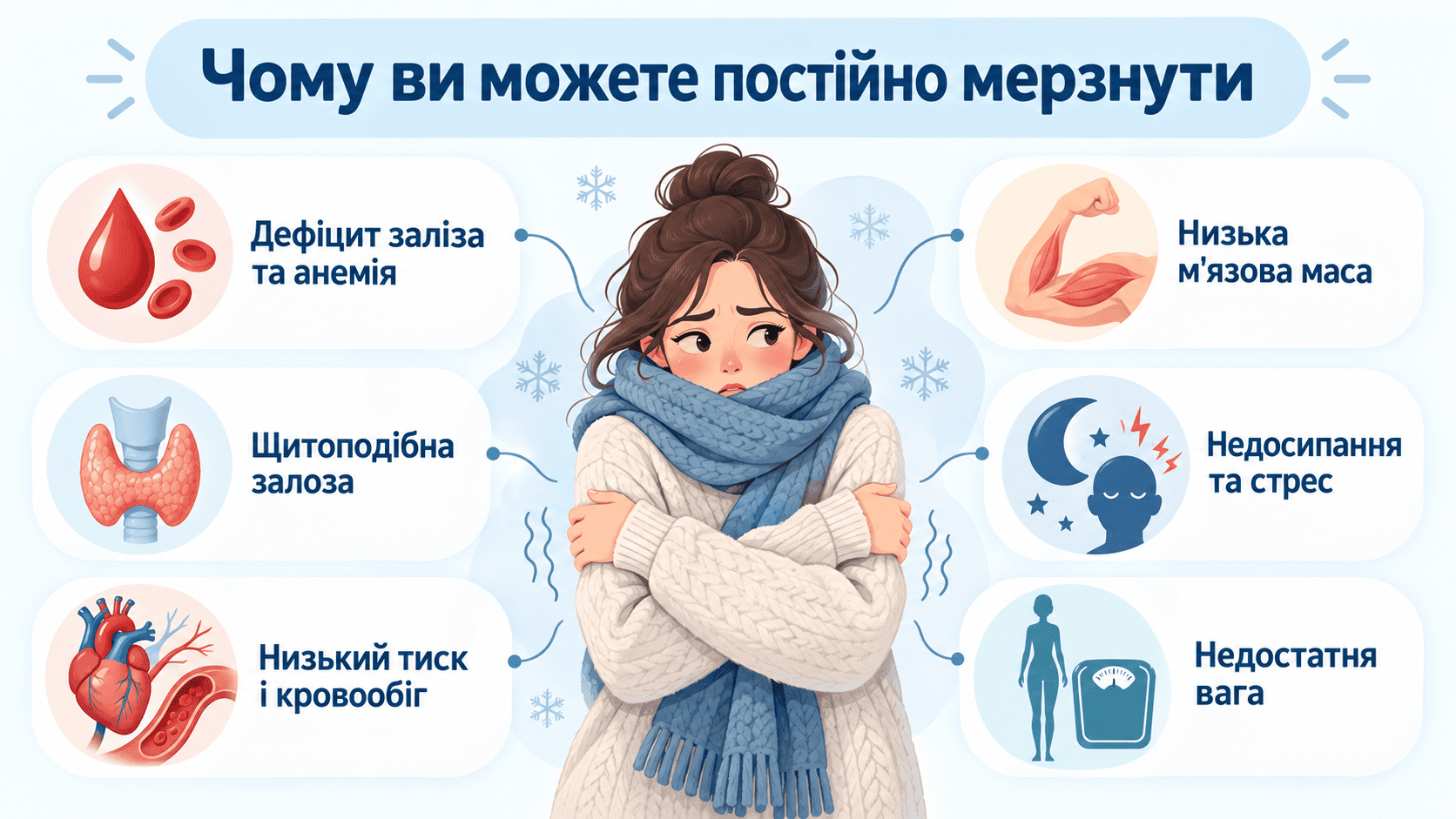
Cold hands and feet can occur in iron deficiency anemia. Iron is necessary for the formation of hemoglobin, a protein in red blood cells that carries oxygen. With anemia, along with chilliness, fatigue, weakness, pallor, shortness of breath during normal exercise, or dizziness may appear.
It is impossible to determine iron deficiency by sensations alone. You should not start taking iron supplements on your own only because of cold hands: excess iron can also be harmful. If there is a suspicion of deficiency, it is better to discuss the advisability of tests and further actions with your doctor.
Read more about early manifestations in the material “What happens to the body when there is not enough iron: the first signals”.
Among the herbal remedies used for anemia of various origins are nettle leaves. Biologically active substances of nettle contribute to an increase in hemoglobin content and the number of red blood cells, as well as the normalization of blood composition.


Vitamin D deficiency
In autumn and winter, vitamin D is mentioned especially often — and not by chance. Its synthesis in the skin depends on ultraviolet radiation, which is influenced by the season, length of day, cloudiness, geographical location, and other factors. Vitamin D is necessary for normal bone health and is involved in the functioning of muscles and the immune system.
At the same time, a constant feeling of cold is not a specific sign of vitamin D deficiency. If there is reason to suspect a deficiency, the issue of tests and dosage should be discussed with your doctor.
An additional source of vitamin D3 in the diet can be Vitamin D3 Beauty. Vitamin D3 contributes to the normal absorption of calcium and phosphorus and the maintenance of normal bones, teeth, muscles, and the immune system. Adults are advised to consume 1–2 capsules per day during or after meals. During pregnancy and breastfeeding, the supplement is used after consulting a doctor. Also, without consulting a doctor, it should not be combined with other supplements containing vitamin D. A dietary supplement is not a medicine and does not replace a complete diet.
Thyroid disorders
The thyroid gland, through its hormones, affects the rate of many metabolic processes. When its function is reduced, the body can produce less heat, and the person sometimes begins to tolerate cold worse. But chilliness in itself does not allow us to conclude that hypothyroidism is present: it is a nonspecific symptom that has many other explanations.
If the feeling of cold has become constant and other changes in well-being appear, you should consult a family doctor or endocrinologist. Laboratory tests are used to assess thyroid function, in particular the determination of thyroid-stimulating hormone (TSH); if necessary, the doctor prescribes other indicators, for example, free T4.
Low blood pressure and circulatory disorders
Blood pressure below average for a particular person is not always a problem. In some people, low blood pressure numbers do not cause any symptoms. But if they are combined with dizziness, weakness, darkening of the eyes, or fainting, this is already a reason to discuss the condition with a doctor.
Cold hands and feet can also be associated with peripheral circulation patterns. During cold weather, skin vessels naturally constrict to reduce heat loss. If there is venous insufficiency or another diagnosed vascular disease, new or noticeably stronger cold sensations in the extremities should also be discussed with your doctor.
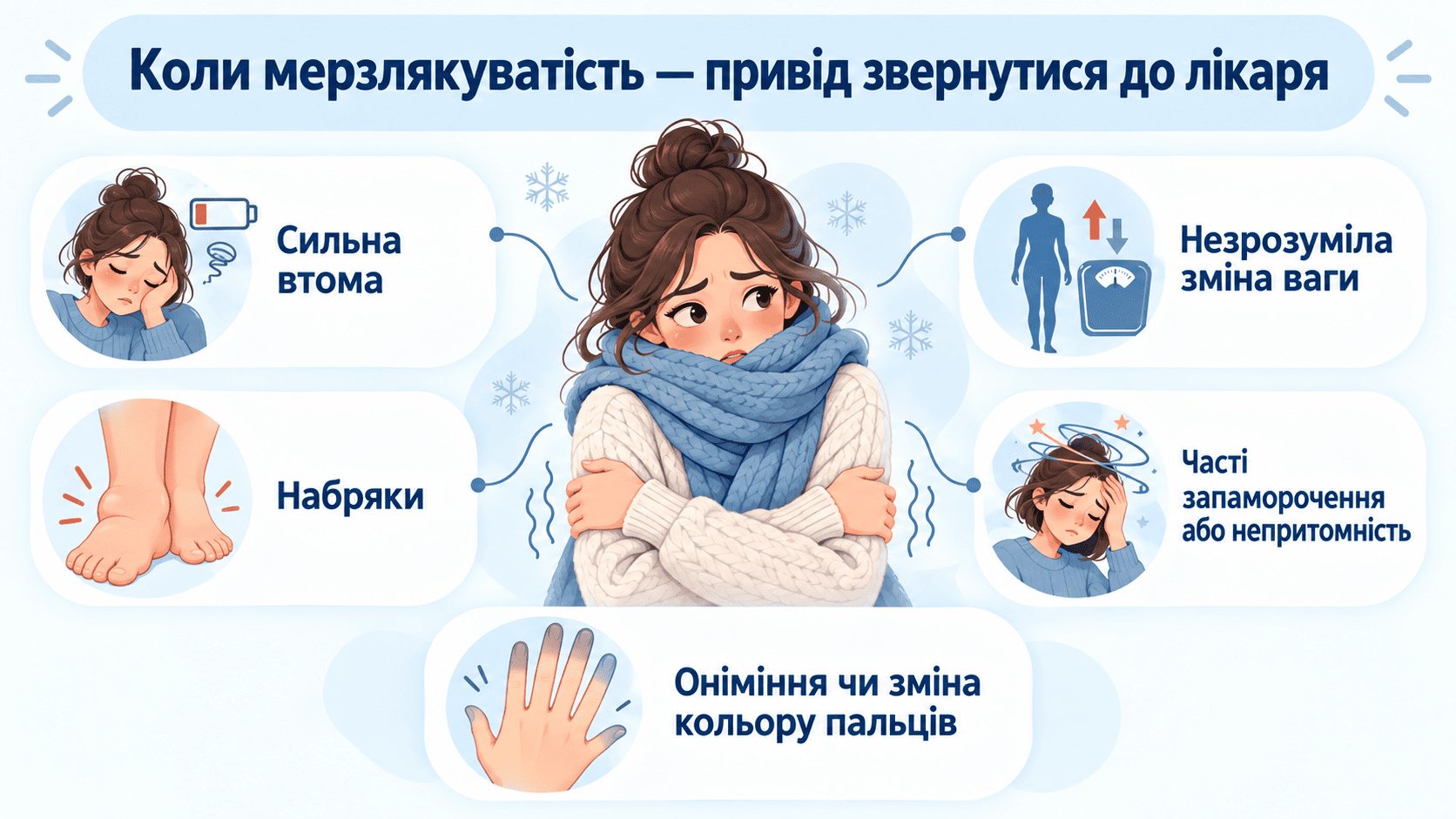
If your fingers do not just get cold, but noticeably turn white or blue, become numb, hurt, or tingle, especially in response to cold or stress, you should separately draw your doctor’s attention to this. This is how episodes of Raynaud’s phenomenon can manifest themselves, but only a specialist can confirm them and determine the cause.
A sedentary lifestyle also does not help: during work, muscles produce heat, and movement supports blood circulation. Therefore, several hours motionless at a laptop may well end up with cold hands and feet, even in a healthy person.
Medicines
Hypersensitivity to cold can sometimes be associated with taking certain medicines. In particular, beta-blockers can cause cold hands and feet, some antidepressants can affect thermoregulation or vascular tone, and some chemotherapeutic drugs can change the perception of temperature due to their effect on peripheral nerves.
Underweight and low muscle mass
The body produces heat primarily in the metabolic process, and muscles are an important part of this mechanism. People with very low body weight, a small amount of muscle, and adipose tissue can tolerate cold worse: the body has fewer opportunities for both heat production and thermal insulation.
Particular attention should be paid to the situation when chilliness appeared against the background of rapid or unwanted weight loss. Strict diets and prolonged energy deficits can affect not only the feeling of warmth, but also the general condition. In this case, it is important to find out the reason for the weight change, and not just add another layer of clothing.
Dehydration, lack of sleep and chronic stress
These factors are not among the most typical medical causes of permanent cold intolerance, but can affect how the body regulates temperature and how a person subjectively feels cold.
Water is needed for the normal functioning of thermoregulation and circulatory systems. Lack of sleep, in turn, can disrupt the coordinated functioning of thermoregulation mechanisms: after a sleepless night, many people may indeed feel more “chilly”. Stress affects the autonomic nervous system and peripheral vascular tone; in people with Raynaud’s phenomenon, emotional stress, for example, can provoke an attack.
Therefore, sufficient drinking, regular sleep, and recovery are not a “cure for chilliness”, but these are basic conditions without which it is more difficult to assess whether the problem persists on its own.
When to see a doctor
The reason not to postpone the consultation is not the fact that you like a warm sweater, but a noticeable change in your usual state or a combination of chilliness with other symptoms.
It is worth consulting a doctor if the feeling of cold lasts for a long time or intensifies, and at the same time there is severe fatigue, weakness, shortness of breath, unexplained weight change, swelling, noticeable hair loss, frequent dizziness, or fainting. Numbness, pain, tingling, or a pronounced discoloration of the fingers requires special attention. Consultation is also appropriate if severe chilliness arose suddenly and was not characteristic of you before.
It is also worth seeking advice when the feeling of cold becomes so pronounced that it interferes with daily activities or disrupts sleep.
The doctor evaluates not one symptom, but the whole picture — complaints, nutrition, weight changes, possible blood loss, medication, chronic diseases, and examination results. That is why there is no universal “test for chilliness”.
What you can do now
While you are monitoring your well-being or planning a consultation, you can help your body in simple and safe ways:
- track your symptoms: note when the feeling of cold occurs, how long it lasts, whether it recurs at certain times of the day or under certain circumstances, and what other symptoms occur at the same time;
- dress in layers, and do not rely on one very warm piece of clothing;
- protect not only your arms and legs, but also your body and head during the cold;
- get up and move regularly if you work while sitting;
- eat a varied diet and avoid a long-term calorie deficit without medical indication;
- maintain your usual drinking regimen;
- try to get enough sleep and maintain a stable routine;
- do not start taking iron, hormones, or high doses of vitamins “for cold” on your own.
These steps are not a substitute for medical advice, but they can help you better understand the patterns of symptoms and feel calmer while you search for answers. Do not ignore the constant feeling of cold: if the chilliness remains severe or is accompanied by other symptoms, it is worth finding out the possible cause with your doctor.
Conclusion
You can constantly freeze for very different reasons — from individual thermoregulation and small muscle mass to anemia, thyroid disorders, peripheral circulation problems, or taking certain medicines. If this sensation has appeared recently, has become stronger, or interferes with daily life, it is better to check your health, and not just get used to wrapping yourself warmer.
The material is for informational purposes only and does not replace a doctor’s consultation, diagnosis, or individual medical recommendations.
References
- Taylor P.N., Albrecht D., Scholz A. et al. Hypothyroidism. The Lancet. 2024. DOI: 10.1016/S0140-6736(24)01614-3 (https://pubmed.ncbi.nlm.nih.gov/39368843/).
- Brigham D., Beard J. Iron and thermoregulation: a review. Critical Reviews in Food Science and Nutrition. 1996; 36(8):747–763. DOI: 10.1080/10408399609527748 (https://pubmed.ncbi.nlm.nih.gov/8989508/).
- Bobryk M., Komisarenko Y. Combined endocrine pathology in the conditions of chronic stress of war. Endocrinology. 2025; 30(1):33–38. DOI: 10.31793/1680-1466.2025.30-1.33 (https://endokrynologia.com.ua/index.php/journal/article/view/791).
Author: Natalia Kandybey, Candidate of Pharmaceutical Sciences, Quality Director of PJSC Pharmaceutical Factory “VIOLA”